U.S. Marines Deploy to Middle East as Houthis Join Iran Conflict
Iran's Saudi base strike wounded two dozen U.S. troops, pushing American casualties beyond 300, as 2,500 Marines landed and Houthis fired missiles at Israel.
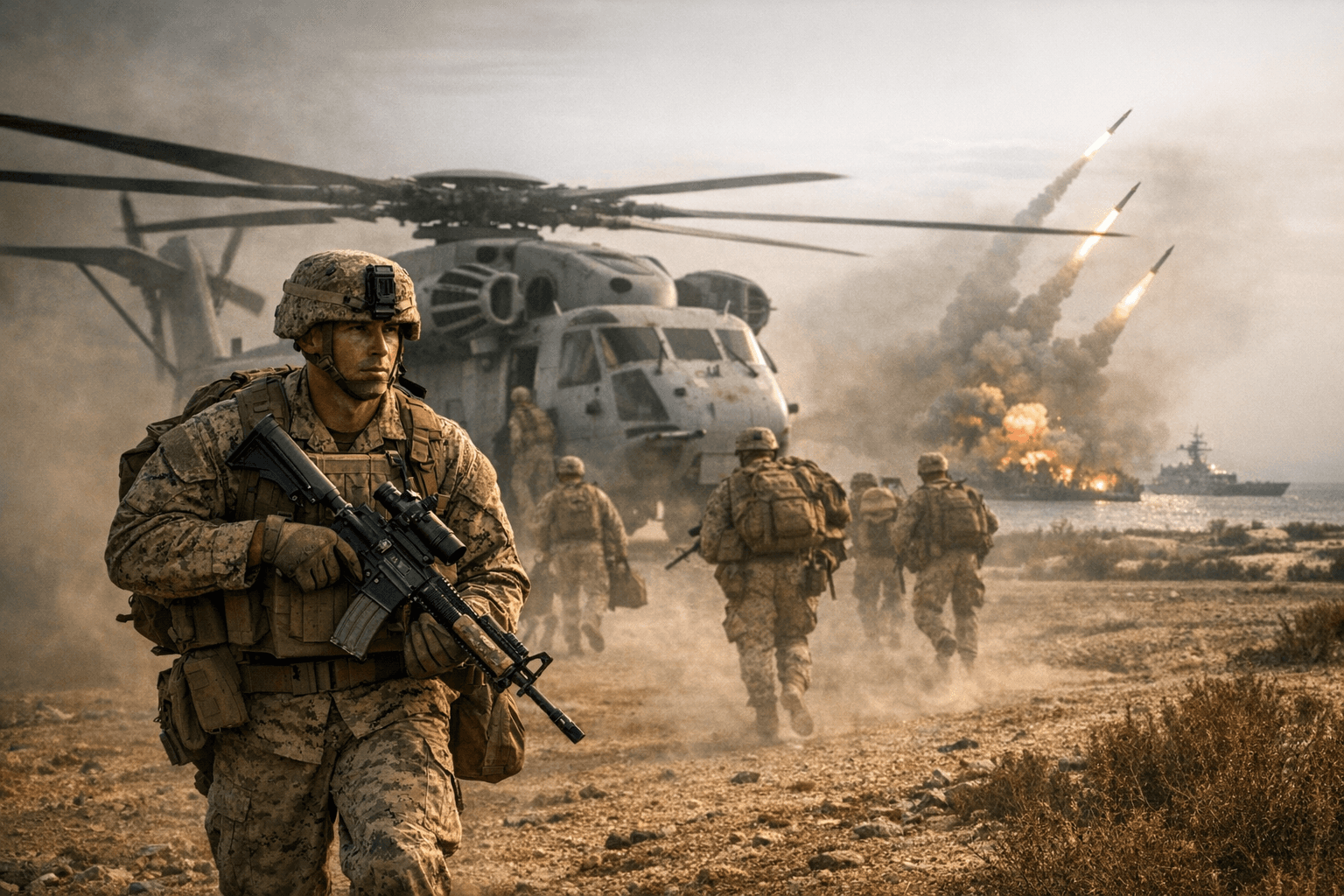
An Iranian strike on a U.S. military base in Saudi Arabia injured around two dozen American troops, with a U.S. official calling it "one of the most serious breaches of American defenses since the war began." The attack pushed the total number of Americans wounded in the Iran war beyond 300 as U.S. Central Command announced Saturday that a Navy ship carrying about 2,500 Marines had arrived in the Middle East.
The same day, Iranian-backed Houthi rebels entered the month-old conflict for the first time. Houthi military spokesperson Yahya Saree said the group fired a barrage of ballistic missiles targeting what he called "sensitive Israeli military sites" in southern Israel. Israeli authorities said they intercepted the launch. Saree had signaled in a vague statement the previous day that the rebels intended to join the war.
U.S. Central Command said the Marines arrived aboard the amphibious assault ship USS Tripoli, which carries transport and strike fighter aircraft along with amphibious assault assets. The USS Boxer and two other ships, along with another Marine Expeditionary Unit, were separately ordered to the Middle East from San Diego. At least 1,000 paratroopers from the 82nd Airborne, trained to land in hostile territory and secure key positions and airfields, were also ordered to the region. A separate report indicated the Pentagon was weighing the deployment of an additional 10,000 ground troops; President Trump has not issued orders for Marines or special forces to conduct ground operations.
The Houthis' entry carries immediate consequences for global trade. About 12% of the world's commerce passes through the Bab el-Mandeb Strait, and roughly 10% of global maritime trade, including 40% of container ship traffic, moves through the Suez Canal each year. The Red Sea corridor handled approximately $1 trillion in goods annually before the current conflict. Between November 2023 and January 2025, the Houthis attacked more than 100 merchant vessels with missiles and drones, sinking two ships and killing four sailors, framing the campaign as solidarity with Palestinians in Gaza. The U.S. Navy's response included more than 1,100 strikes on Houthi targets, a campaign that became the most intense running sea battle the Navy had faced since the Second World War.
The Houthis' reemergence also complicates the positioning of the USS Gerald R. Ford aircraft carrier, which arrived in port for repairs. Sending the Ford into the Red Sea would risk the kind of attacks sustained by the USS Dwight D. Eisenhower in 2024 and the USS Harry S. Truman in 2025.
The Houthis have controlled Yemen's capital, Sanaa, since 2014. Saudi Arabia launched a military campaign against the group on behalf of Yemen's exiled government in 2015, and an uneasy ceasefire between Riyadh and the Houthis had kept the rebels on the sidelines of the current conflict until Saturday's launch. The group considers itself part of Iran's "axis of resistance," a network that also includes Hezbollah in Lebanon, Hamas in Gaza and Shiite militias in Iraq. A U.S.-Houthi ceasefire reached in 2025 failed to stop attacks entirely; major shipping companies continued to avoid Red Sea routes even after it took effect.
Pakistan announced that regional powers planned to meet Sunday to discuss how to end the war. Iran expressed skepticism about the diplomatic push. Meanwhile, the conflict's reach was widening on multiple fronts: Israeli airstrikes killed three journalists in southern Lebanon, and air raid sirens sounded around Beersheba and near Israel's main nuclear research center for the third time overnight.
Know something we missed? Have a correction or additional information?
Submit a Tip

