U.S. Marines stage rapid response drill at reopened Caracas embassy
Marines touched down at the reopened U.S. embassy in Caracas as Washington signaled it can still project force, even while rebuilding ties with Venezuela.

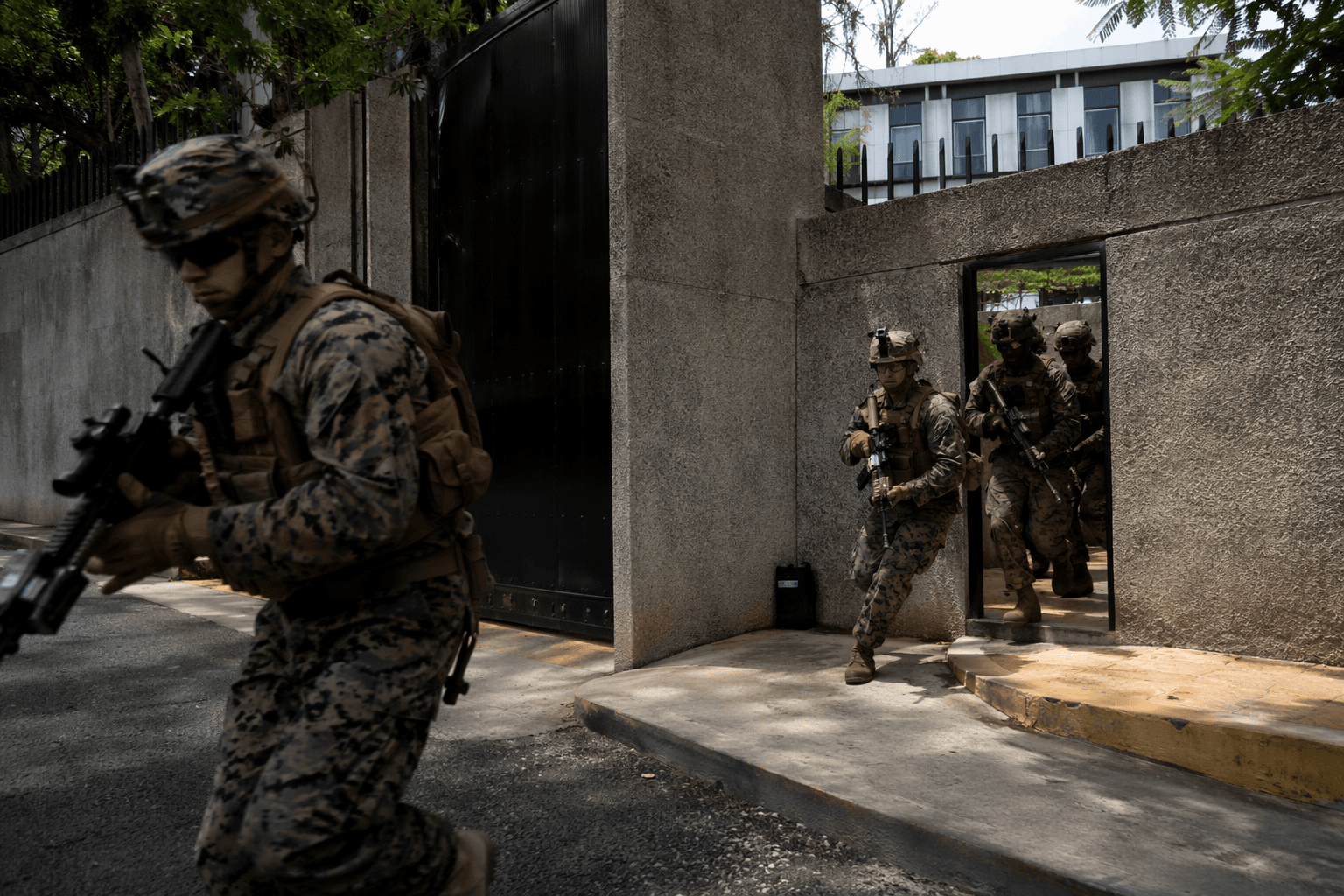
A pair of Marine Corps Osprey aircraft flew low over the reopened U.S. embassy in Caracas on May 23 and landed in the parking lot, kicking up branches as Marines descended in full view of residents and protesters. The rapid-response drill was meant to project more than readiness. It showed Venezuela, U.S. personnel, and regional rivals that Washington intends to keep a military reach on display even as it rebuilds diplomatic ties.
The embassy said on Instagram that “ensuring the military’s rapid response capability is a key component of mission readiness, both here in Venezuela and around the world.” Venezuelan Foreign Minister Yván Gil had already described the exercise as preparation for “medical emergencies or catastrophic emergencies.” Those parallel explanations underscored the dual message of the operation: a routine preparedness drill on one level, and a pointed reminder of U.S. capability on another.
The exercise came less than two months after the United States formally resumed operations at Embassy Caracas on March 30, restoring a diplomatic presence that had been closed for seven years. Ambassador Laura F. Dogu arrived in Caracas in January as charge d’affaires, and U.S. officials said the building needed significant repairs, including mold remediation, before normal operations could restart. At the time of reopening, consular services still were not fully restored. Washington cast the reopening as a key milestone in a three-phase plan and said renewed engagement was meant to support stability, economic recovery and political reconciliation.
The military display carried added weight because it followed a March agreement by the United States and Venezuela’s interim authorities to re-establish diplomatic and consular relations. Marine Gen. Francis L. Donovan, the commander of U.S. Southern Command, observed the drill, met senior Venezuelan officials and embassy staff, and arrived in one of the Ospreys. It was his second official visit to Caracas this year, after meeting Venezuelan interim authorities on Feb. 18. The same squadron involved in the operation, Marine Medium Tiltrotor Squadron 263, is based aboard the amphibious assault ship USS Iwo Jima in the Caribbean.
Outside the embassy, residents gathered to watch the aircraft while protesters held a Venezuelan flag reading, “No to the Yankee drill.” That scene captured the tension at the heart of the reset: an embassy back open, contacts restored, and a fragile political transition still shadowed by the memory of abrupt change and the reality of continuing pressure.
Know something we missed? Have a correction or additional information?
Submit a Tip