U.S. military blockade begins in Strait of Hormuz, threatening global energy flows
A U.S. blockade at Iranian ports pushed crude above $104 and put the Strait of Hormuz’s 20 million-barrel daily flow at risk. Iran has vowed retaliation.
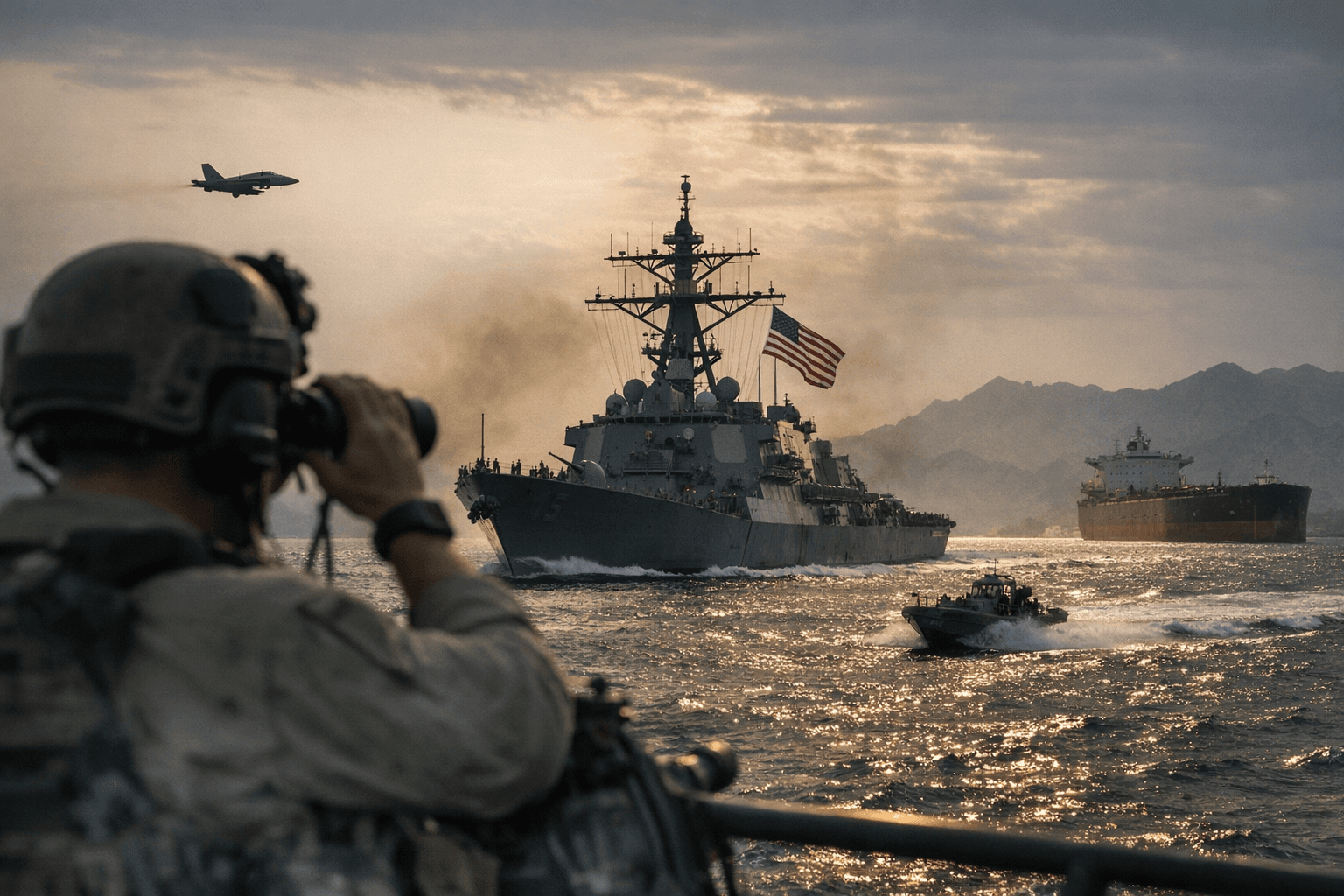
The narrow Strait of Hormuz moved to the center of a global energy shock as the U.S. military said it began blocking traffic entering and exiting Iranian ports at 10 a.m. ET. The immediate market response was sharp: U.S. crude climbed to $104.24 a barrel and Brent rose to $102.29, a reminder of how fast a shipping disruption in the waterway can reach fuel prices, freight costs and household bills.
The stakes are unusually high because the strait is one of the world’s most important energy chokepoints. The U.S. Energy Information Administration says about 20 million barrels per day of oil flowed through it in 2024, roughly 20% of global petroleum liquids consumption. It also says about one-fifth of global LNG trade crossed the strait in 2023. The agency has warned that the route is difficult to replace because very few alternative export paths exist if it closes.
The disruption had already spread beyond tankers and oil markets. The United Nations Security Council failed on April 7 to adopt a resolution meant to strengthen security in the corridor after Russia and China vetoed the draft. UN reporting said the strait had already been largely closed to global trade and humanitarian transport, and UN News said only four or five ships a day were still attempting the transit before the blockade took effect. The International Maritime Organization said around 3,200 vessels and about 20,000 seafarers had been affected.
Donald Trump tied the move to his demand that Iran end its nuclear program, after talks in Pakistan failed, and warned that any Iranian warships approaching the blockade would be destroyed. Iran’s Islamic Revolutionary Guard Corps vowed retaliation, signaling that the standoff could widen quickly if either side miscalculates in the confined waters between the Persian Gulf, the Gulf of Oman and the Arabian Sea.
The economic pressure is already visible in the Gulf. The Energy Information Administration estimated that Iraq, Saudi Arabia, Kuwait, the United Arab Emirates, Qatar and Bahrain collectively shut in 7.5 million barrels per day of crude production in March because exports could not move normally through the strait. China said the blockade ran against global interests and urged restraint, underscoring how a confrontation over one waterway now threatens energy security far beyond the region.
Know something we missed? Have a correction or additional information?
Submit a Tip