U.S. missile stocks depleted in Iran war, replacement could take years
U.S. missile use in Iran drained stocks fast enough that some key munitions may take up to four years to rebuild, raising new pressure on Pacific war plans.
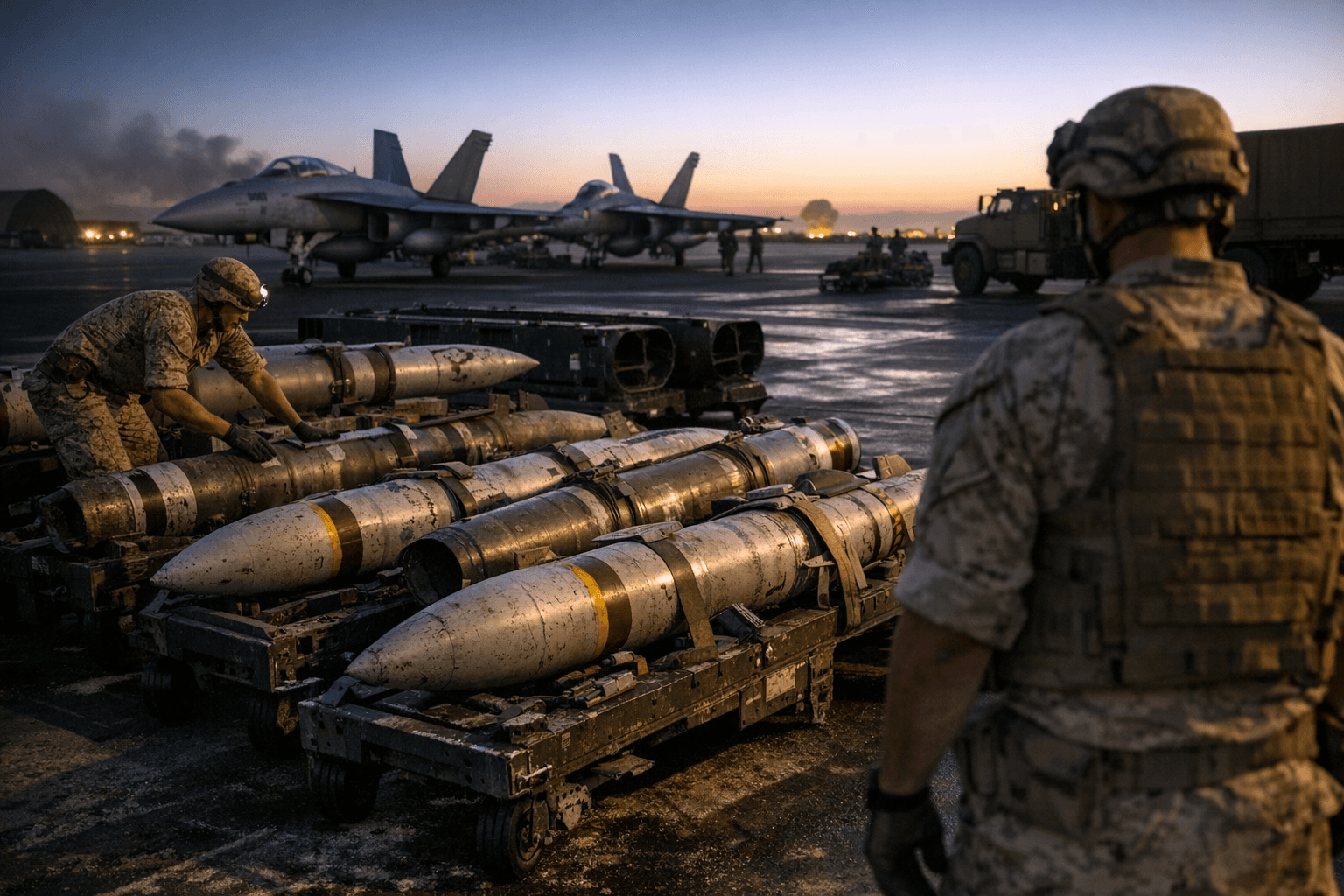
Missile salvos fired at Iran did more than shape the war in the Middle East. They pulled down U.S. inventories of critical weapons fast enough to force a harder question in Washington: how much firepower can the Pentagon spare now, and how long will it take to replace it if a crisis erupts in the western Pacific?
The Center for Strategic and International Studies said in its April 21 follow-up, Last Rounds? Status of Key Munitions at the Iran War Ceasefire, that U.S. forces heavily used seven munitions during the 39 days of air and missile operations before the ceasefire. For four of those weapons, the think tank said the United States may have expended more than half of the prewar inventory. Rebuilding stocks to prewar levels for the seven munitions could take one to four years as missiles already in the pipeline are delivered.
The concern is not whether the United States can keep fighting the current war, but what the depleted shelves mean for the next one. CSIS said the real risk is a future conflict with a peer competitor, especially China, where magazine depth and industrial output could matter as much as combat performance. The same warning extended to Ukraine, where reduced inventories also complicate support for a long war of attrition.
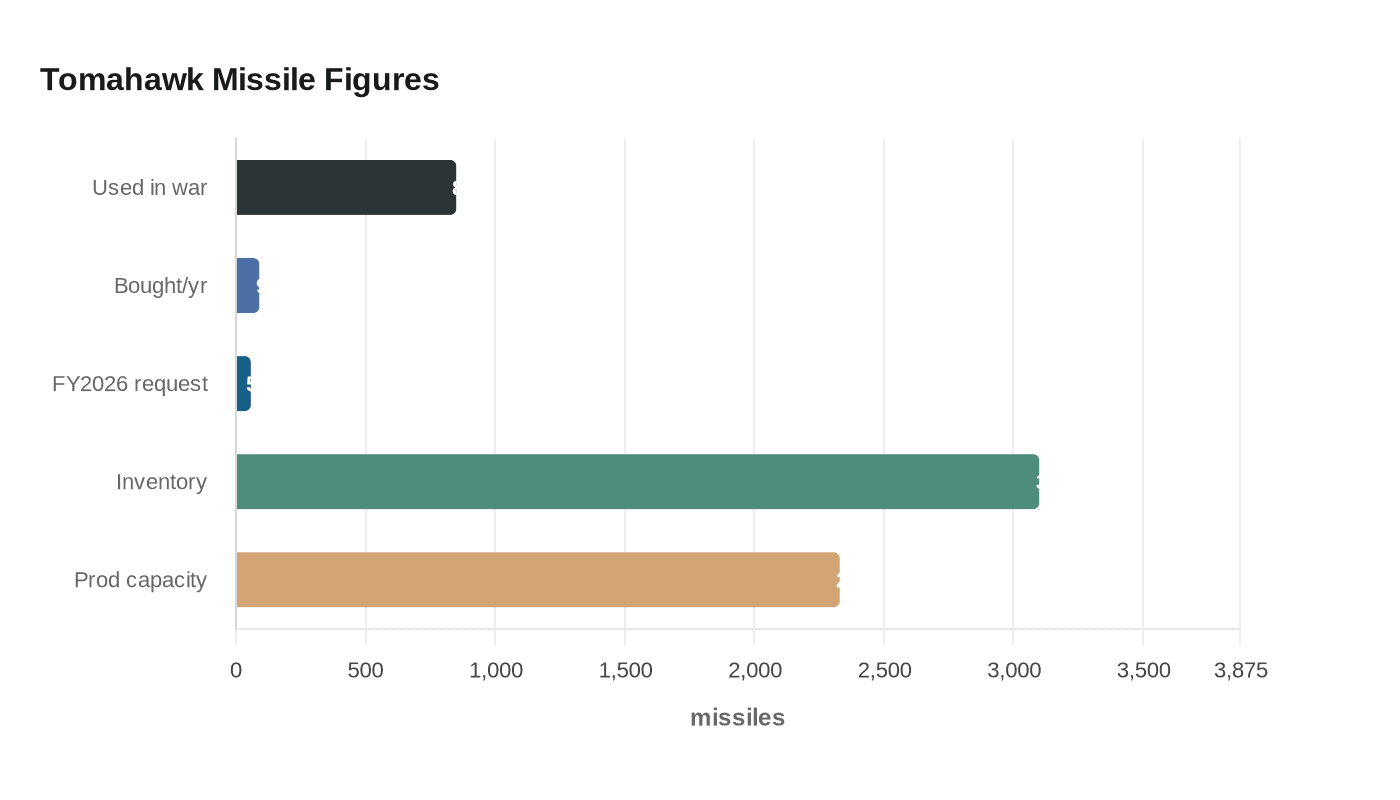
No weapon illustrates the squeeze more clearly than the Tomahawk cruise missile. CBS News reported March 27 that U.S. forces had used more than 850 Tomahawks in the Iran conflict, while the Pentagon buys about 90 a year on average. The Navy requested just 57 Tomahawks for fiscal year 2026, even as CBS estimated the U.S. inventory at about 3,100 missiles. CSIS cited Pentagon budget documents showing production capacity could reach 2,330 a year on paper across existing contracts, but actual procurement has run far below that level.
The financial burden has been large as well. In a March 13 update, CSIS said the Pentagon reported the first six days of the war cost $11.3 billion. That came before the campaign reached its 39-day total and before the ceasefire exposed how much the fighting had drawn down the stockpile.
President Donald Trump said on March 23 that the war with Iran had added urgency to replenishing U.S. stockpiles and linked the pressure to prior aid for Ukraine. He said the United States wanted “vast amounts of ammunition.” For military planners, the lesson is stark: the issue is no longer just how quickly missiles can be launched, but how quickly American industry can make them again.
This article was produced by Prism’s automated news system from verified source data, official records, and press releases, then run through automated quality and moderation checks before publishing. The system is built and supervised by the people who set the standards it runs under. Read our full AI policy.
Did this article answer your question?

