U.S. Navy drone rescues Apache crew, first known sea recovery
A Navy sea drone pulled two Apache crew members from the water near Oman, a first known U.S. use of an unmanned vessel to recover personnel at sea.
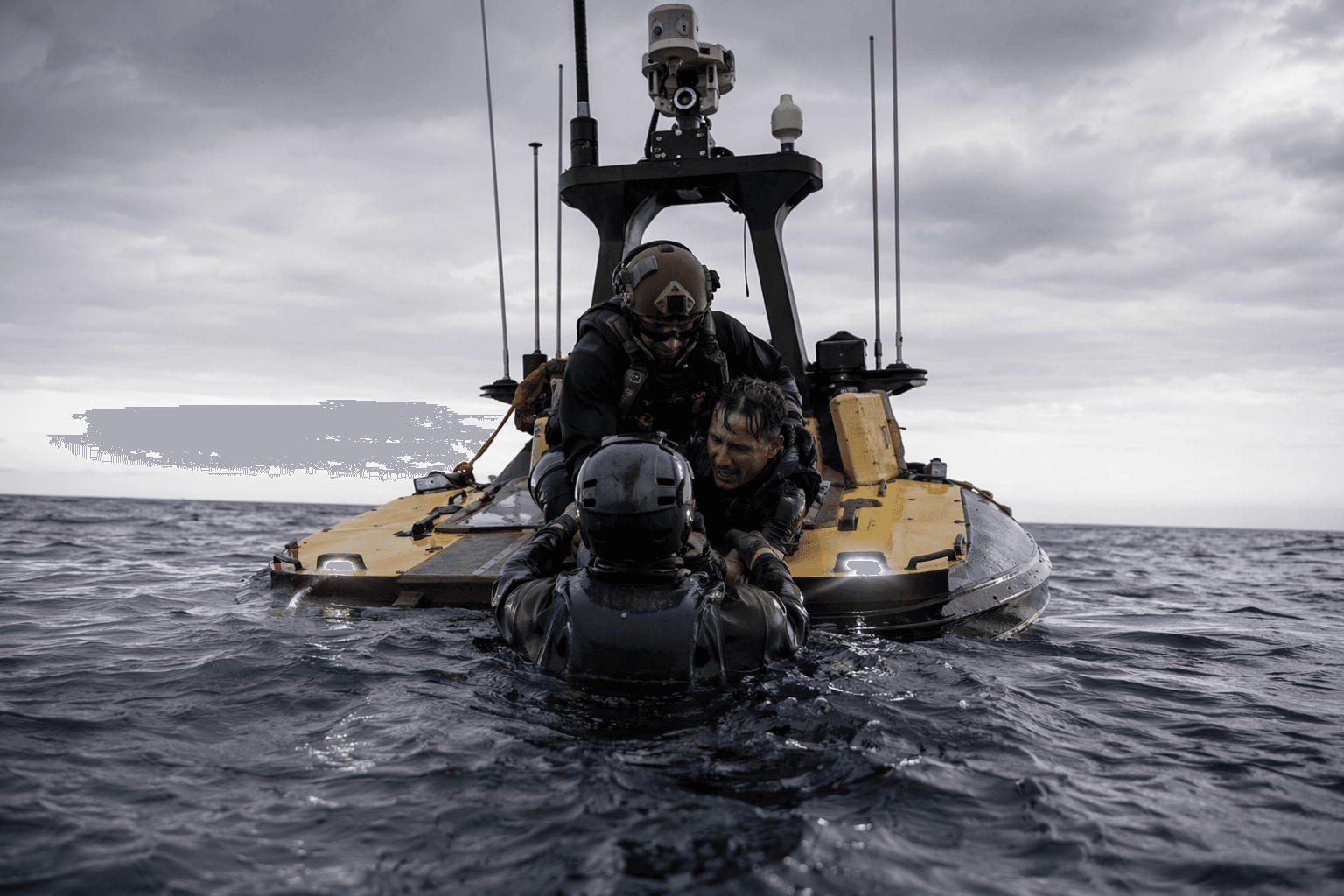
A Navy sea drone pulled two Army aviators from the water near Oman after their AH-64 Apache went down, marking what was believed to be the first known U.S. use of an unmanned military vessel to recover personnel at sea. The rescue was more than a technical curiosity: it showed a system built for scouting and persistence can also answer an urgent human call without putting another crew at risk.
U.S. Central Command said the two crew members were rescued at 7:33 p.m. ET on June 8, 2026, after the helicopter went down near the coast of Oman while patrolling regional waters. President Donald Trump later described the crew as “fine,” but the episode underscored how quickly an unmanned platform can be folded into a live recovery mission in the Strait of Hormuz corridor, where speed and reach matter.
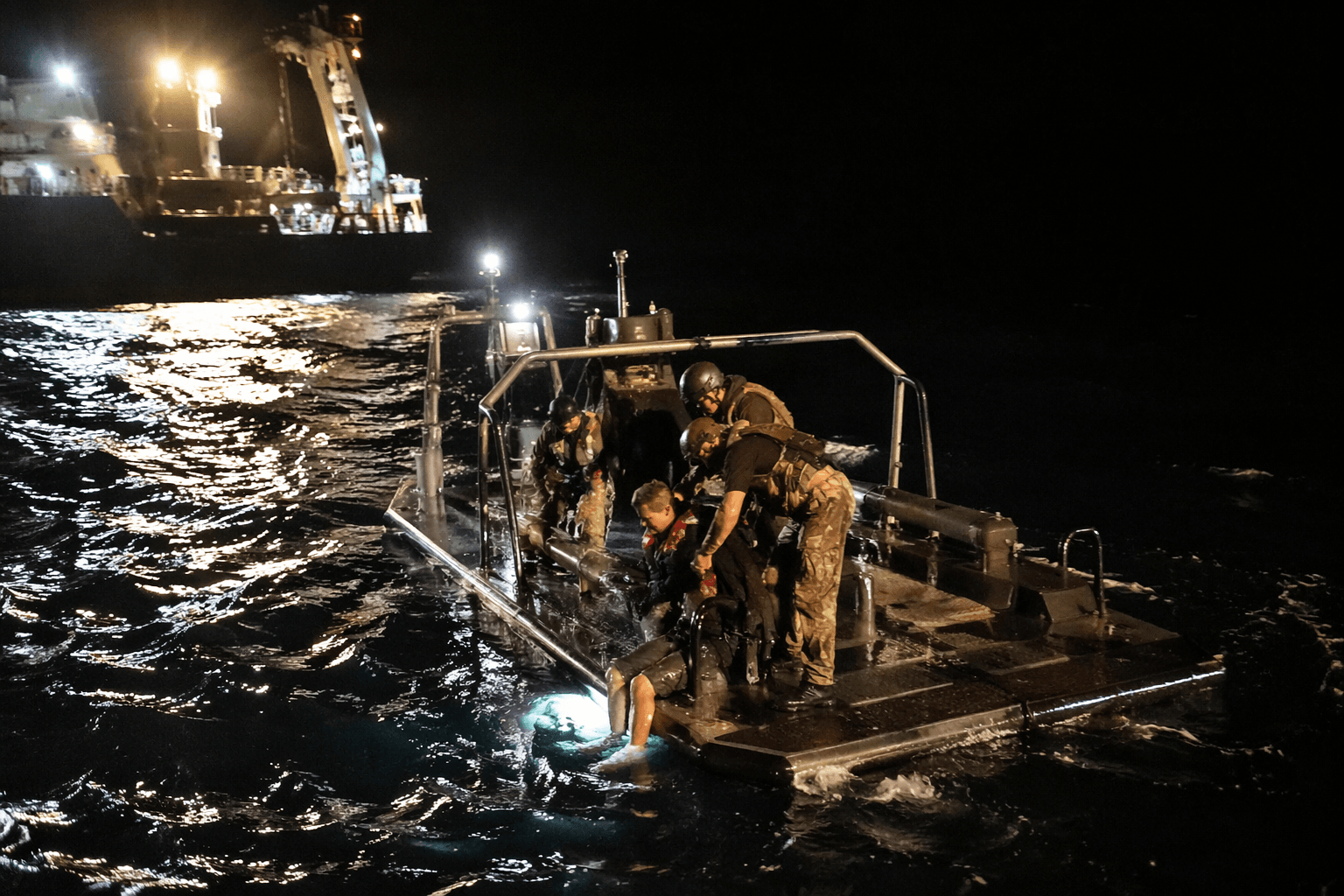
The vessel was identified as a Saronic Corsair, a 24-foot autonomous surface vessel designed to operate over long distances and in rough conditions. Saronic says the Corsair can carry up to 1,000 pounds over 1,000 nautical miles, and Reuters-related reporting said it can exceed 35 knots. Those specifications explain why the Navy has been treating sea drones not as gadgets, but as tools that can extend the fleet’s reach while reducing risk to sailors and aviators.
The recovery also reflects years of institutional buildup in Bahrain, where Task Force 59 has become the Navy’s test bed for unmanned systems. Created in September 2021 as the service’s first unit dedicated to unmanned systems, the task force was set up to combine manned and unmanned platforms with artificial intelligence in the U.S. 5th Fleet area of operations. In January 2024, the Navy created Task Group 59.1 in Manama to focus on operational deployment of unmanned systems with manned operators.
Task Force 59 began fielding Corsairs in the Middle East in late March 2026, giving commanders a platform that could scout, conduct surveillance, detect mines and track enemy activity without exposing a crew. Bahrain’s role matters because it was the first regional partner to work with the U.S. Navy on integrating new unmanned systems and artificial intelligence after Task Force 59 was established, turning the country into a proving ground for operational doctrine rather than just hardware demonstrations.
The wider lesson reaches beyond one rescue. Reuters pointed to Ukraine’s sea drone campaign against Russia as a warning and a model, showing that unmanned surface vessels can damage ships and even down a helicopter. In that context, the Apache recovery looks less like a novelty than a sign that sea drones are moving from experiment to operational practice in the kinds of missions militaries care most about: finding people fast, limiting exposure and holding the line in contested water.
This article was produced by Prism’s automated news system from verified source data, official records, and press releases, then run through automated quality and moderation checks before publishing. The system is built and supervised by the people who set the standards it runs under. Read our full AI policy.
Know something we missed? Have a correction or additional information?
Submit a Tip