U.S. New-Vehicle Sales Rise 2% Despite Policy Shocks
U.S. new-vehicle sales rose about 2% in 2025 to roughly 16 million units, defying a year of supply disruptions, tariff uncertainty and the removal of a $7,500 electric-vehicle tax credit. The modest gain masks shifting demand toward trucks, SUVs and hybrids and highlights how policy volatility and affordability constraints are reshaping the auto market and could depress growth in 2026.
DETROIT, U.S. new-vehicle sales increased by roughly 2% in 2025, totaling about 16 million units, according to analyst estimates. The gain came in a year industry participants described as unusually turbulent, with recurring "black swan" events that combined supply-chain snarls, unpredictable tariffs and the sudden removal of a $7,500 federal electric-vehicle tax credit.
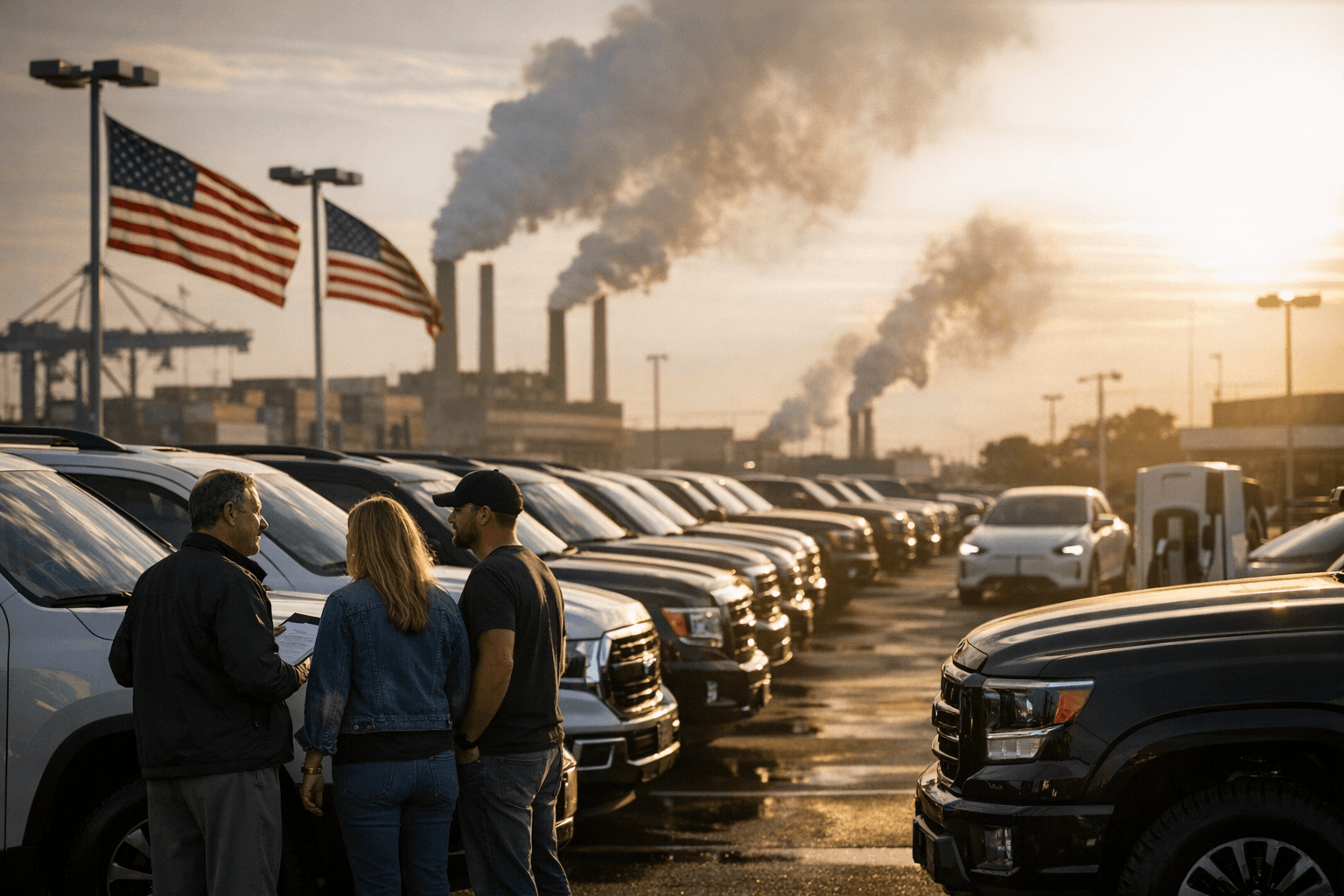
Sales growth was uneven across the market. Demand held strongest for gas-powered trucks and SUVs and for hybrid models, which helped offset deep turbulence in the EV segment after the tax-credit change altered the economics of many electric models. Industry sources said some shoppers accelerated purchases to lock in prices and incentives before regulatory shifts took effect, producing a pull-forward effect that temporarily bolstered dealer activity.
Automakers were expected to publish final, company-reported sales figures later Monday, with totals from Toyota Motor, General Motors and Hyundai Motor among those that could confirm or revise the analyst estimates. The preliminary picture, however, points to a market that expanded modestly in volume even as structural headwinds intensified.
Three central disruptors defined 2025. Ongoing supply-chain constraints delayed production and complicated inventory timing, leaving dealers with uneven model availability. Unpredictable tariffs injected an additional layer of cost uncertainty that affected pricing and sourcing decisions across the industry. And the removal of the $7,500 EV tax credit reshaped buyer incentives, sharpening volatility in the electric segment as consumers and fleet buyers reassessed total ownership costs.
Affordability remained a persistent barrier. Elevated monthly payments constrained access for price-sensitive buyers and narrowed the pool of potential new-vehicle customers. "Many price-sensitive shoppers have been pushed out of the new-vehicle market entirely as elevated monthly payments put ownership out of reach," said Jessica Caldwell, head of insights at Edmunds. That squeeze on demand contributed to a bifurcated market, with wealthier or fleet buyers continuing to upgrade while marginal buyers deferred purchases or turned to used vehicles.
The policy environment also moved to center stage in Washington. Executives from Detroit's major automakers were summoned to testify before the Senate Commerce Committee on Jan. 14, a sign that lawmakers are tightening scrutiny of affordability, domestic production and the broader competitive landscape as regulators weigh how to balance climate goals with consumer access.
Analysts are divided on whether the 2025 uptick can be sustained into 2026. Some see the year's growth as largely a timing phenomenon driven by pull-forward buying and inventory dynamics, which could lead to a softer 2026 as those effects unwind. Others point to resilient demand for light trucks and hybrids and the potential for stabilized supply chains to support further gains if policy uncertainty diminishes.
Final, model-level sales data from automakers will be needed to quantify precisely how much trucks, SUVs, hybrids and EVs each contributed to the roughly 16 million total. For now, the industry faces a delicate transition: modest volume growth amid intensifying calls for clearer policy and solutions to affordability that will shape long-term vehicle purchasing and the pace of electrification.
This article was produced by Prism’s automated news system from verified source data, official records, and press releases, then run through automated quality and moderation checks before publishing. The system is built and supervised by the people who set the standards it runs under. Read our full AI policy.
Did this article answer your question?

