U.S. says Iran blockade fully implemented, halting sea trade through Hormuz
U.S. forces said they stopped sea trade in and out of Iran by sea, but two vessels still crossed Hormuz as the blockade tested a fragile ceasefire.
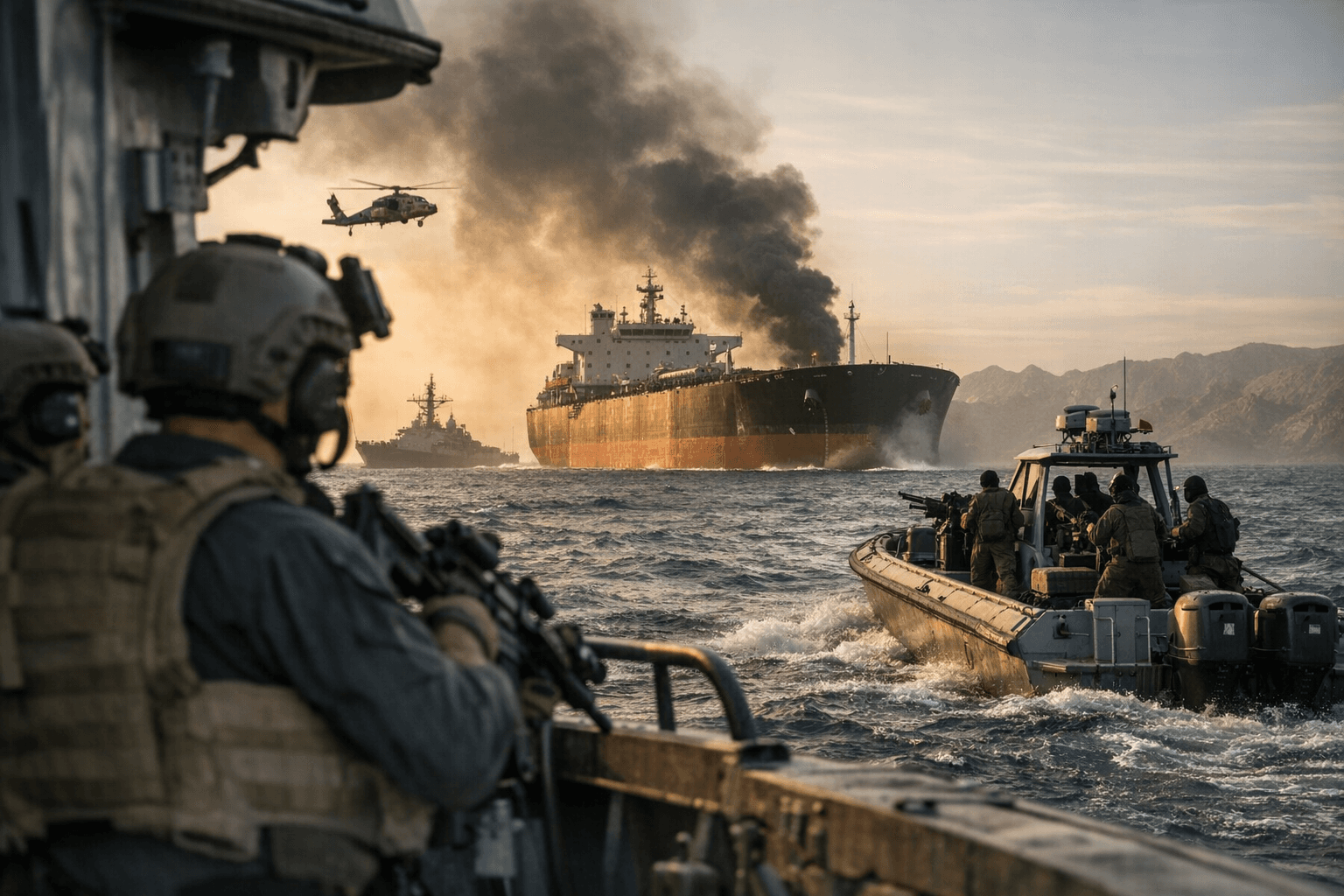
U.S. Central Command said the blockade of Iranian ports was “fully implemented” by late Tuesday, less than 36 hours after President Donald Trump ordered it and amid a two-week ceasefire that already looked brittle. The military said U.S. forces had “completely halted” economic trade going in and out of Iran by sea, a move meant to force Tehran to give up control of the Strait of Hormuz, the narrow route that carries most of Iran’s overseas trade.
The scale of the operation showed how quickly Washington was turning a maritime choke point into a pressure campaign. The U.S. military said more than 10,000 troops, over a dozen Navy ships and fighter jets in the Gulf of Oman and the Arabian Sea were involved. During the first 24 hours, U.S. forces said six merchant vessels were ordered to turn back toward an Iranian port on the Gulf of Oman. But maritime intelligence firm Windward later identified at least two vessels that still passed through the Strait of Hormuz in the first full day under enforcement, including the U.S.-sanctioned Chinese-owned tanker Rich Starry.
The economic stakes are severe. More than 90% of Iran’s $109.7 billion in annual seaborne trade moves through Hormuz, and Miad Maleki, a senior fellow at the Foundation for Defense of Democracies, said Iran has no meaningful alternative trade route. He estimated the blockade could cost Tehran about $435 million a day in combined economic damage. Because the strait carries oil, fertilizer and other vital commodities, any sustained interruption would pressure shipping schedules, fuel costs and the supply chains that feed regional economies far beyond Iran’s shores.
The blockade also widened the danger of direct confrontation. Trump announced “major combat operations” against Iran on Feb. 28 after massive joint U.S.-Israeli strikes on military and government sites, and the White House said Operation Epic Fury began on March 1 to eliminate Iran’s nuclear threat, degrade proxy forces and cripple naval forces. Trump had also signed an executive order on Feb. 6 reaffirming the national emergency with respect to Iran and setting up tariffs on countries that acquire Iranian goods or services, tightening the economic vise before the sea blockade began.
Diplomacy has not disappeared, but it is running beside military escalation rather than ahead of it. The White House has signaled a negotiated outcome, and Pakistan was trying to arrange another round of U.S.-Iran peace talks after earlier discussions failed in Pakistan. Iran, for its part, has threatened retaliation and said no Gulf ports would be safe if the blockade continued. With the war in its seventh week and the ceasefire still fragile, the question is no longer whether Hormuz matters, but how much closer Washington and Tehran are moving toward a clash at sea.
This article was produced by Prism’s automated news system from verified source data, official records, and press releases, then run through automated quality and moderation checks before publishing. The system is built and supervised by the people who set the standards it runs under. Read our full AI policy.
Did this article answer your question?


