U.S. strikes Iranian targets near Strait of Hormuz in self-defense
U.S. strikes near the Strait of Hormuz hit missile sites and Iranian mine-laying boats, sharpening fears of wider conflict as talks continued in Doha.

U.S. strikes near the Strait of Hormuz sharpened the risk of a wider conflict, putting one of the world’s most sensitive shipping lanes and the American military posture in the region under renewed strain. U.S. Central Command said the attacks in southern Iran were self-defense strikes aimed at missile launch sites and Iranian boats attempting to emplace mines, a move that highlighted how quickly deterrence could slide toward direct confrontation.
Navy Capt. Tim Hawkins, a spokesman for U.S. Central Command, said the military acted in self-defense to protect U.S. troops from threats posed by Iranian forces. A defense official said the strikes were reported in Bandar Abbas, a port city in southern Iran near the Strait of Hormuz, where disruption has already rattled maritime traffic and pushed global fuel prices higher. Iranian media reported explosions in Bandar Abbas and nearby coastal areas, adding to the sense of escalation around a waterway central to global energy shipments.
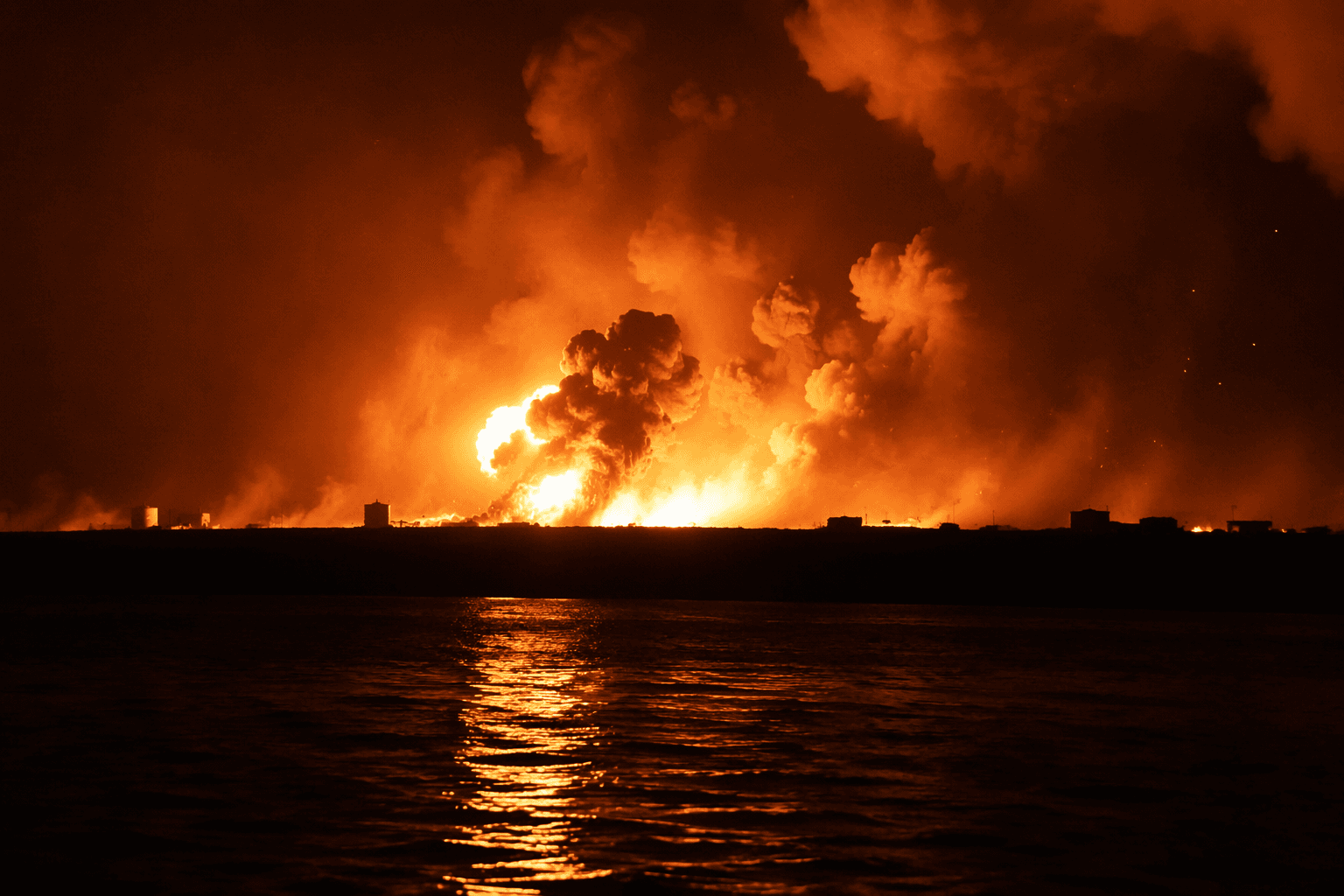
The action came with no announced change in the temporary ceasefire between the United States and Iran, which took effect April 8, 2026. U.S. officials said Central Command was continuing to defend its forces while using restraint during the ceasefire, even as the strikes underscored the narrow line now separating deterrence from a broader military exchange.
The timing of the strikes was especially delicate. They came as talks were underway in Doha, where Iran’s top negotiator and foreign minister met with Qatar’s prime minister on a possible deal with the United States. The war began with U.S. and Israeli strikes against Iran on February 28, 2026, and the new attacks raised the pressure on negotiations that had already been unsettled by shifting signals from President Donald Trump.
Trump said Monday that talks with Iran were going “nicely” but warned of more attacks if they failed. He also demanded a resolution to the issue of enriched uranium inside Iran, a central sticking point in the talks, saying the material should be turned over to the United States or destroyed in place under international oversight. Iran’s Mehr news agency said the situation in Bandar Abbas was under control and there was no cause for concern, even as the latest strikes left the ceasefire and the prospect of a wider conflict hanging in the balance.
Know something we missed? Have a correction or additional information?
Submit a Tip