US Tariffs Hit Decade Highs, but Economic Impact Remains Unclear
US tariffs reached their highest effective rate since 1943, yet GDP has kept growing and the labor market has shown only pockets of weakness a year on.
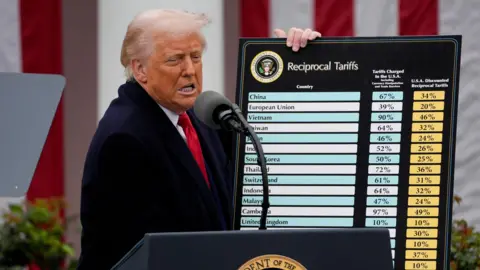
One year after the Trump administration's sweeping "Liberation Day" tariff announcement, the average effective tariff rate on US goods imports has climbed to levels unseen since the mid-20th century, yet the full economic reckoning that many economists predicted has proven stubbornly difficult to measure.
The Federal Reserve Bank of Richmond calculated that by October 2025 the average effective tariff rate had reached 11.4 percent, the highest mark since 1943. That figure reflects a dramatic departure from recent norms: in 2025, the United States raised average tariff duties from 2.4 percent to an 80-year high of 9.6 percent, according to economists Pablo Fajgelbaum of UCLA and Amit Khandelwal of Yale.
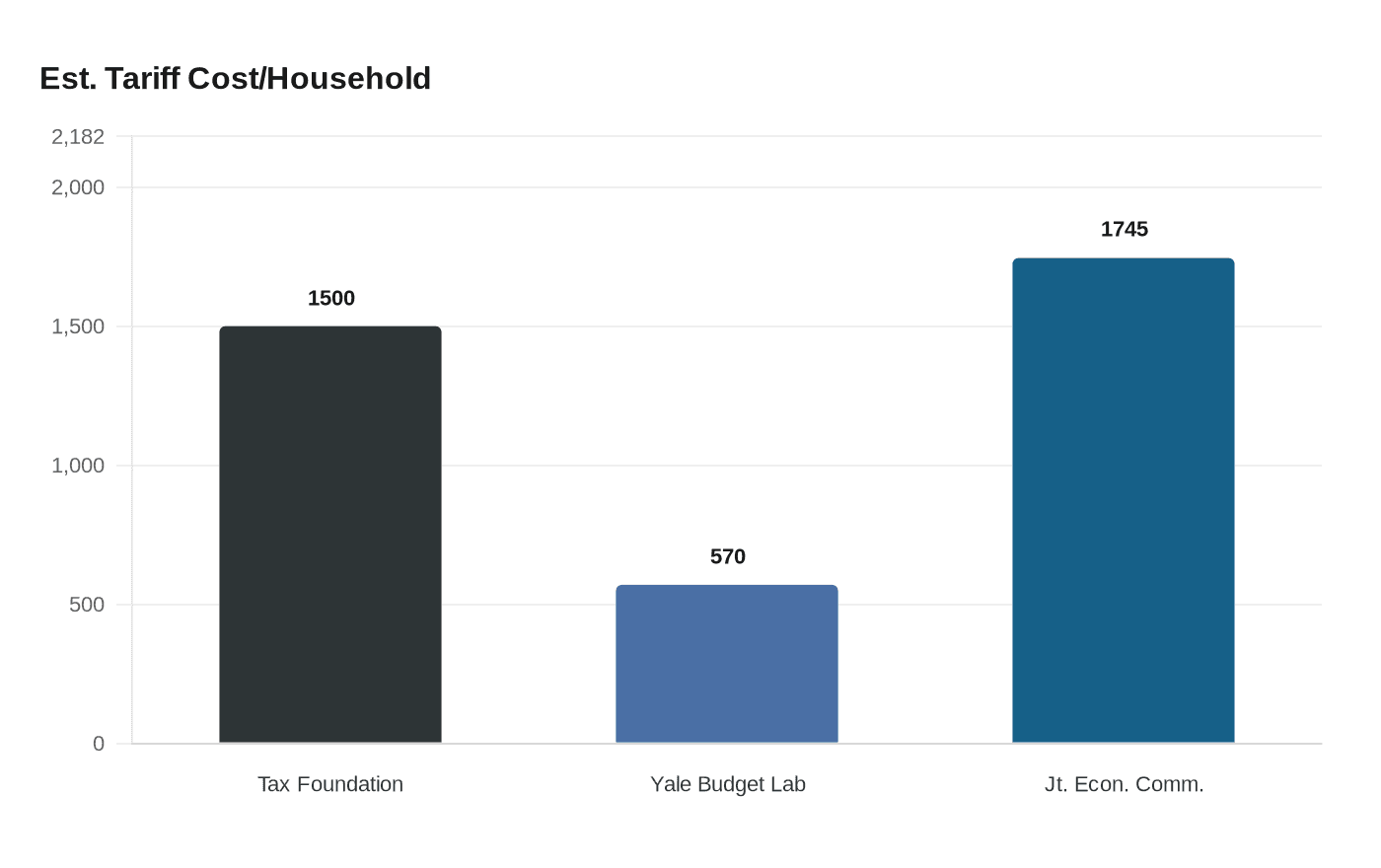
The fiscal consequences are significant on paper. The Trump tariffs represent the largest US tax increase as a percent of GDP since 1993 and amount to an average tax increase per US household of $1,500 in 2026, according to the Tax Foundation. Estimates of actual household costs vary considerably depending on methodology and which tariffs are counted. The Yale University Budget Lab, a nonpartisan policy research center, put the figure at roughly $570 per average household in 2026 as of a March 9 analysis. The Joint Economic Committee arrived at a higher number, finding that American consumers overall paid more than $231 billion in tariff costs between February 2025 and January 2026, an average of roughly $1,745 per family.

The divergence in those estimates reflects genuine uncertainty about how much of the tariff burden has been absorbed by importers, exporters, and supply chains rather than passed directly to consumers. Research from the San Francisco Fed suggests that the effects on core inflation are slow to burn, eventually showing up mostly through goods inflation, while services inflation remains largely insulated. Morningstar projects US inflation will average roughly 2.6 percent for 2025 before rising to 2.7 percent in 2026 as businesses pass on more tariff costs to consumers.
On growth, the picture is similarly mixed. The Budget Lab at Yale estimated that US real GDP growth was 0.5 percentage points lower in 2025 and 0.1 percentage points lower in 2026 as a result of the tariffs. The Congressional Budget Office projected that tariff changes would reduce the rate of real GDP growth by 0.06 percentage points per year on average from 2025 to 2035, leaving real GDP 0.6 percent lower than it otherwise would have been by 2035. Crucially, however, US GDP continued to grow despite widespread predictions of a recession, a result that economists have partially attributed to the administration walking back some of the highest initial tariff rates.
The labor market has told a similarly ambiguous story. There has been no definitive indication of a significant aggregate effect on employment so far, though industries most exposed to tariffs show some signs of weakness relative to the pre-2025 trend. The Budget Lab at Yale projects the current tariff regime will increase the unemployment rate by 0.3 percentage points by the end of 2026.
The legal landscape has also shifted the calculus. The US Supreme Court struck down IEEPA tariffs in February 2026, introducing fresh uncertainty about which measures will survive and for how long. China continues to face the highest tariff exposure among major trading partners, with effective rates reaching 33.4 percent in December 2025 according to the Penn Wharton Budget Model. Meanwhile, imports from Vietnam made up 6.3 percent of total US goods imports in the third quarter of 2025, with the country's average effective tariff rate continuing to rise sharply as trade flows redistribute around the new barriers.
What remains clearest is that the tariff regime has created a vast and ongoing economic experiment whose full results will take years, not months, to fully register.
This article was produced by Prism’s automated news system from verified source data, official records, and press releases, then run through automated quality and moderation checks before publishing. The system is built and supervised by the people who set the standards it runs under. Read our full AI policy.
Did this article answer your question?