U.S. welcomes first Venezuela talks on democratic transition roadmap
Washington backed a rare encounter between Jorge Rodriguez and Dinorah Figuera, but the talks sketched only a roadmap on elections, sanctions and civic space.
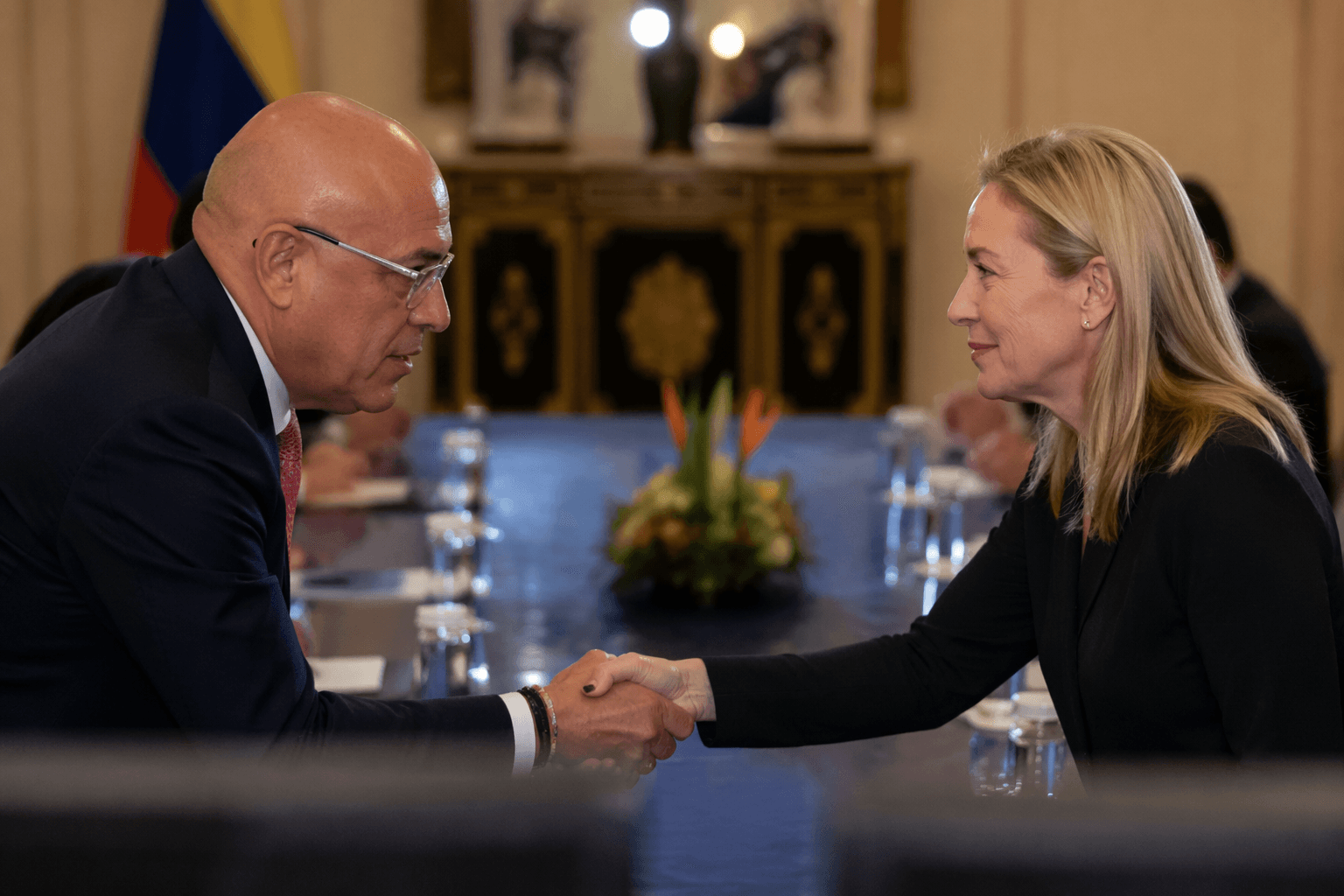
The first public contact between Venezuela’s ruling camp and opposition lawmakers in months gave Washington a small opening to press for a more credible political process, but it stopped far short of a deal. The U.S. State Department said it welcomed the June 18 meeting between Jorge Rodriguez, president of the 2026 National Assembly, and Dinorah Figuera, the former opposition lawmaker who represents the Venezuelan Interim Government.
Washington framed the encounter as the start of a roadmap for democratic transition, not a breakthrough. The agenda it outlined centered on rebuilding democratic institutions, strengthening the National Electoral Council, or CNE, restoring durable guarantees for political participation and protecting civic freedoms for open political debate. The department called the meeting “a first step” and said it expected continued conversations in Caracas in the coming weeks.

Figuera returned to Caracas on June 18 after eight years in exile in Spain, underscoring how tentative the opening remains. At the airport, she said she had come in response to an invitation from the State Department and pointed to the need for a credible CNE. She also said she planned to meet John Barrett, the U.S. chargé d’affaires in Venezuela.
The National Assembly later confirmed the meeting and said Figuera was acting as a representative of opposition lawmakers from the 2015-2020 term. Washington has repeatedly treated that 2015 legislature as the last internationally recognized democratically elected entity in Venezuela, a position reinforced in U.S. law under 22 U.S.C. 9702.
The substance of the talks matters because the CNE sits at the center of Venezuela’s contested election system. Marco Rubio said earlier in June that Venezuela needs a new electoral committee and free, fair multi-party elections, putting electoral reform at the top of Washington’s agenda. A prior U.S. embassy meeting with Figuera in April also focused on a stable, orderly and consolidated democratic transition.
The limited detail that emerged after the meeting suggests both promise and fragility. No detailed agreement was announced, and neither side immediately offered a public roadmap on sanctions relief, election rules or institutional guarantees. That restraint matters in a country where negotiations have repeatedly stalled, including the Mexico talks restarted in November 2022 and a 2023-2024 framework that failed to produce transparent conditions for the 2024 presidential election.
Washington’s willingness to highlight even this modest contact shows it sees value in keeping a channel open. The question now is whether the talks produce concrete steps on the CNE, political participation and civic freedoms, or remain another symbolic gesture in a long cycle of Venezuelan negotiations that have too often ended in stalemate.
This article was produced by Prism’s automated news system from verified source data, official records, and press releases, then run through automated quality and moderation checks before publishing. The system is built and supervised by the people who set the standards it runs under. Read our full AI policy.
Did this article answer your question?