USA Pickleball launches on-site paddle testing for amateurs
USA Pickleball launched a field-testing program to verify paddle specs at amateur events, starting at the 2026 Golden Ticket Tournament. Players can scan RFID tags to view test data and track paddle changes.
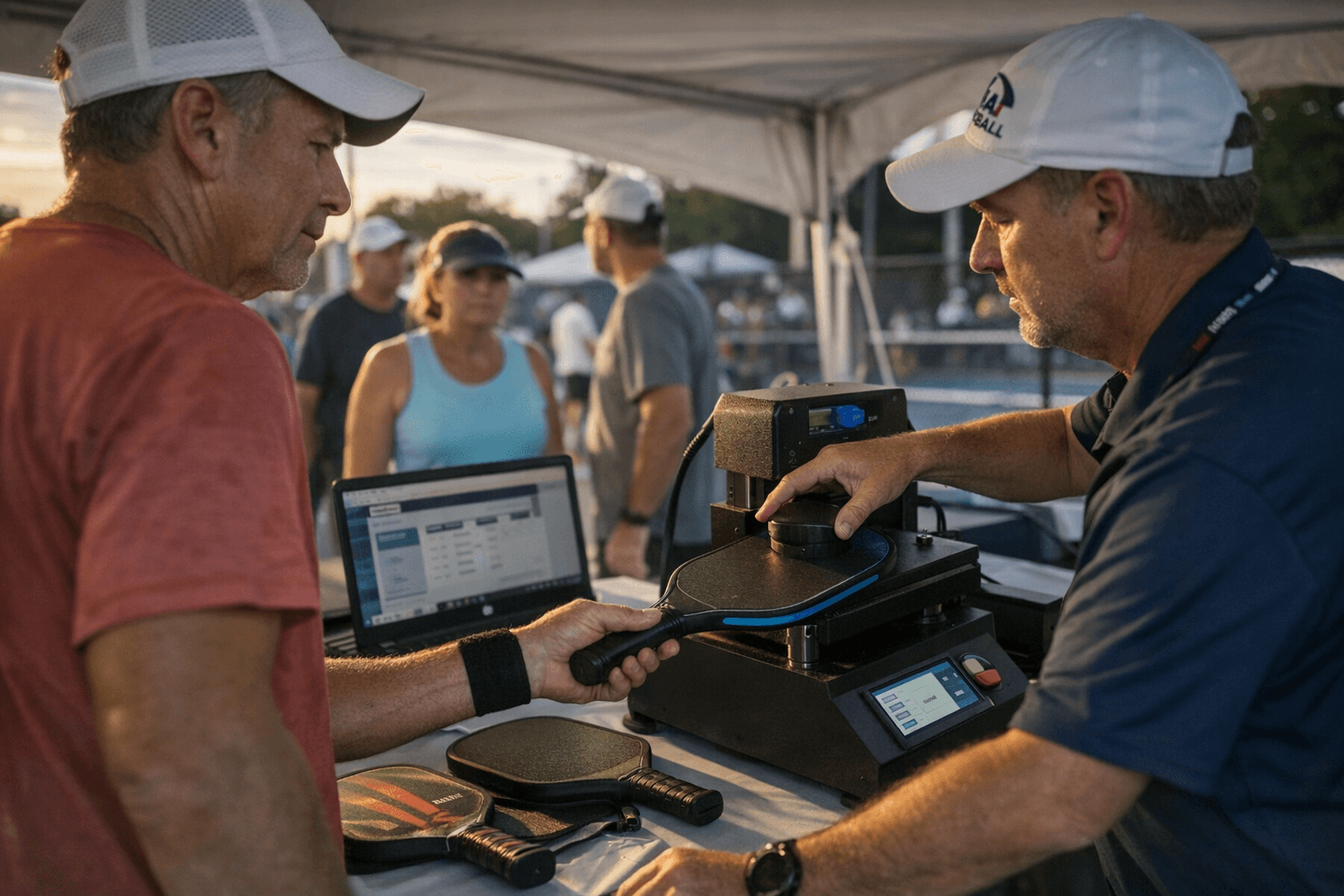
USA Pickleball on January 16 rolled out a field-testing program for paddle verification at the Golden Ticket Tournament in Glendale, AZ, marking the first time lab-style equipment checks will be performed on-site for amateur competition. Developed with Pickleball Instruments, the program aims to bring greater transparency and consistent enforcement to local and regional play while keeping tests fast and minimally disruptive.
The on-site protocol is designed to take under five minutes per paddle and begins with three core measurements: coefficient of friction, deflection, and weight and balance. Those initial metrics give tournament organizers and players a quick, repeatable snapshot of whether a paddle meets established parameters. USA Pickleball and Pickleball Instruments intend to add more metrics in later phases, including PBCoR and spin measurements, once those tests receive lab certification.
Every paddle tested receives a small RFID sticker linking that paddle to its measured data. Players can scan the RFID tag to view the latest results, and USA Pickleball is developing a mobile app targeted for public release before March 2026 to let players track a paddle’s readings and changes over time. The program includes built-in tolerances to account for normal wear, so a paddle won’t be flagged for trivial, expected shifts in performance.
Organizers expect the rollout to expand from the Golden Ticket event to additional sanctioned tournaments and clubs in the months ahead. As testing inventory grows, USA Pickleball plans to deploy kiosks at events and venues to widen access beyond staffed testing stations. Longer-term goals include counterfeit-detection features developed in cooperation with paddle manufacturers and distributors, aiming to curb illicit copies and aftermarket modifications.
For weekend warriors and club competitors, the immediate gains are practical: faster, consistent checks at events reduce uncertainty about equipment compliance and make it easier to resolve objections without delaying play. The RFID-and-app combination creates a personal record players can use to monitor wear, spot sudden changes after a mishit or accident, and document a paddle’s condition when entering tournaments that require verification.
Bringing verification tools usually reserved for elite competition onto community courts represents a net gain for fairness and clarity. Expect more checkpoints at sanctioned events, easier access to test results, and a push toward standardized equipment transparency across clubs — a development that makes it easier to focus on strategy, not gear disputes, when you walk onto the court.
Sources:
Know something we missed? Have a correction or additional information?
Submit a Tip