USMNT falls to Germany in final World Cup tune-up, 2-1
Kai Havertz struck inside two minutes at Soldier Field, and the U.S. was left with one last warning before Paraguay.

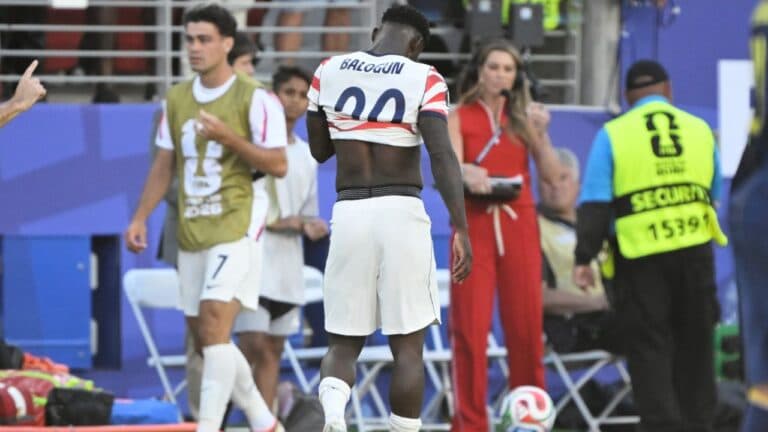
The USMNT got the kind of final test that can expose a team’s margins fast. Germany scored inside the opening two minutes through Kai Havertz, Antonee Robinson answered with a volleyed equalizer, and Germany restored the lead on the way to a 2-1 win that left Mauricio Pochettino’s side with hard evidence about its readiness.
The match was the Coca-Cola Send-Off Match at Soldier Field in Chicago, Illinois, with kickoff set for 2:30 p.m. ET, 1:30 p.m. CT on June 6, 2026. TNT, HBO Max, Telemundo, Universo and Peacock carried the game, and U.S. Soccer had billed it as the United States’ final World Cup tune-up before the 2026 tournament. That framing was not cosmetic. This was the last chance to measure the Americans against a side described as one of the favorites to win the World Cup later in 2026, in a stadium and a setting that carried the weight of a dress rehearsal for a home tournament the United States has not hosted since 1994.
What the game revealed first was fragility under immediate pressure. Joshua Kimmich delivered the free kick that set up Havertz’s early opener, and Germany’s quick strike forced the Americans to spend the rest of the afternoon chasing the game. Robinson’s response showed the U.S. can still produce a moment of quality against elite opposition, but the finish line was not enough to mask the difference in control. Germany regained the lead and held on, a reminder that one flash of individual skill does not always translate into sustained threat against a disciplined European opponent.

The broader lesson was less about one bad result than about the ceiling and the gaps. One report characterized the loss as the U.S. side’s fifth defeat in five matches against European opposition, a run that underscores how much the Americans still have to prove against the game’s top-tier defenses and midfields. Pochettino still had positives to take from the performance, and after the match he said he could finally feel the excitement he expected from the American fan base. That emotion mattered, but the structural questions mattered more: can the U.S. start cleaner, defend set pieces better, and recover faster when an opponent lands the first punch?
The answer has to come quickly. Paraguay waits in the World Cup opener on Friday, June 12, 2026, and Chicago showed that the U.S. has enough talent to compete, but not yet enough margin for error to survive elite pressure for 90 minutes.
This article was produced by Prism’s automated news system from verified source data, official records, and press releases, then run through automated quality and moderation checks before publishing. The system is built and supervised by the people who set the standards it runs under. Read our full AI policy.
Did this article answer your question?