USPS Files for 8% Surcharge on Package Services Starting April 26
The U.S. Postal Service filed for its first-ever fuel surcharge Wednesday — 8% on packages — as oil prices spike past $100 a barrel amid the ongoing war in Iran.
Postmaster General David Steiner warned Congress three weeks ago that the U.S. Postal Service "could run out of cash in less than a year." On Wednesday, the agency took its most dramatic pricing step in recent memory to try to slow that clock.
USPS told its regulatory agency that it plans to implement an 8% across-the-board increase in prices for its core package and shipping services on April 26, remaining in place until Jan. 17, 2027. The filing, submitted to the Postal Regulatory Commission, is pending the agency's approval before taking effect.
The time-limited rate change will increase prices 8% across the board on competitive products, including Priority Mail Express, Priority Mail, USPS Ground Advantage, and Parcel Select, effective April 26, 2026, through January 17, 2027. No other products or services, including first-class stamps, would be impacted.
For decades, USPS distinguished itself from private carriers by avoiding separate surcharges for fuel, instead incorporating transportation costs into base postage rates. The agency now says that model is no longer sustainable. "Transportation costs have been increasing, and our competitors have reacted with a number of surcharges," USPS said in its press release. "We have steadfastly avoided surcharges and this charge is less than one-third of what our competitors charge for fuel alone, so even with this change, the Postal Service continues to offer great value in shipping with some of the lowest rates in the industrialized world."
The fuel shock driving this decision has a clear geopolitical source. U.S. crude oil prices are up more than 30% since the war began, and gas is at nearly $4 per gallon. Following the closure of the Strait of Hormuz on March 4, oil and LNG exports were stranded, causing Brent crude to surge past $120 per barrel. The Strait of Hormuz, through which 20% of the world's oil supply typically passes, has remained at a near standstill since the war began. On Monday, just five ships passed through the strait. On Tuesday, the total was six. On many days since the war started, not a single ship has passed through.
Steiner saw this coming. In a March 4 Bloomberg interview, the Postmaster General laid out the agency's exposure in stark terms: "Every single day, we drive the equivalent of 13 trips to the moon and back. You have to be concerned about oil prices." He said at the time that USPS might need a fuel surcharge if diesel costs stayed elevated. They have.
Steiner told members of the House Oversight and Government Reform Committee last week that USPS is set to run out of cash in less than a year and that lawmakers need to act soon to keep the agency running. He has also hired restructuring firm Alvarez & Marsal for recommendations to improve the organization's finances. USPS has reported net losses of $118 billion since 2007 as first-class mail, its most profitable product, has fallen to its lowest volume since the late 1960s.
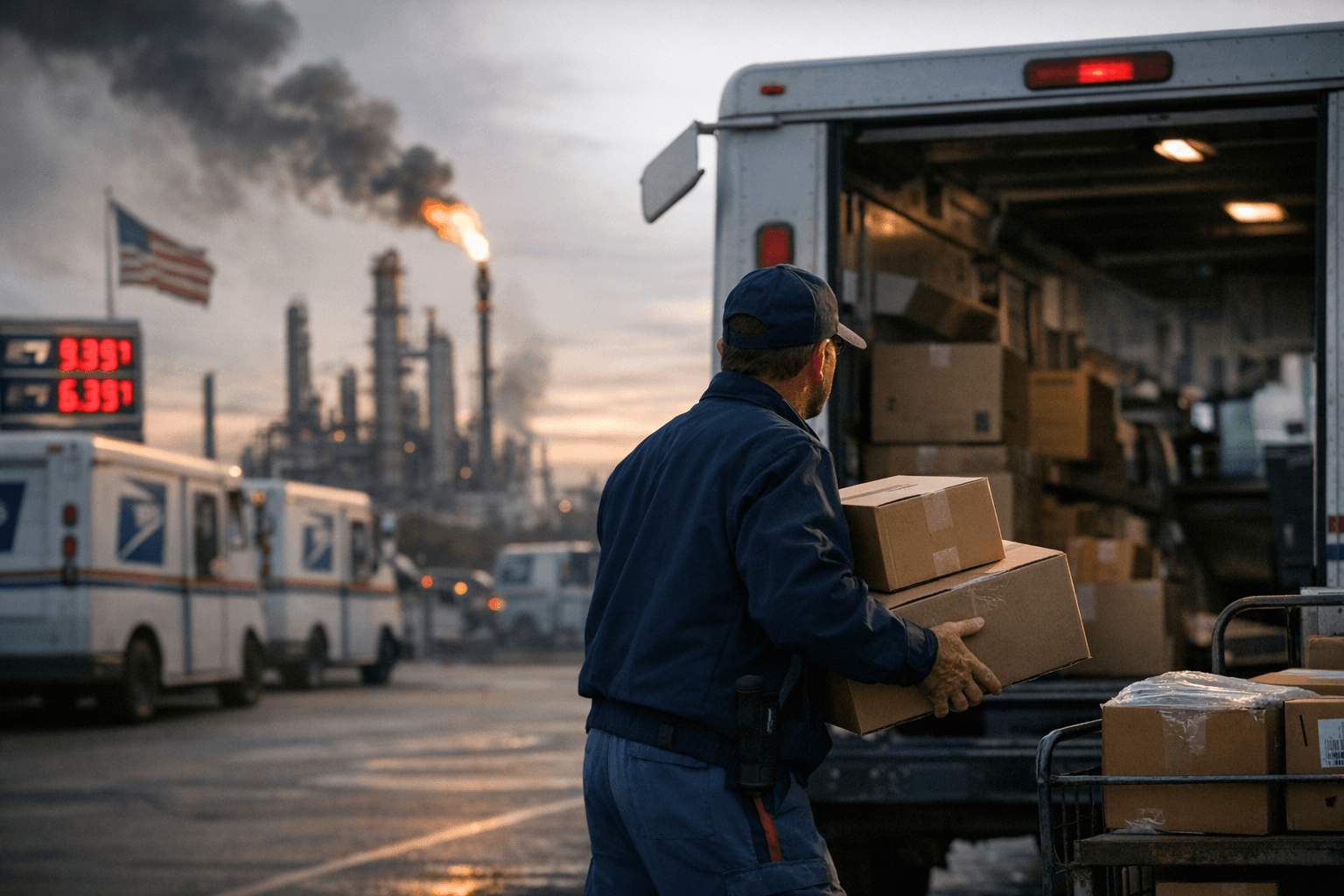
Under its 10-year Delivering for America Plan, USPS has tried to cut costs by shifting more of its mail volume from air to ground transportation. Former Postmaster General Louis DeJoy told Congress last year that these changes contributed to about $2 billion in annual savings. That progress has not been enough to absorb a fuel crisis of this scale.
Per the notice filed with the Postal Regulatory Commission, the decision to initiate this time-limited price change prior to the peak shipping season is intended to address changing market conditions concerning transportation costs, including the increasing price of fuel and contracted transportation, and to begin better aligning the Postal Service with standard industry practice.
USPS noted that its proposed surcharge is still far below what private carriers already charge. UPS and FedEx both routinely levy fuel surcharges, and the postal service's filing acknowledges that the new 8% charge represents less than one-third of what those competitors collect for fuel alone. USPS delivered about 6.8 billion packages in fiscal 2025, down from 7.3 billion packages the previous year — a volume that makes every cent-per-mile in diesel costs a material budget line.
The 8% fuel surcharge will hit online sellers particularly hard as consumers may balk at paying higher shipping rates. For those who sell on marketplaces like Etsy and eBay, it will be a double impact, as selling and advertising fees are charged on total sales costs including shipping, resulting in a de facto fee increase that will eat further into margins.
The Postal Regulatory Commission has not yet indicated when it will complete its review. If approved, the surcharge clock starts at midnight Central Time on April 26, and USPS has reserved the right to determine "if a different long-term approach is needed" once the January 17, 2027, end date arrives.
Know something we missed? Have a correction or additional information?
Submit a Tip