USPS suspends non-essential spending amid mounting cash crisis
USPS froze travel, supplies and consultant spending as leaders warned cash could run short by February, sharpening fears for mail reliability and rural delivery.

The U.S. Postal Service has suspended non-essential spending on travel, office supplies, consultants and other discretionary items as the agency tries to protect core operations and keep its nationwide network running through a deepening cash squeeze. The memo from Postmaster General David Steiner, dated Tuesday, went beyond a symbolic freeze and ordered limits on purchases of office supplies, equipment, software, training, system upgrades and bulk orders not needed in the near term.
The move lands against a long accounting trail of losses. USPS reported a $9.5 billion net loss for fiscal 2024, and said more than 80% of that shortfall came from factors outside management’s control. Its first quarter of fiscal 2026 brought another nearly $1.3 billion GAAP net loss, even as controllable income came in at $350 million. Mail volumes fell 6.3% in the quarter ended March 31, while operating revenue rose 2.3% to $20.2 billion.
USPS has been living on a tighter clock for months. Earlier in May, management warned the agency could run out of cash as soon as February. The Postal Service has already suspended employer pension contributions, a step it says could conserve $200 million every two weeks, or about $2.5 billion through Sept. 30. On April 9, it also filed a notice with the Postal Regulatory Commission to raise the price of a First-Class Mail Forever stamp from 78 cents to 82 cents, effective July 12.
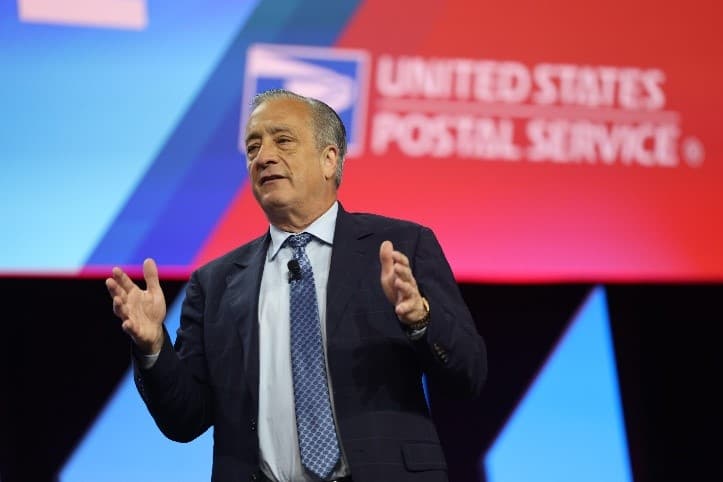
Those moves are meant to buy time while USPS looks for structural fixes from Congress and tries to steady service. The agency’s long-term blueprint, Delivering for America, was published March 23, 2021, and was designed to push the Postal Service toward financial sustainability and service excellence. On May 9, 2025, the Postal Service Board of Governors named Steiner the 76th postmaster general and chief executive, putting him in charge of a system still struggling with declining first-class mail, a costly universal delivery obligation and rising operating pressure.
The implications reach well beyond the balance sheet. If non-essential cuts deepen into a broader austerity campaign, the risk is not just slower procurement or delayed software upgrades. It could mean less room to absorb breakdowns in service, especially in rural communities that depend on USPS for daily delivery. It also raises stakes for election mail, prescription delivery and the ordinary documents that still move through the postal system when digital alternatives are not available.

USPS ended contract negotiations with the National Association of Letter Carriers by agreeing to continue talks through mandatory mediation after the current agreement expired on May 22, another sign that labor, finance and service quality are now colliding at once. The agency’s new spending freeze may preserve cash for the moment, but it also puts a sharper question before Washington: whether this is temporary triage or evidence that the Postal Service’s business model can no longer sustain the obligations it has been ordered to carry.
This article was produced by Prism’s automated news system from verified source data, official records, and press releases, then run through automated quality and moderation checks before publishing. The system is built and supervised by the people who set the standards it runs under. Read our full AI policy.
Did this article answer your question?

