UW in Laramie to Host NSF-Funded Great Plains I-Corps Cohort
UW will host an NSF Great Plains I‑Corps cohort to help Laramie innovators test commercial potential of technologies and pursue federal grant opportunities.
The University of Wyoming will host a National Science Foundation Great Plains I‑Corps Hub training cohort, beginning with an orientation session Wednesday, March 4, 1:00–2:30 p.m. Mountain time, aimed at helping Laramie and Albany County innovators move ideas from lab to market. For those who have a technology idea they want to commercialize, a prime opportunity awaits.
UW describes the cohort as an 11-week experiential program with five training sessions on Wednesdays through May 6 that uses a blended approach to assess the market potential of technology ideas. The program is aimed at faculty, staff, students, researchers, community entrepreneurs or anyone with a technology they’d like to explore commercializing. Teams will focus on customer discovery interviews, a hands-on method for validating demand and shaping value propositions outside the laboratory.
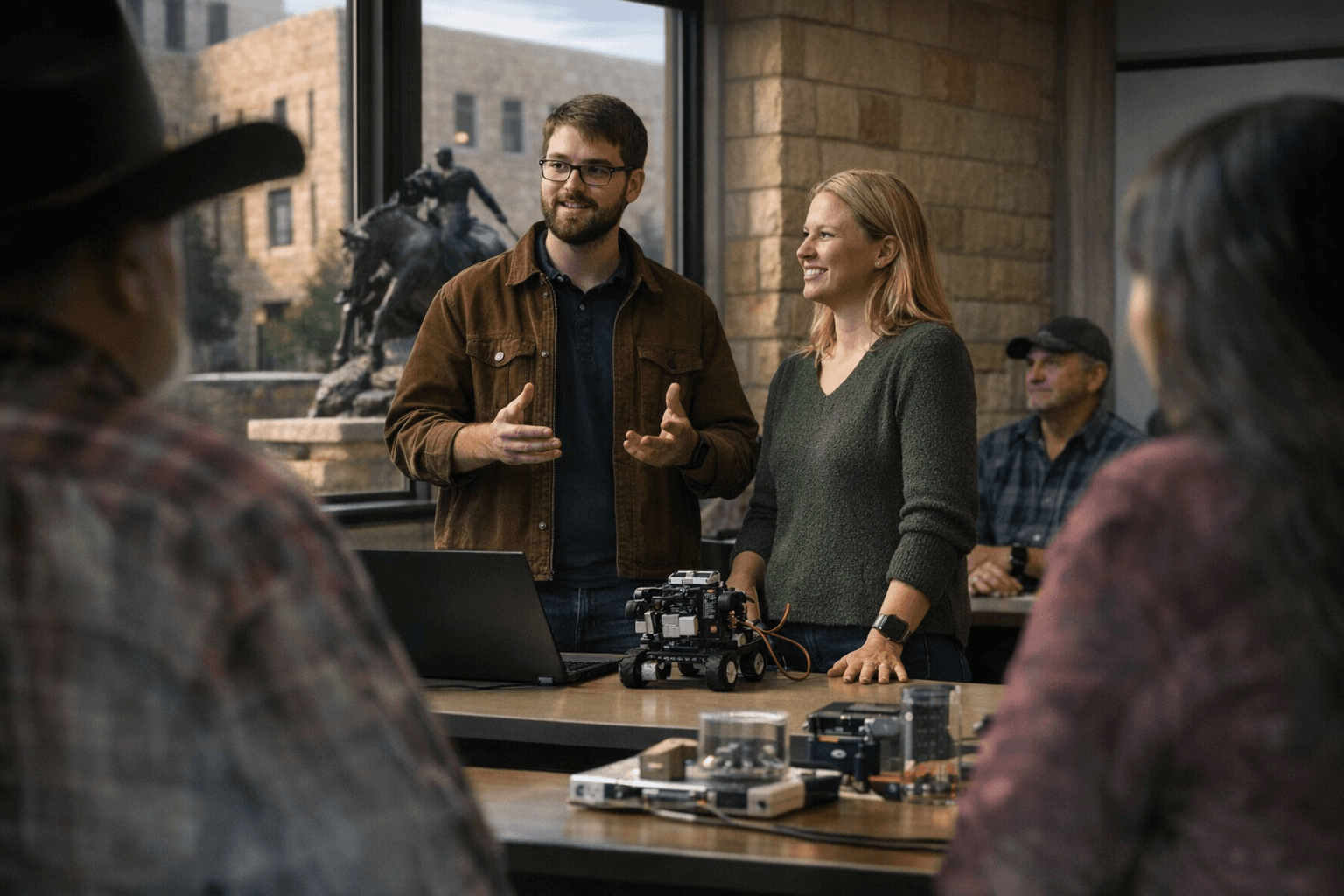
Practical support is explicit in UW’s announcement: travel support is available for participants to complete customer discovery interviews, and upon completing the cohort, a $1,000 stipend is provided to entrepreneurial leads. The university also highlights follow-on training and support that can strengthen teams’ chances of securing Small Business Innovation Research and Small Business Technology Transfer grants and other grant funding. Those federal programs are a key route to non-dilutive R&D capital for startups, and local access to I‑Corps training can make Albany County proposals more competitive.
Applications for the UW cohort are open until Sunday, Feb. 15. To fill out an application, go to Spring 2026 UW I‑Corps cohort. For questions, email Ram Veerakumar at rveeraku@uwyo.edu or Erica Belmont at ebelmont@uwyo.edu. The program materials identify UW as a Carnegie R1 research university and list the Bureau of Mines Building within Institutional Communications metadata.
The Great Plains cohort in Laramie sits inside a larger NSF network of regional hubs. Other hubs such as the Great Lakes and Mid‑Atlantic run similar training sequences with different schedules and deadlines; the variety across hubs underscores NSF’s strategy of seeding regional innovation ecosystems rather than offering a one-size-fits-all calendar. Local teams should note that schedules, modalities, and deadlines vary by hub, and UW’s description uses the phrase blended approach without listing which sessions will be virtual or in person.
For Albany County the economic implications are straightforward. Better market testing and customer discovery increase the probability that university research spawns viable firms, bringing outside grant dollars and follow-on investment to the region. Strengthened SBIR/STTR applications can channel federal research funding to local small businesses, a long-term pathway to job creation and sector diversification beyond the state’s traditional energy and agriculture base.
What comes next for interested innovators: submit an application by Feb. 15, plan to attend the March 4 orientation, and prepare to conduct customer interviews with available travel support. The cohort runs through May 6 and could be a launching pad for teams aiming to convert research into competitive grant proposals and startups that help diversify Albany County’s economic base.
Know something we missed? Have a correction or additional information?
Submit a Tip