VA Adaptive Winter Clinic Brings Mobility, Camaraderie to Nearly 50 Veterans
Nearly 50 veterans from New England and beyond attended the VA New England Adaptive Winter Sports Clinic in the Upper Valley, gaining mobility, renewed independence, and social connection.

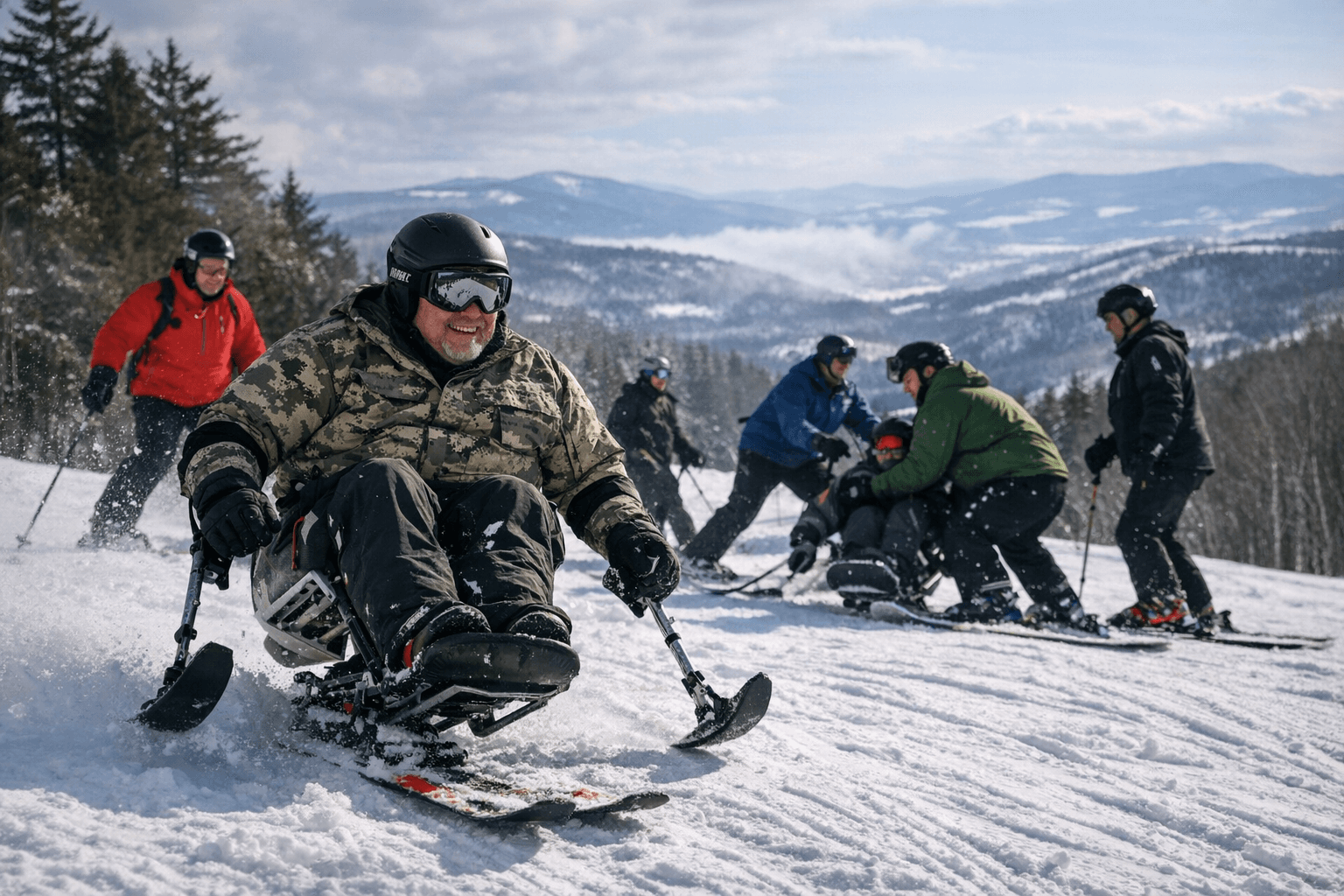
The 28th annual VA New England Adaptive Winter Sports Clinic brought nearly 50 veterans with disabilities to the Upper Valley the week of Jan. 12–15, 2026, for four days of adaptive sport, rehabilitation, and peer support. Hosted by VA Boston and the White River Junction VA health care systems, the clinic used local facilities and more than 120 volunteers to stage sled hockey, adaptive skiing and snowboarding, ski-bike runs, and indoor rock climbing for participants from across New England and beyond.
Organizers prioritized veterans cared for within the VA VISN 1 region while accommodating out-of-region participants when space allowed. Activities included sled hockey at the James W. Campion III Rink in West Lebanon, adaptive skiing and ski-bike runs at Mount Sunapee, and indoor climbing sessions in Lebanon. Shared lodging in Lebanon helped concentrate services and reduce travel burdens for veterans who rely on adaptive transport or mobility aids.
Public health and rehabilitation specialists at the clinic emphasized therapeutic and social benefits. Adaptive equipment and coaching allow participants with a wide range of injuries and diagnoses to compete and move together, reducing isolation and supporting physical recovery. Clinic staff and volunteers described outcomes that included improved mobility, renewed independence, stronger social bonds, and mental-health benefits associated with recreation, skill mastery, and peer camaraderie.
The clinic’s operating model underscores strong coordination between the VA and a broad network of community partners. The involvement of more than 120 volunteers reflects the clinic’s multi location structure and the intentional use of community resources to support recreational therapy and adaptive sports. Organizations hosting activities contribute their time and facilities as part of a mission to help veterans reconnect with their communities and build independence. Rather than signaling fragility, the scale of volunteer participation highlights the depth of local commitment, effective coordination, and the program’s capacity to deliver a robust, community integrated experience. For Sullivan County and the Upper Valley, the event functions as both a health intervention and a community effort, connecting veterans with adaptive care teams, raising public awareness of disability needs, and mobilizing partners in support of veteran wellbeing.
Beyond immediate health gains, the clinic advances equity by leveling the playing field so veterans with mobility impairments can access sport and recreation on equal terms. Adaptive sports have documented value for physical conditioning, pain management, and mental health; bringing those opportunities into the community increases the reach of rehabilitation beyond clinic walls. Local volunteerism and shared lodging also reduce socioeconomic barriers, making the experience accessible to veterans who might otherwise be shut out by transportation, equipment, or cost hurdles.
For Sullivan County readers, the clinic is a reminder that local assets - rinks, slopes, climbing facilities, and a network of volunteers - can be marshaled to serve veterans’ health and social needs. Continued support from public funding, health systems, and community partners will determine whether this annual lifeline expands or remains limited by budget and capacity.
Sources:
Know something we missed? Have a correction or additional information?
Submit a Tip