Val Verde Winery Endures, Anchors Del Rio Wine Tourism Economy
Val Verde Winery in Del Rio continues to operate under the Qualia family, maintaining one of Texas's oldest continuous winemaking traditions that dates back to the 1880s. Its modest production, historic property, and tasting offerings provide a steady local draw that supports agriculture and tourism even as water stress and broader industry shifts create long term challenges.
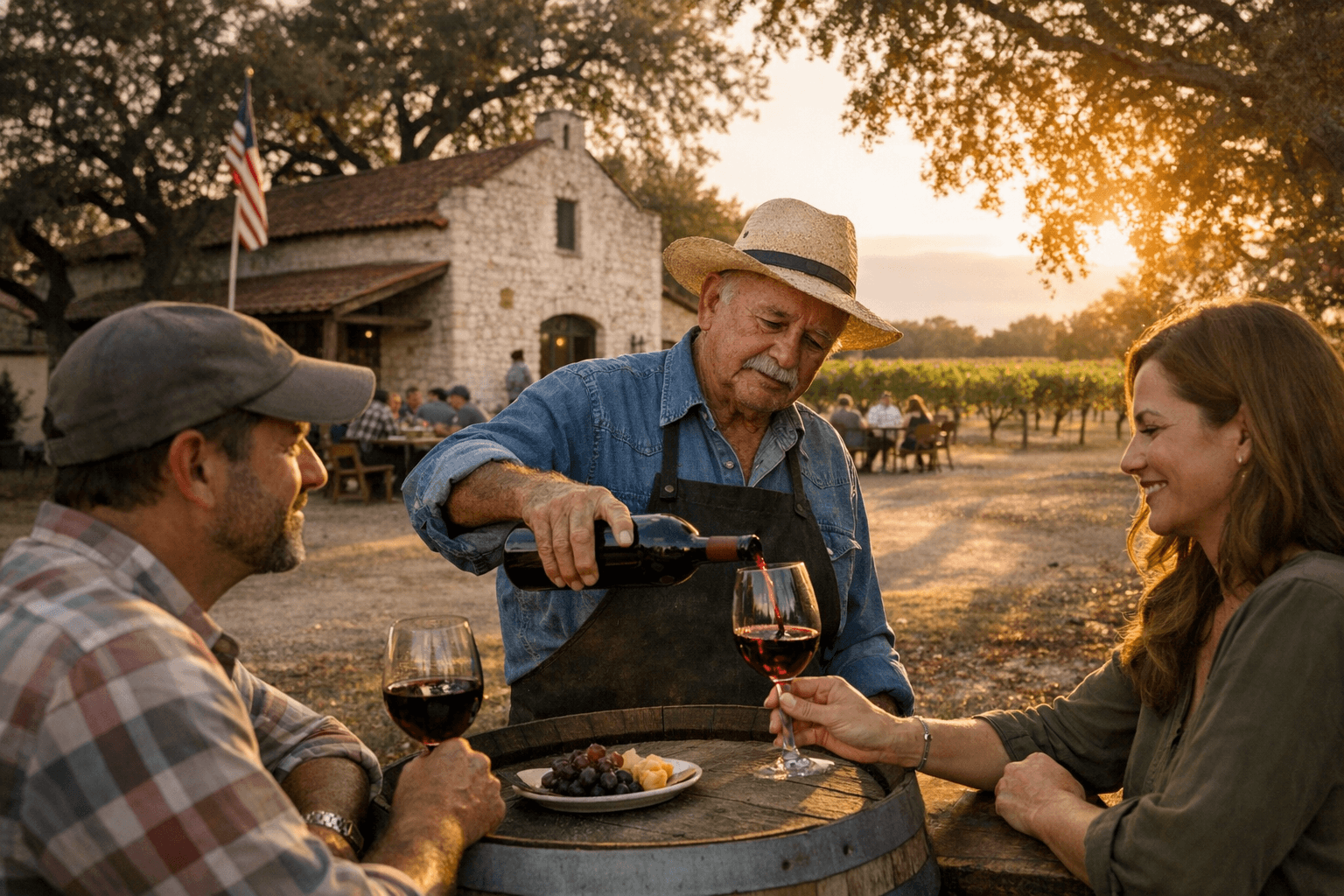
Val Verde Winery remains a living link to Del Rio's agricultural and immigrant history. Founded by Italian immigrant Francisco Qualia in the 1880s, the family operated estate produces a modest number of cases each year from grapes grown on site and fruit sourced from other Texas vineyards. The operation is best known locally for a tawny style port and a range of red, white and rosé wines, and it retains historic equipment alongside an adobe style production and tasting building that attracts visitors.
The winery sits on a scenic parcel lined with palms and pecan trees near Del Rio, making it a regular stop for tourists visiting Lake Amistad and nearby historic sites. Visitors can take tastings and informal tours, with tasting room hours that vary by season. Practical information including the address and phone number is listed on the winery website at valverdewinery.com.
Grapes grown and used at Val Verde include Black Spanish also known as Lenoir, Herbemont and Blanc du Bois. Those varieties were selected for their resistance to regional vine diseases and their suitability to Val Verde County climate conditions. That choice reflects a long running emphasis on resilience. Generations of the Qualia family have maintained viticulture and small scale winemaking despite regional droughts, interruptions during the Prohibition era, and shifting trends across the Texas wine market.
Economically the winery operates at a small scale, which limits its direct output but increases its relative value as a cultural and tourism asset. As a local employer and purchaser of agricultural inputs, Val Verde helps anchor a niche food and beverage supply chain tied to regional visitors. Continued visitation from Lake Amistad and heritage tourism can bolster local retail and hospitality revenue, even as statewide competition and changing consumer preferences place pressure on small producers.
Policy factors to watch include water management, agricultural support for small family farms, and programs that promote rural tourism. Investments that reduce drought vulnerability and expand marketing support for regional trail networks could enhance the winery's economic contribution. For now Val Verde Winery stands as a durable example of small family agriculture adapting to local conditions while continuing to draw visitors to Del Rio.
Sources:
Know something we missed? Have a correction or additional information?
Submit a Tip