Vendor concentration drove 2025 breach cascade - Black Kite warns of 'silent window'
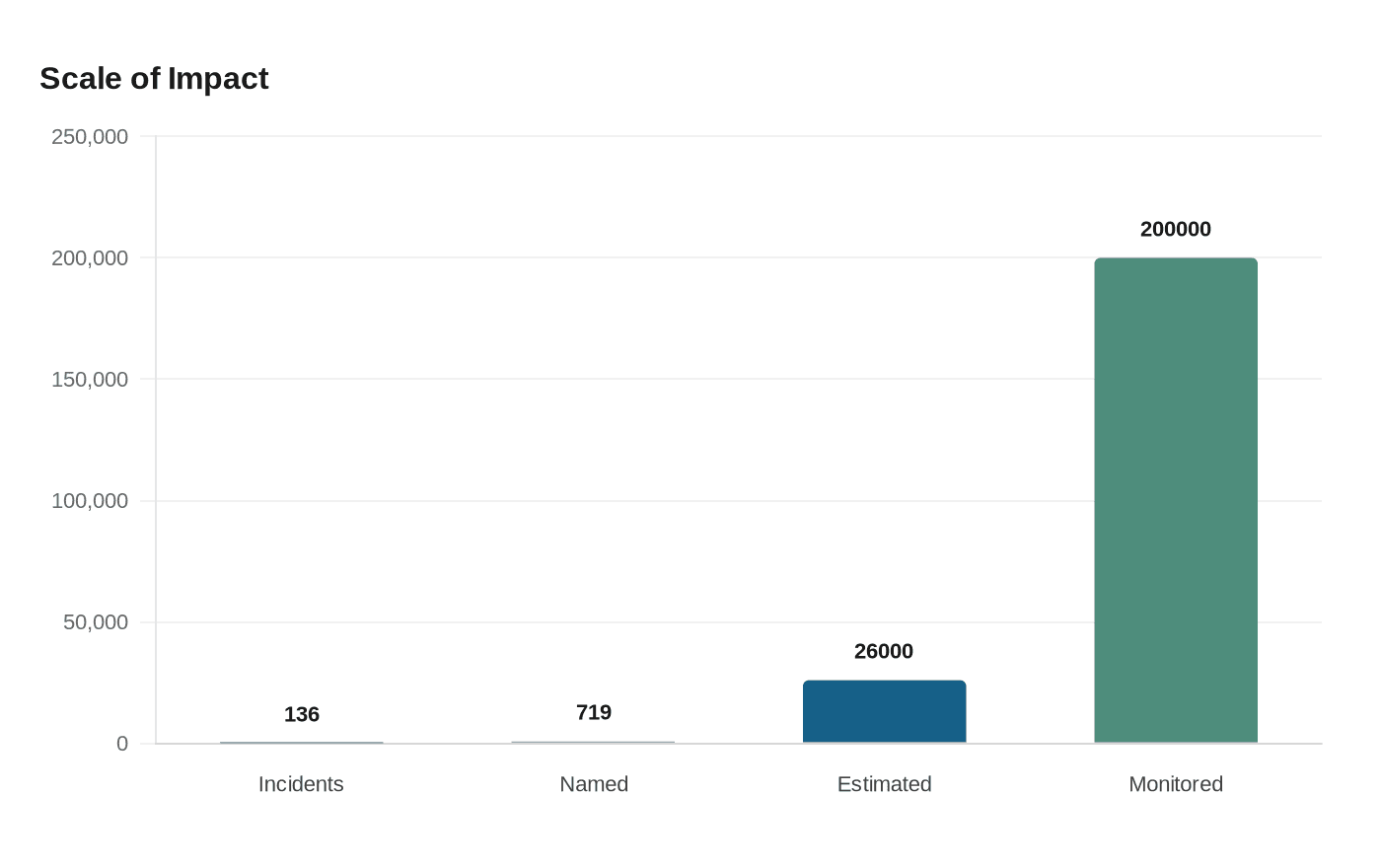
Black Kite found 136 major third-party incidents in 2025 hitting 719 named firms and an estimated 26,000 more, warning that vendor concentration let impact spread before disclosure.

Black Kite’s seventh annual Third-Party Breach Report found that 136 unique major incidents in 2025 cascaded across corporate supply chains, directly affecting 719 named companies and, the firm estimates, another roughly 26,000 downstream organizations that were not officially named. In a stark summary of the year’s dynamics, Black Kite said, "Third-party breaches scaled because impact cascaded faster than disclosure, baseline control gaps stayed repeatable, and the most relied-upon vendors remained structurally exposed."
The report, distributed March 3 by PR Newswire, analyzes third-party data breaches disclosed between January 1, 2025 and December 31, 2025. Black Kite combined "verified public breach disclosures with the company's external cyber risk telemetry and supply chain intelligence" and evaluated the cyber posture of approximately 200,000 monitored companies on its platform. The firm also examined concentration risk among the top 50 most relied-upon third parties within the Forbes Global 2000 ecosystem.
Those figures illustrate two converging trends that magnified systemic cyber risk last year. First, attacks increasingly targeted shared platforms, centralized services and high-dependency vendors so that an upstream compromise translated into multi-company impact. Second, disclosure lag created what security analysts describe as a "silent window" when attackers and their access chains spread through ecosystems before victims appeared in public reports. Black Kite’s own language captures the problem: impact moved faster than disclosure.
Black Kite’s findings accentuate familiar weaknesses. The report asserts that "baseline control gaps stayed repeatable," signaling recurring, common misconfigurations or governance failures among vendors and their customers. That persistence helps explain why concentrated vendors remain "structurally exposed" despite repeated incidents. On its blog, Black Kite and coauthor Jeffrey Wheatman define concentration risk succinctly: "In its most basic form, concentration risk is the concentration of value or assets in a single entity." The blog asks a pointed question for corporate risk managers: "have we concentrated a particular critical service to a single vendor, creating a single point of failure?" It also recommends remediation steps, notably that "A big first action here is to work with an automated third-party risk monitoring program, like Black Kite, that can manage and organize your full vendor ecosystem in a short period of time, with room to scale and grow."
Market and policy implications are immediate. For corporate buyers, the report will intensify procurement scrutiny and drive demand for vendor diversification, stronger contractual security requirements, and continuous external monitoring. For insurers, a rise in concentrated, cascading losses may prompt higher cyber premiums and narrower cover terms for clients dependent on a few critical suppliers. For regulators and securities lawyers, the disclosure lag flagged by Black Kite raises questions about the timing and completeness of incident reporting and whether current disclosure regimes capture systemic supply-chain propagation quickly enough to protect investors and counterparties.
Black Kite’s press distribution reiterates that its dataset is limited to verified, publicly disclosed incidents and reflects what can be substantiated from primary disclosures. The firm has not published a full incident list or public methodology for its estimate of roughly 26,000 additional impacted companies in the PR text. The report’s full data tables and case studies will be important for risk managers and policymakers seeking to quantify vendor concentration exposure and to shrink the silent window between compromise and public awareness. PR Newswire distributed the report. Contact information listed with the release is 888-776-0942.
Know something we missed? Have a correction or additional information?
Submit a Tip