Venice Biennale 2026 to open as Koyo Kouoh’s final curatorial vision
Koyo Kouoh’s last biennial opened amid protests, 110 invited participants and a wave of first-time national entries, turning Venice into a test of the biennial form.
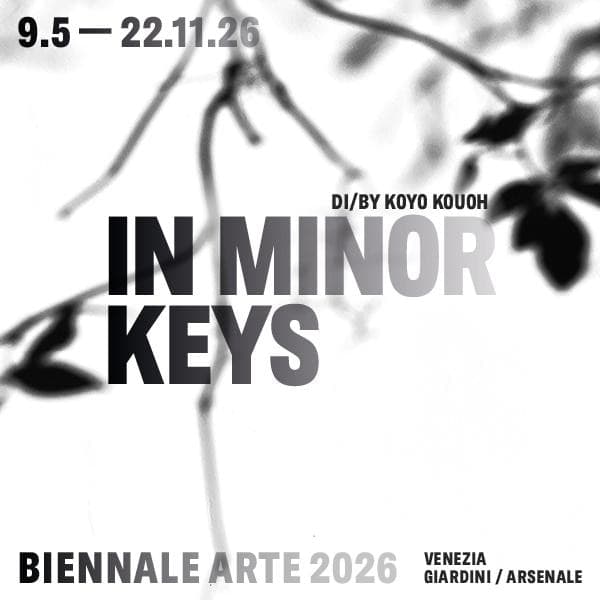
Venice opened the 61st International Art Exhibition as Koyo Kouoh’s final curatorial vision, a show conceived under the title In Minor Keys and shaped by a project she had already been developing before her death at 57. Appointed in December 2024, Kouoh died of cancer in May 2025, and La Biennale kept the exhibition moving forward as her own rather than recasting it as a successor’s edition.
The scale underscored the stakes. La Biennale said the 2026 edition included 110 invited participants, 100 National Participations and 31 Collateral Events, spread across the Giardini, the Arsenale and Forte Marghera, with pre-opening days on May 6, 7 and 8 and the run continuing through November 22. The Giardini has hosted national pavilions since 1907, while the Arsenale, a former shipbuilding complex dating to the 14th century, remained one of the clearest reminders that Venice still stages art inside institutions built for empire, trade and spectacle.

The national section made the geopolitical mood hard to miss. Seven countries took part for the first time in the Biennale Arte 2026, including Guinea, Equatorial Guinea, Nauru, Qatar, Sierra Leone, Somalia and Viet Nam. El Salvador also appeared for the first time with its own pavilion. In a year already marked by debate over patronage, cultural visibility and institutional power, those debuts pushed the biennial beyond familiar art-capital circuits and toward a broader map of who gets to claim space in Venice.
The opening itself suggested that the exhibition would not separate art from political weather. La Biennale reported about 10,000 visitors on opening day, roughly 10 percent more than in 2024, even as ArtReview reported protests during opening week. The Biennale’s title, with its invocation of “minor keys,” points to slower listening and to small islands within larger political and ecological systems, a framing that fit a show being read as both a memorial to Kouoh and a measure of what the art world wants to foreground now: institutions, identity, war, patronage and fatigue with easy consensus.
That larger reading was already taking shape in the criticism around it. Frieze said the strongest moments lived in the institutions Kouoh built, while ArtReview called the edition quintessential biennial art. With the Visitors’ Lions awards scheduled for November 22, Venice was already less a single exhibition than a referendum on whether the biennial can still justify its scale, its politics and its authority.
This article was produced by Prism’s automated news system from verified source data, official records, and press releases, then run through automated quality and moderation checks before publishing. The system is built and supervised by the people who set the standards it runs under. Read our full AI policy.
Did this article answer your question?