Venice Biennale Opens Under Kouoh’s Vision, Russia Returns Amid Tensions
Koyo Kouoh’s posthumous Biennale opens as Russia returns, the EU slashes funding and the jury quits, turning Venice into a test of art-world neutrality.

The Venice Biennale will open its preview days with grief and geopolitical tension hanging over the Giardini. Koyo Kouoh’s posthumous curatorial vision, the return of Russia to the national lineup, and a funding fight with Brussels have turned the 61st edition into a struggle over who gets to define international culture at a moment of war and institutional distrust.
La Biennale di Venezia has said the 2026 exhibition will go forward under Kouoh’s title, In Minor Keys, with the support of her family. Kouoh, appointed in December 2024, died unexpectedly in May 2025 at 57, before she could present the project she had been developing for the world’s most watched contemporary art stage. The organization described her passing as “sudden and untimely” and said she had been working with “passion, intellectual rigor and vision.” Her death made the 2026 edition her final, posthumous project and marked a historic loss, since she was the first African woman chosen to curate the Biennale.
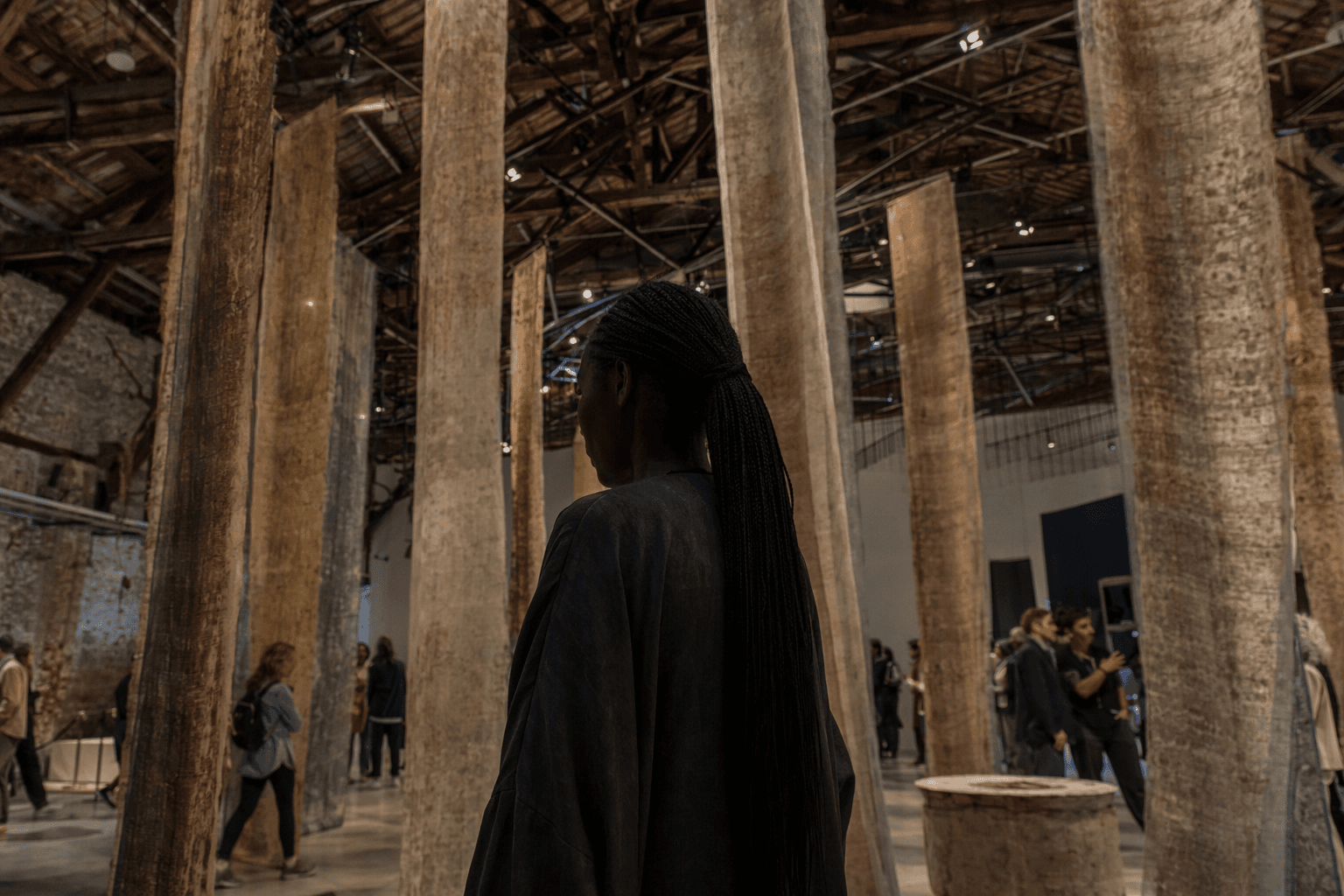
The exhibition is scheduled to run from May 9 through November 22, 2026, with preview days from May 6 to May 8. La Biennale says 99 nations will present national pavilions, including 29 in the Giardini, alongside 110 invited participants in the central exhibition. That scale has long made Venice the closest thing the art world has to an Olympics, but this year’s contest is being shaped as much by diplomatic rupture as by artistic ambition.
Russia’s return is the sharpest flashpoint. The country last took part in the International Art Exhibition in 2019, then withdrew in 2022 after its artists stepped away following the invasion of Ukraine. In 2024, Russia did not mount an exhibition in its permanent pavilion and instead lent the Giardini building to Bolivia, which made its first formal pavilion appearance. For 2026, Russia is back in the national-participation list, though reports say its pavilion will open only during the preview days before closing to the public for the rest of the exhibition. The Biennale has said it cannot bar countries recognized by Italy from applying, and it owns the Russian pavilion, built in 1914.
The backlash has extended far beyond Venice. On April 23, 2026, the European Commission cut a 2-million-euro grant to the Biennale over Russia’s participation, and EU foreign policy chief Kaja Kallas said the bloc should not support an institution that allows Russia to exhibit while Moscow is bombing museums and destroying Ukrainian culture. Ukraine’s foreign minister, Andrii Sybiha, also condemned the decision.
Pressure inside the institution intensified on April 30, when the entire international jury resigned. The panel, composed of Solange Farkas, Zoe Butt, Elvira Dyangani Ose, Marta Kuzma and Giovanna Zapperi, said it would not consider artists from countries whose leaders are charged by the International Criminal Court. The Biennale then moved the awards ceremony from May 9 to November 22 and said prizes would be distributed under a revised procedure, underscoring how thoroughly this edition has been overtaken by politics.
This article was produced by Prism’s automated news system from verified source data, official records, and press releases, then run through automated quality and moderation checks before publishing. The system is built and supervised by the people who set the standards it runs under. Read our full AI policy.
Did this article answer your question?