Vicky Lopez rises as Barcelona and Lyon renew Champions League rivalry
Barcelona and Lyon meet again, but Vicky López is the real marker of how women’s football is scaling talent, pressure and global value.
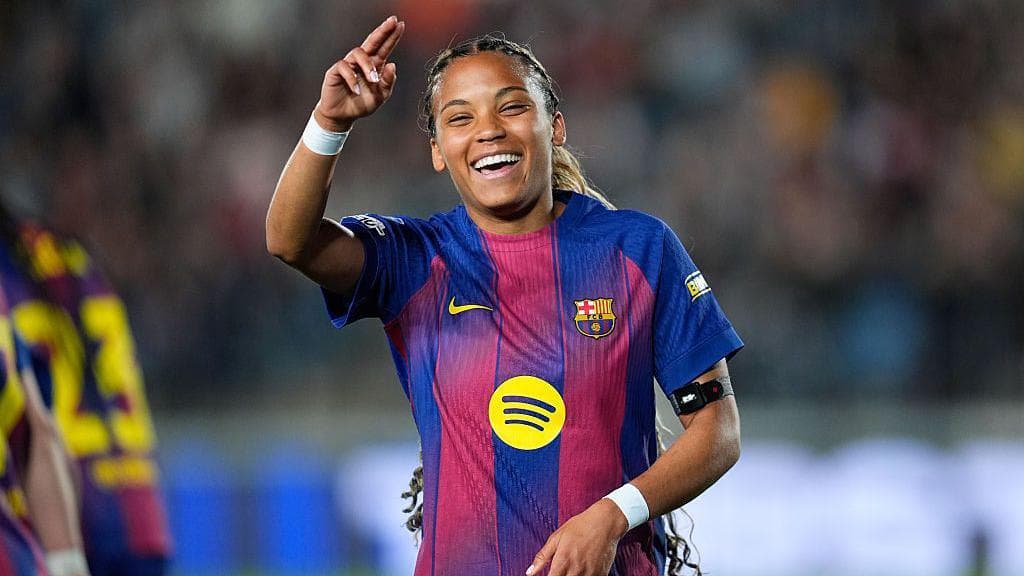
Vicky López enters the Women’s Champions League final as more than Barcelona’s latest midfield talent. At 19, she has already become the club’s youngest Champions League player, won a global youth award with Spain, and turned her rise into a live test of how women’s football now develops, brands and protects teenage stars.
Oslo frames a rivalry that keeps resetting the standard
Barcelona and OL Lyonnes meet in Oslo on Saturday, 23 May 2026, in a final that UEFA says is the fourth between the two clubs, a record-equalling meeting that underlines how central this rivalry has become to the women’s game. For years, Lyon set the European benchmark; Barcelona have become the team most capable of matching it, and this final gives that long-running duel another high-stakes stage.
That matters because the headline act is no longer just club dominance. The modern Women’s Champions League final is also a global showcase, and López is the kind of player around whom attention, expectation and commercial value now gather almost immediately. The final in Oslo is not only about the trophy. It is also about what it means when a teenager is already being treated as part of football’s elite brand architecture.
Barcelona found López early, and accelerated everything
Born on 26 July 2006, Vicky López built her reputation quickly enough to force top-level football to make room for her. She joined FC Barcelona in July 2022 from Madrid CFF, after a youth spell so productive that FIFA reported she scored 60 goals in 17 youth-league matches in the 2020-21 season. That kind of output is not just a statistical curiosity; it is the profile of a player who was already operating well ahead of her age group before Barcelona moved in.
Barcelona say she made her senior debut for the club at 16, becoming the youngest debutant in the club’s history since the professionalisation of the women’s team. They also say she is the youngest player in club history, regardless of gender, to appear in the Champions League. Those are not simply flattering notes for a prospect file. They show how quickly Barcelona trusted her, and how aggressively the club is willing to convert adolescent excellence into first-team relevance.
That leap from youth scorer to European-level player is exactly where Barcelona’s system stands out. The club has long been associated with elite technical development, and López now sits in the same conversation as established stars such as Alexia Putellas and Aitana Bonmatí, whose presence helps define Barcelona’s identity as both a winning side and a production line for world-class talent.
Spain fast-tracked her too
López’s ascent did not stop at club level. She won the 2022 FIFA U-17 Women’s World Cup Golden Ball with Spain, a sign that her influence was already being recognized in tournament football rather than just youth development settings. By February 2024, she had made her senior Spain debut in a UEFA Nations League final win over France, another reminder that the step up from prospect to international contributor came fast.
Barcelona also say she was part of Spain’s 2-0 Nations League final win over France in Seville in 2024. That detail matters because it shows the widening overlap between Barcelona’s internal talent pipeline and Spain’s national-team success. The same player can now be a club asset, a national-team contributor and a central figure in the public story of the sport all at once.
Her 2025 Ballon d’Or ceremony in Paris pushed that trajectory even further. López won the inaugural women’s Kopa Trophy, becoming the first winner of the award in women’s football. In practical terms, that placed her in a new commercial lane. Awards like that do more than decorate a résumé; they help define marketable identity, and they signal to sponsors, broadcasters and fans that a young player is already part of the sport’s premium product.
What Barcelona are managing in real time
UEFA described López as a player of “youth and poise” with “fearless” movement ahead of the final, and the player herself framed her mentality simply: “I don’t like to focus too much on what I’ve achieved, I just want more.” That mindset is the one Barcelona need from her, because the club’s challenge is not merely to showcase a teenager, but to let her keep growing inside a team that is already expected to win everything.
That is where López becomes the most revealing case in the sport. Women’s football has reached a point where elite teenagers can become global properties before they have completed the usual developmental arc. The upside is obvious: better talent identification, deeper competition and more visible pathways from youth football to the biggest stage. The risk is equally clear: the pressure to make a 19-year-old carry club mythology, tournament storylines and commercial expectations all at once.
Barcelona’s handling of López will help define how the next generation is managed. If the club can keep her advancing while preserving the freedom that made her special, it strengthens the case that women’s football can scale without burning out its youngest stars. If not, the sport risks turning prodigies into public assets faster than it can protect them.
A final that says as much about the future as the present
The Barcelona-Lyon final is still a collision between two of Europe’s great teams, with a trophy on the line and a rivalry that now stretches across eras. But López gives it a second layer of meaning. She represents the new economics of the women’s game, where teenage excellence, global branding and elite competition are arriving together rather than one after the other.
That is why her rise matters beyond one final in Oslo. Barcelona are not just fielding a player. They are demonstrating how modern women’s football manufactures a star, tests her under maximum pressure and turns her into evidence that the sport’s mainstream reach is still expanding.
This article was produced by Prism’s automated news system from verified source data, official records, and press releases, then run through automated quality and moderation checks before publishing. The system is built and supervised by the people who set the standards it runs under. Read our full AI policy.
Did this article answer your question?