Vienna hosts Eurovision final amid protests over Israel’s participation
Rain and tight security did little to slow Eurovision fans in Vienna as five countries boycotted over Israel’s participation and protests shadowed the final.

Vienna turned the Wiener Stadthalle into a fortress and a party at once as the 70th Eurovision Song Contest reached its grand final on Saturday, with acts from 25 countries stepping onto the stage after semi-finals on Tuesday and Thursday. Rain swept over the Austrian capital, but it did not thin the crowds or dull the contest’s familiar promise of spectacle.
The atmosphere around the arena showed how hard Eurovision has become to keep separate from politics. Vienna police warned before the final that protests over Israel’s participation could include blockades and disruption attempts, and authorities treated the event as one of the largest security operations they had faced. Around the city, demonstrations continued through the week as the contest moved from rehearsal and semi-final mode into its last night.
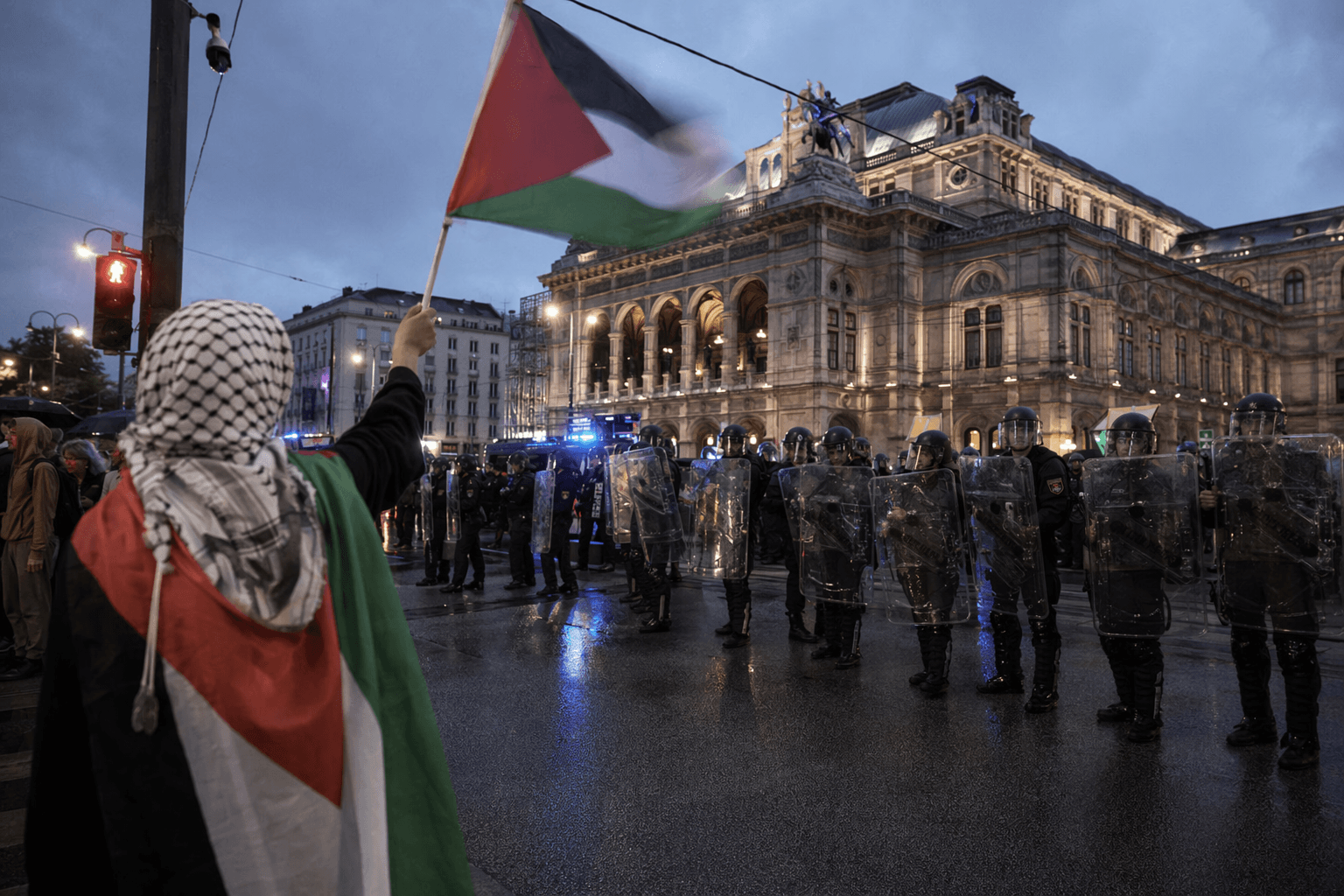
The backlash centered on the war in Gaza and the decision to let Israel remain in the competition. Spain, Ireland, the Netherlands, Iceland and Slovenia boycotted Eurovision 2026 over Israel’s inclusion, creating the largest coordinated withdrawal in decades. Israel’s entrant, Noam Bettan, still advanced to the final, keeping the dispute squarely inside the show even as organizers tried to preserve its identity as a pop contest rather than a political arena.
That tension defined the week in Vienna: the music kept going, but the arguments never left the building. Fans inside and outside the arena continued to treat Eurovision as a shared television ritual, while critics pressed the European Broadcasting Union over whether neutrality was still possible when one of the biggest names in the lineup was at the center of a wartime boycott campaign.
Vienna’s role also carried symbolic weight. The city hosted Eurovision for the third time, after 1967 and 2015, after Austria won the right to stage the contest again when JJ took the 2025 title in Basel with Wasted Love. The 2026 edition was organized by the European Broadcasting Union and ORF, and the broadcast team in Vienna featured Victoria Swarovski and Michael Ostrowski, with Emily Busvine in the green room. In a year when politics could not be kept at the door, the final still tried to do what Eurovision has always done best: turn a continent’s contradictions into a live Saturday-night show.
This article was produced by Prism’s automated news system from verified source data, official records, and press releases, then run through automated quality and moderation checks before publishing. The system is built and supervised by the people who set the standards it runs under. Read our full AI policy.
Did this article answer your question?