Viking textile production site discovered in Denmark dates back 1,000 years
A 100,000-square-meter textile site north of Aarhus held more than 80 pit houses, flax processing and trade goods, pointing to a tightly organized Viking economy.
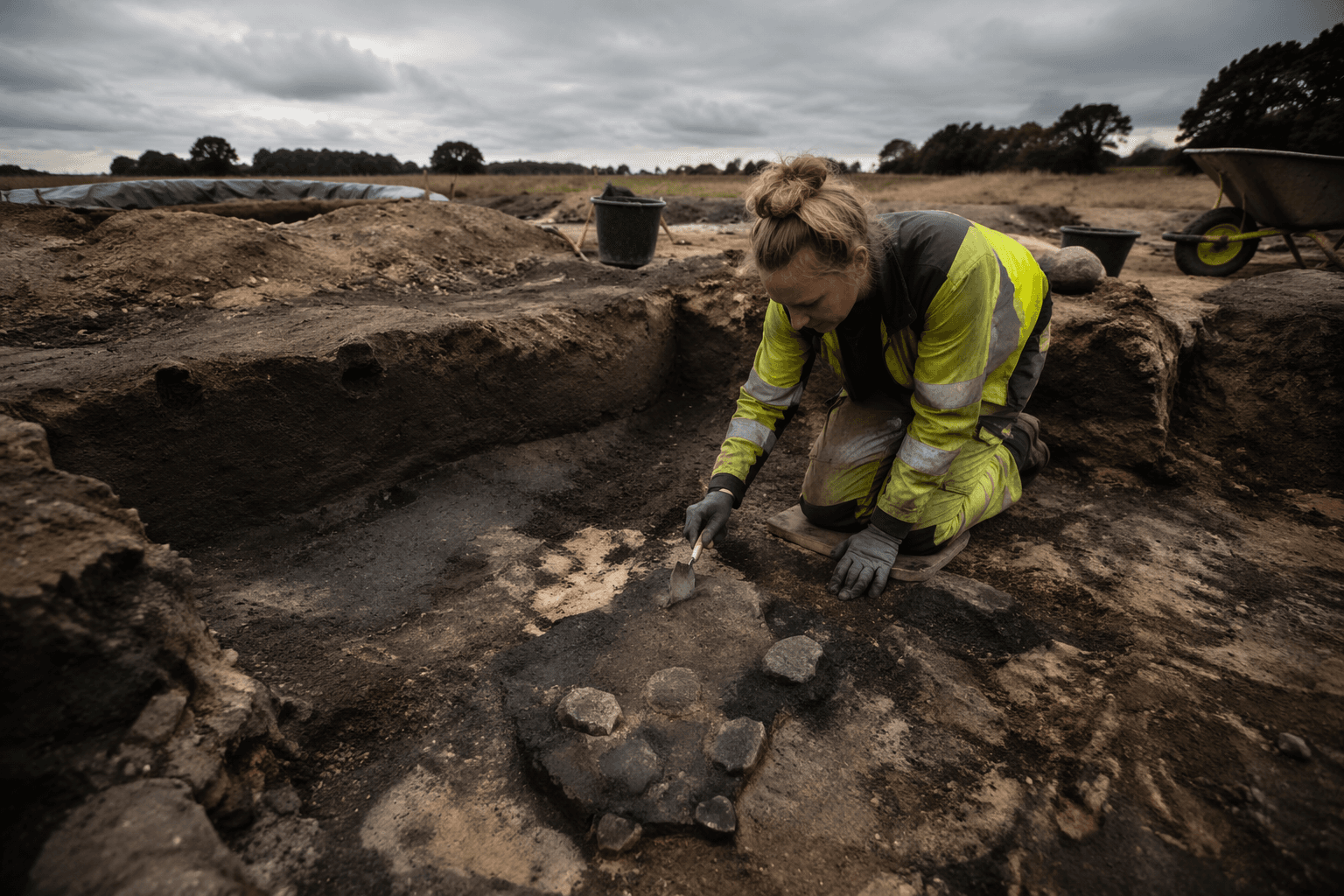
Archaeologists in Søften have uncovered a 100,000-square-meter Viking-age textile site with more than 80 pit houses, a flax-processing area and the tools of organized cloth-making. The find, 10 kilometers north of Aarhus on Denmark’s Jutland peninsula, dates to the late Iron Age and early Viking Age, roughly A.D. 600 to 950, and adds a different picture of Viking society than the familiar image of raiders at sea.
Liv Stidsing Reher-Langberg led the 10-month excavation, which revealed spindle whorls, loom weights, silver coins, glass beads and pottery spread across a site built for production. The layout points to separate craft and work areas, plus a single residential home, suggesting the operation was overseen by a powerful individual with control over land, labor and resources. In a Viking economy, that kind of textile center would have carried real weight. Cloth was not a side task. It was labor-intensive, valuable and closely tied to household power, making women’s likely role in the work central to the economic life of the settlement.
Kasper Andersen of Moesgaard Museum called the discovery “another piece in the puzzle” for understanding the region’s economic, cultural and political structure. That puzzle matters because Aarhus, known in the Viking era as Aros, was a center for royalty and international trade. Andersen said a site of this scale cannot be read as a local anomaly; it has to be understood as part of a much larger network that moved goods and raw materials from the countryside into wider exchange routes.
The Søften site also fits with other discoveries around Aarhus. Last year, archaeologists found another Viking site in nearby Lisbjerg, about 4 kilometers away, that was likely home to members of the nobility. A separate study of Viking Age Aarhus describes the settlement in the 8th and 9th centuries as mainly agrarian, with urban characteristics and specialized crafts emerging only in the late 10th century. That broader timeline makes the textile complex in Søften look less like an isolated workshop and more like evidence of an economy in transition, where rural production fed political power and trade.
Current research is sharpening that picture. The National Museum of Denmark says its Fashioning the Viking Age project, run with the Centre for Textile Research at the University of Copenhagen and Land of Legends in Lejre, ran from September 2018 to April 2023. A related project, Textile Resources in Viking Age Landscapes, continues through December 2025, underscoring how closely the Søften find now sits within a wider effort to reconstruct Viking textiles, clothing and dye use from the ground up.
This article was produced by Prism’s automated news system from verified source data, official records, and press releases, then run through automated quality and moderation checks before publishing. The system is built and supervised by the people who set the standards it runs under. Read our full AI policy.
Know something we missed? Have a correction or additional information?
Submit a Tip