Vincent Kompany’s bold Bayern rebuild powers Bundesliga dominance
Kompany has turned Bayern’s risky reset into a title machine, while raising the bigger question: Guardiola’s inheritance, or the start of something new?
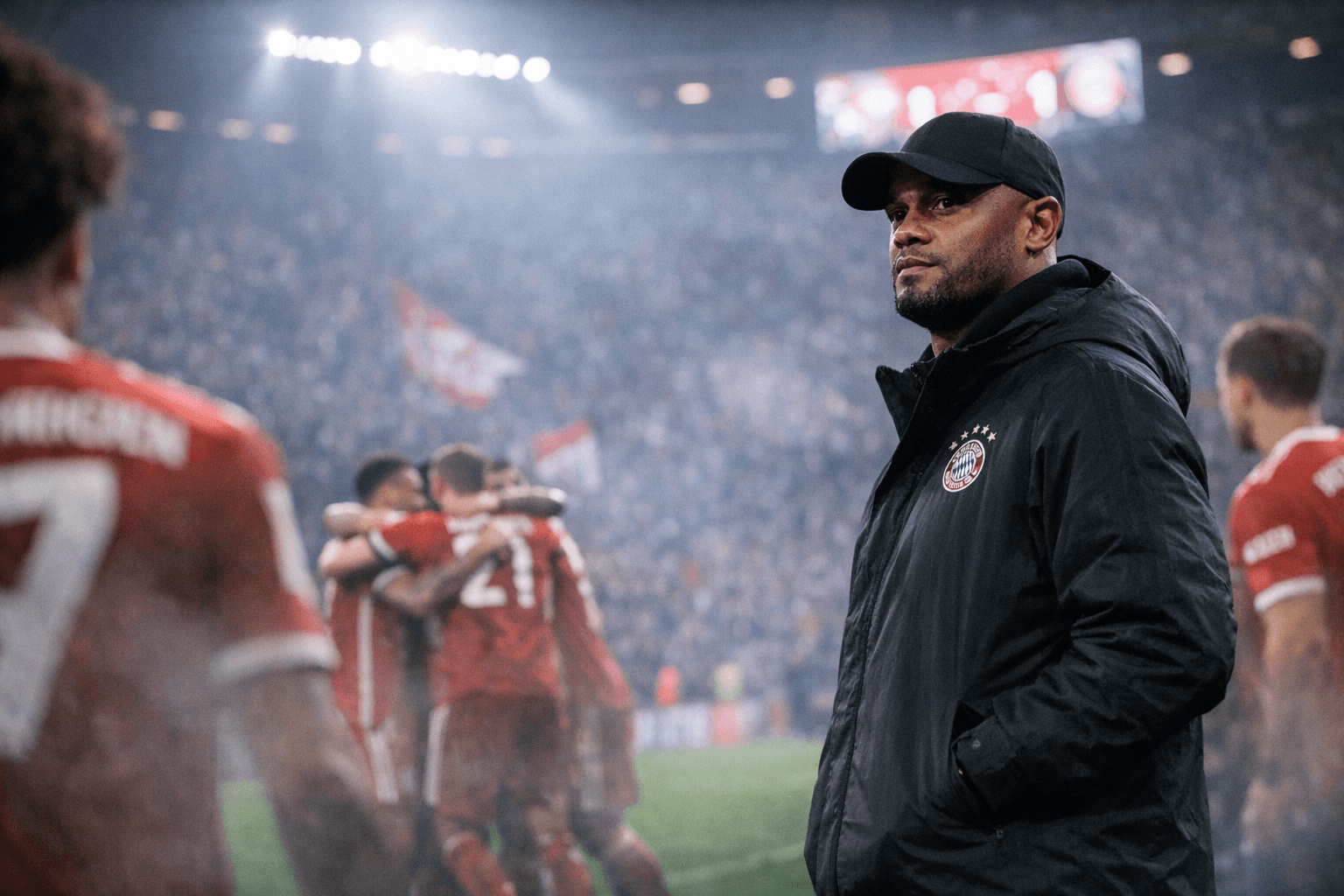
A succession gamble that quickly became a statement
Vincent Kompany’s Bayern have made the most persuasive case yet that a club can keep Pep Guardiola’s ideas alive without copying his control-first orthodoxy. Bayern hired him on 30 May 2024 after their first trophyless season in 12 years, gave him a deal through 30 June 2027, then extended it to 30 June 2029 after he delivered the Bundesliga title and restored domestic authority.
The surprise was obvious at the time. Kompany arrived from Burnley after relegation from the Premier League, was only 38 when appointed, and had to answer questions about scale as much as style. Bayern’s hierarchy said his ideas and character were central to the appointment, and Kompany made his own brief clear from the start: he wanted players to be “brave” and have “personality on the ball.”
A Guardiola lineage, but with more volatility
The clearest way to read Kompany’s Bayern is as an evolution of Guardiola’s Munich, not a rejection of it. Pep Guardiola’s 2013 to 2016 spell remains the club’s major stylistic reference point, and Kompany has kept the broad positional-play framework in place: Bayern build from the back, push numbers into central zones and keep the ball under pressure. But the rhythm is different, because Kompany’s version asks for more aggression, more running and more risk.
The numbers show the shift. Early in 2024/25, Bayern were already posting 65 percent possession, a 91 percent pass completion rate and 55 percent tackles won, while covering 119.2 kilometres per game, up from 115.4 the previous season. That is still a possession team, but it is a far more physical one than the version Bayern fans grew used to under more controlled managers.
What makes this look like football after Guardiola, rather than simply Guardiola by another name, is the blend of structure and freedom. Kompany preserves the central platform of positional play, but he allows more movement between lines, more rotation away from fixed roles and a more vertical approach once the press is broken. That is the tactical tension at the heart of Bayern’s success.
The build-up is defined by one central trick
The first recurring pattern is Bayern’s first phase. Kompany wants the team to start from deep, with Manuel Neuer involved in build-up and a midfielder or full-back stepping into the middle to create a numerical advantage. In practice, that often means the right-back moving inside, which gives Bayern a central overload and frees Alphonso Davies to stay higher and wider on the left as the direct threat.
That shape does two things at once. It gives Bayern short passing options around the ball, and it forces opponents to decide whether to follow the man inside or protect the space behind. In a team with Harry Kane, Jamal Musiala, Michael Olise and Joshua Kimmich, those small advantages become a steady supply of shots and final-third entries.
Pressing is not a phase, it is the system
The second pattern is the press. Kompany’s Bayern do not wait to recover shape after losing the ball; they immediately hunt in collective counterpress, and when opponents try to build short, Bayern press man-to-man all over the pitch. That produces the “space, time and opponent pressure” effect described in the German analysis: the opposition is rushed, the ball is turned over high, and Bayern attack closer to goal.
That same aggression creates the main danger in the model. Bayern’s defensive line sits even higher than it did under Guardiola, which gives them territory and suffocates opponents, but also leaves space to attack if the press is beaten cleanly. The high reward is visible in the shot volume and goal output; the risk is visible in the counterattacks they can concede.
Spacing is fluid enough to break man-marking
The third pattern is the most revealing one for the Guardiola comparison. Kompany’s Bayern use movement off the ball to manipulate marker assignments, rotating players into unusual zones to drag opponents out of position. Against man-marking sides such as Atalanta, Serge Gnabry has dropped into centre-back territory to pull a defender with him, while Joshua Kimmich has dropped deep to create an extra layer in build-up.
That kind of rotation hints at a system that is more permissive than Guardiola’s most controlled Bayern sides. The base shape still matters, but the real action comes from players exchanging spaces until an opponent’s structure breaks. It is positional play with a freer, more improvisational edge, and that is why Kompany’s Bayern feel like a possible post-positional model for elite clubs.
The results have been emphatic
The performance has been matched by output. Bayern clinched the 2024/25 Bundesliga title on 4 May 2025 with two games to spare, returning the league crown from Bayer Leverkusen after their own 11-year run had been interrupted. They finished that championship season with 25 wins, seven draws and two defeats, scoring 99 goals and conceding only 32.
Kompany’s second season has pushed the ceiling even higher. Bayern reached 101 Bundesliga goals in 2025/26 and later moved to 102, breaking the league record that had stood since 1971/72, and Kompany marked his 100th Bayern game with a 2-1 win at Real Madrid on 8 April 2026. In those first 100 matches, Bayern scored 302 goals and conceded 100, while Kompany’s 2.41 points per game matched Guardiola’s record at the club.
That is why this story is bigger than one fast start. Bayern have not merely replaced Thomas Tuchel with another possession coach; they have found a manager who preserves the club’s Guardiola-era foundations while adding more speed, more pressing and more freedom between the lines. If Guardiola made Bayern more systematic, Kompany is making them more elastic, and that may be the shape of the next elite model.
This article was produced by Prism’s automated news system from verified source data, official records, and press releases, then run through automated quality and moderation checks before publishing. The system is built and supervised by the people who set the standards it runs under. Read our full AI policy.
Did this article answer your question?