Vinicius Junior faces Brazil love test ahead of World Cup run
Vinicius Junior arrives as Brazil’s brightest star, but affection at home is harder to win than titles in Madrid. A World Cup run could decide how his story is written in Brazil.
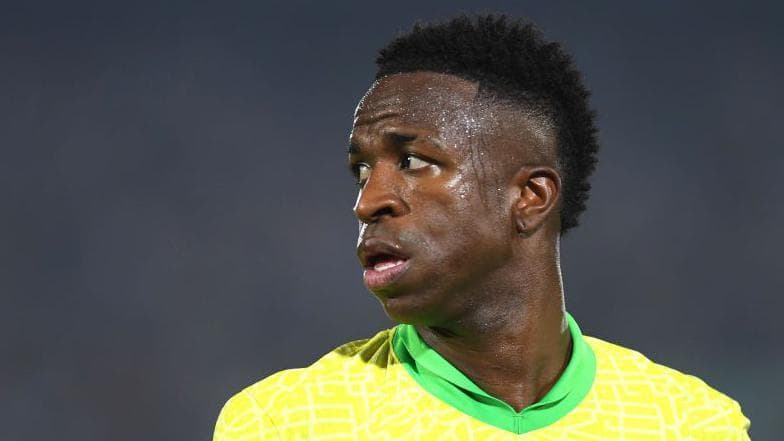
Vinicius Junior enters Brazil’s World Cup campaign with a contradiction at the center of his reputation: he is a global star for Real Madrid, yet still a player many Brazilians are waiting to fully embrace in the national shirt. That tension matters because Brazil does not treat its elite players as ordinary celebrities. It asks them to carry history, identity and expectation, especially when the country is chasing a sixth World Cup after a 24-year wait.
A superstar under a heavier flag
Brazil’s place in football is unmatched in one crucial measure: five World Cup titles, more than any other nation. But the last one came in 2002, and that long drought has sharpened the scrutiny around every new generation. Vinicius is not being evaluated only on goals or dribbles; he is being judged on whether he can help end a national wait that has become part sporting burden, part cultural wound.
That is why his club brilliance does not automatically translate into unconditional love at home. At Real Madrid, success is measured in trophies, decisive runs and Champions League nights. With Brazil, the standard is harsher and more emotional. Supporters want not just performance but symbolic certainty, the sense that a player can restore the aura Brazil once carried as a natural power rather than a team searching for its next identity.
Brazil’s World Cup pressure is built into the group
The 2026 tournament gives that pressure an immediate frame. Brazil is in Group C with Morocco, Haiti and Scotland, and opens against Morocco on June 13 at MetLife Stadium in New Jersey. That opener is more than a first match. It is the first public test of whether Brazil can project control, belief and authority from the start of a campaign built around ending the long title drought.
Carlo Ancelotti, now Brazil coach, has made clear that Vinicius remains central to the plan. He has publicly backed the forward, saying he trusts him and gives him freedom. For Brazil, that kind of manager-player relationship is important because it signals tactical confidence in a squad that needs structure as much as inspiration. For Vinicius, it also means the burden is not merely to produce, but to do so inside a system that asks him to express himself without carrying everything alone.
Why the public debate is about more than form
Brazil’s discussion of Vinicius has been shaped by setbacks that extend beyond the club game. In July 2024, Brazil were knocked out by Uruguay on penalties in the Copa America quarterfinals, a painful exit that sharpened the sense that the national team still lacks a decisive edge. Vinicius apologized to fans afterward and said it was his fault, a gesture that reflected both personal accountability and the weight he already feels as one of the team’s most visible figures.
That moment also showed how quickly the national mood can turn. In a country that has produced icons from Pelé to Neymar, public patience is often short when the team falls short in knockout football. Neymar helped define the modern era’s expectations, but Brazil still appears to be searching for a dominant post-Neymar identity. Vinicius sits at the center of that search, not because he is the same kind of player, but because he is one of the few who can plausibly shape the next chapter.
The racial abuse debate made him bigger than the club game
Vinicius’s standing in Brazil cannot be separated from what happened in Spain in March 2024, when he publicly discussed the racist abuse he has endured and broke down in tears during a press conference. That episode turned him into a figure whose significance runs beyond goals and trophies. He is now part of a broader conversation about race, dignity and the treatment of Black footballers at the top of the sport.
That context helps explain why he is such a charged symbol for Brazil. His struggle is not only about whether he can score against Morocco or lead a World Cup run. It is also about whether a nation that prides itself on football artistry can fully rally behind a player whose identity has been forged under pressure, in public, and often in pain. Real Madrid can reward his excellence with medals; Brazil asks him to transform that excellence into belonging.
Vinicius is setting the tone carefully
Vinicius has also been clear that Brazil should not be treated as one of the favorites to win the World Cup. He has said the team has not earned that tag, a statement that reveals as much about his realism as it does about the current state of the squad. Coming from a player of his stature, that caution matters. It suggests a group aware of its talent but still trying to prove that talent can hold under tournament pressure.
For Brazil, that humility may be useful. The country has spent two decades waiting for a team that can match its own mythology. A title run in 2026 would not just end the drought; it would reframe the debate around Vinicius, who has been asked to play simultaneously as striker, symbol and lightning rod. If he thrives, Brazil’s public may finally see him less as a star from Madrid and more as a leader for the national side.
What is at stake in New Jersey and beyond
The opening against Morocco on June 13 at MetLife Stadium begins the practical test, but the larger judgment will come over the full tournament. Brazil’s group is manageable on paper, yet history shows that expectation alone does not win knockout games. The team has the trophy count, the pedigree and now a coach with Ancelotti’s authority, but it still needs the kind of emotional coherence that turns talented squads into national obsessions.
That is the real love test facing Vinicius. Brazil does not just want a match-winner. It wants a player who can absorb the pressure of the shirt and emerge as something larger than a club icon. If he can do that, the drought that began after 2002 may finally look like a chapter that is ending rather than a weight that keeps growing.
This article was produced by Prism’s automated news system from verified source data, official records, and press releases, then run through automated quality and moderation checks before publishing. The system is built and supervised by the people who set the standards it runs under. Read our full AI policy.
Did this article answer your question?