Viral warning told troops to disable location sharing; officials deny
A social media message urged "all U.S. service members" to turn off location services on all devices; Cyber Command and CENTCOM say they did not issue the guidance.
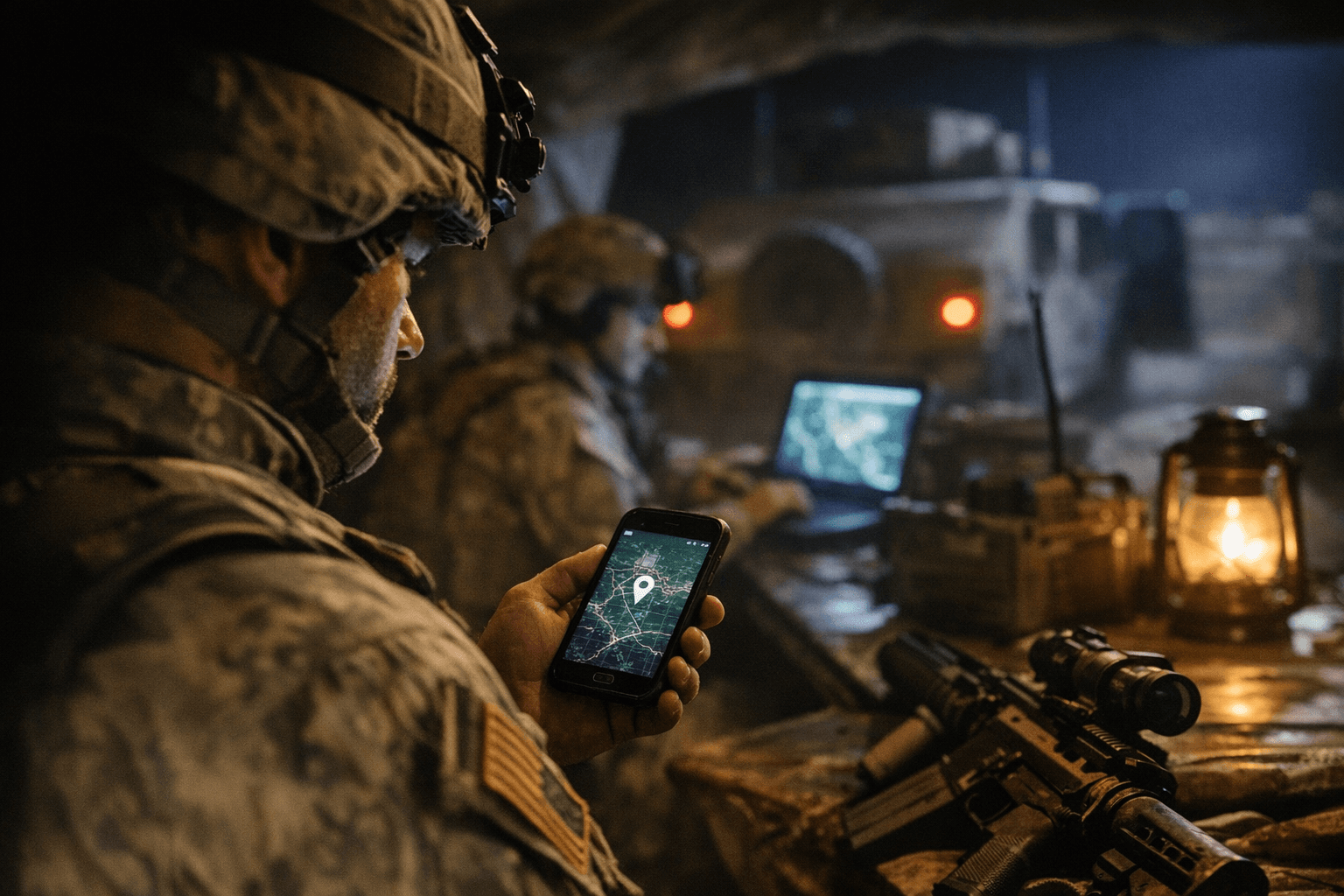
A viral message circulated on social media and in military channels this weekend urging "all U.S. service members" to turn off location services on "all electronic devices," claiming apps including Uber, Snapchat and Talabat had been compromised. Multiple defense officials and Central Command rejected the alert as a false directive, and the origin of the warning remains unknown.
Defense officials said the putative Cyber Command message was not issued by the command. "The command did not issue messages to US service members to turn off location services on their electronic devices and did not issue messages that applications had been compromised," one defense official said. U.S. Central Command spokesman Capt. Tim Hawkins called the message "false." Cyber Command also stressed a standard policy in public communications: "Due to operational security concerns, U.S. Cyber Command does not comment nor discuss cyber intelligence, plans, operations, capabilities, or effects."
The post, which began circulating on Sunday, asserted there were active threats to service members inside the continental United States and urged personnel to disable location sharing and, in some versions, to uninstall apps. Companies named in the message pushed back on the claim. An Uber spokesperson said, "we have no indication that this rumor is true regarding Uber," and the company responded directly to multiple users on X, calling it "an unsubstantiated rumor."
Officials and analysts are treating the episode as an example of rapid, low-cost information operations intersecting with operational security concerns for service members. Cybersecurity and other analysts note a broader background of concern: the Cybersecurity and Infrastructure Security Agency warned last summer that Iranian-affiliated cyber actors "often exploit targets of opportunity" tied to unpatched or outdated software. A Middle East Institute analysis cited by officials also warned that Tehran-linked actors have used "a broad range of operations designed to exert psychological pressure, collect tactical intelligence, enforce deterrence against third countries, and maintain domestic control," and have "intensified its psychological operations through the use of AI to generate and disseminate disinformation."
Despite the denials, the viral message continued to spread online into Monday and was shared in a range of military groups and public forums. Officials acknowledged gaps in the public record around provenance. "It is unclear where the message originated from, that's a big question nobody has answered yet," one reporting line concluded about the circulation. Investigators have not publicly tied the message to any specific foreign actor, and Pentagon officials said they were not pointing to a confirmed outside source in the immediate term.
The episode has immediate operational implications. Service members often carry personal devices that can reveal position data to third parties; unverified advisories that urge mass disabling of services can create confusion for unit leadership and complicate routine operations that rely on approved communications channels. It also highlights a policy gap: there is no single, publicly known mechanism for all service members to validate emergency operational security directives issued through informal channels.
Key follow-ups for military and cybersecurity reporters include obtaining the original message artifacts and metadata, confirmation of any local commands issuing similar orders, and written forensic responses from the companies named. Until provenance is established, defense and commercial statements denying compromise stand as the principal, verifiable record.
This article was produced by Prism’s automated news system from verified source data, official records, and press releases, then run through automated quality and moderation checks before publishing. The system is built and supervised by the people who set the standards it runs under. Read our full AI policy.
Did this article answer your question?

