Virginia QB Chandler Morris Denied Injunction in Seventh Season Eligibility Bid
A Charlottesville judge denied Chandler Morris' bid for a court-ordered seventh season, signaling the steep legal bar facing injured athletes who exhaust NCAA eligibility across multiple programs.
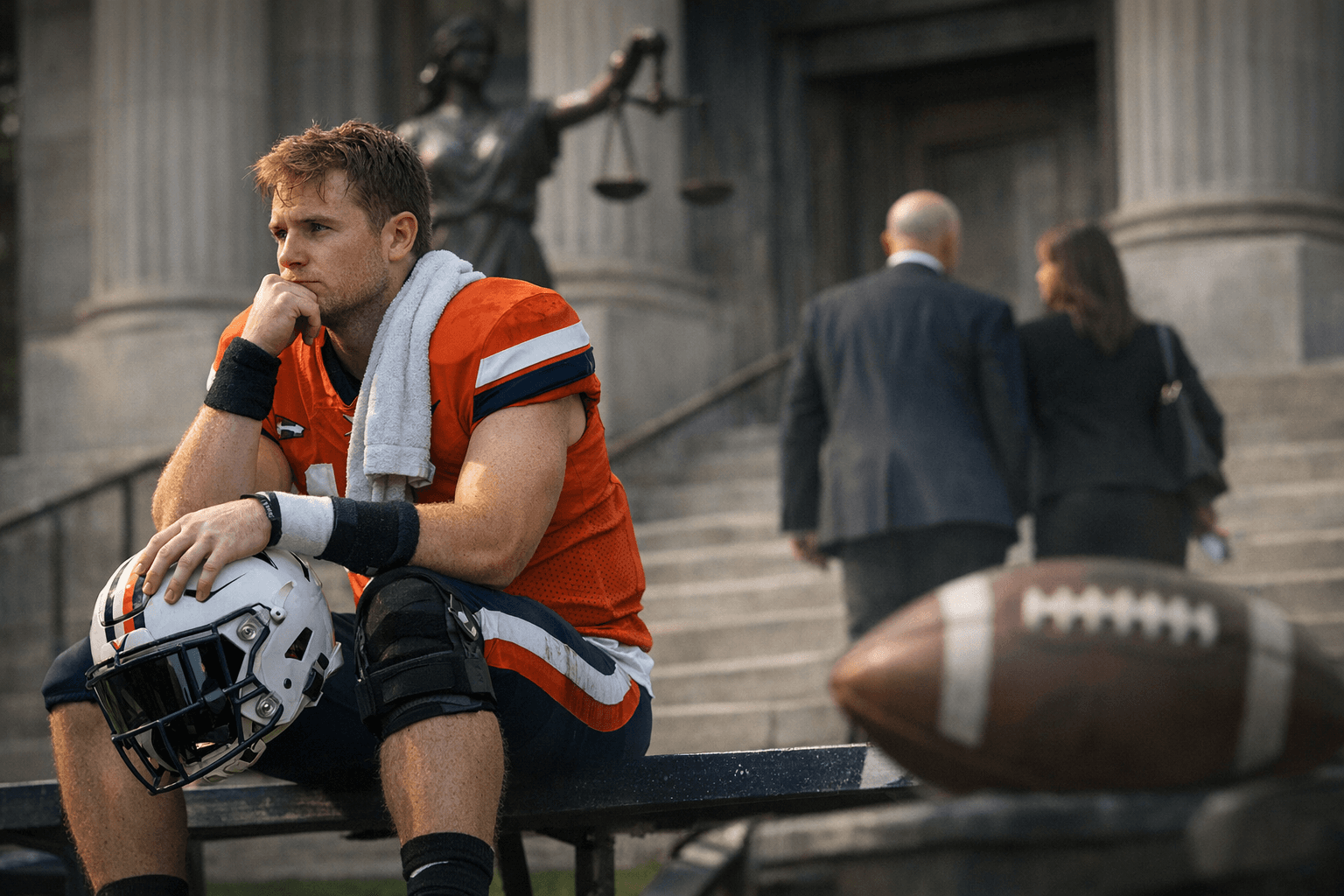
A Charlottesville circuit court judge refused to grant Chandler Morris emergency legal relief, rejecting the Virginia quarterback's bid for a court-ordered seventh season of NCAA eligibility and drawing a clear line around how far medical hardship arguments can stretch across a multi-school career.
Morris, 25, had sued after the NCAA denied his medical redshirt waiver and a subsequent appeal, arguing that his 2022 season at Texas Christian University should not count against his eligibility clock. That season ended after limited appearances when a knee injury shut him down, but the NCAA ruled the season countable. The denial of the preliminary injunction means Morris will not receive court-ordered relief while the underlying case continues.
His career has spanned four programs: Oklahoma, TCU, North Texas and Virginia, where he accumulated more than 9,100 career passing yards. The case is part of a broader wave of transfer-era eligibility litigation that has intensified as the NCAA relaxed transfer rules and NIL regulations reshaped the competitive economics of college sports.
The NCAA applauded the outcome. "The NCAA is pleased by the court's decision today, which protects the integrity of collegiate competition," the organization said in a statement. The association argued that court-ordered eligibility changes create a fragmented competitive landscape and renewed its call for Congress to establish national standards around athlete eligibility rules.
That fragmentation is already visible in the case data. Of roughly 71 eligibility lawsuits filed nationwide, courts have granted preliminary injunctions in 13 cases and denied them in 33, with the remainder pending or dismissed. The divergent outcomes reflect the absence of a uniform legal standard and the degree to which results turn on individual judges' readings of medical evidence, redshirt policy, and competitive harm.
A denied preliminary injunction is not a final ruling. Morris retains the ability to appeal, press the underlying case or pursue a negotiated resolution with the NCAA. The practical effect is immediate, however: Virginia will plan its 2026 roster without Morris, and his window for any remaining college playing time narrows with each passing month.
The ruling reinforces how steep the legal bar remains for emergency relief. Courts consistently require plaintiffs to demonstrate not only a likelihood of success on the merits but also that irreparable harm will result from delay, a standard that tends to favor the NCAA's institutional position. Athletes who have played at multiple programs carry the added burden of explaining how each season, transfer, and injury interacts with overlapping eligibility rules, a complexity the Morris case illustrates with particular precision. How courts resolve that question across the remaining 25-plus pending lawsuits will determine whether the litigation wave produces structural reform or simply a long series of individual defeats.
This article was produced by Prism’s automated news system from verified source data, official records, and press releases, then run through automated quality and moderation checks before publishing. The system is built and supervised by the people who set the standards it runs under. Read our full AI policy.
Did this article answer your question?
.jpg&w=1920&q=75)