Virginia voters weigh redistricting amendment with control of House seats at stake
Virginia’s redistricting vote could reshape 11 House seats, but it was being decided by a much smaller electorate than the 3.3 million voters in last year’s governor’s race.
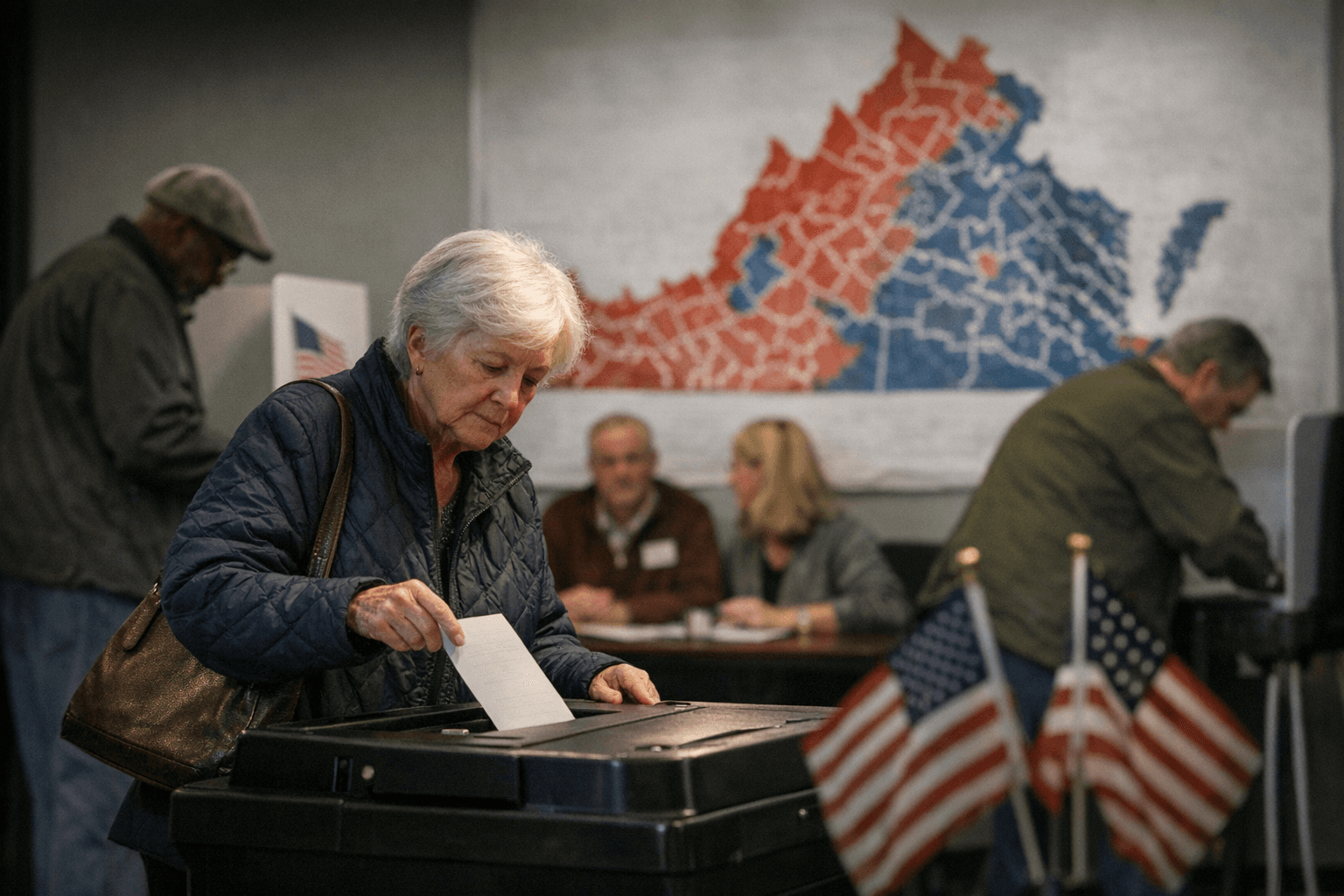
Virginia voters weighed a constitutional amendment on Tuesday that could give the General Assembly temporary power to redraw congressional districts, a change with the potential to shift the state’s 11 House seats and redraw the balance of power in Washington. The vote was unfolding in a special election with turnout far below last year’s record-setting governor’s race, raising an immediate question of democratic legitimacy: whether a major structural change would be decided by a far smaller and less representative electorate.
The amendment would let lawmakers redraw Virginia’s congressional map before 2031 if another state first redraws its own districts without a court order. Under the proposal, that authority would expire on October 31, 2030, and the Virginia Redistricting Commission would resume its work in 2031. Virginia’s current congressional districts were last drawn in 2021, and the proposed map would take effect only if voters approved the constitutional amendment.
The stakes were unusually high for a special election. Supporters said the change could move Virginia’s delegation from a 6-5 Democratic edge to as much as 10-1, a net gain of up to four House seats for Democrats. That prospect brought in heavy national firepower: former President Barack Obama and House Minority Leader Hakeem Jeffries backed the yes campaign, while former Gov. Glenn Youngkin returned to the trail to argue against it. Democrats framed the amendment as part of a broader response to Republican-led redistricting efforts in other states, while Republicans denounced it as a partisan power grab.
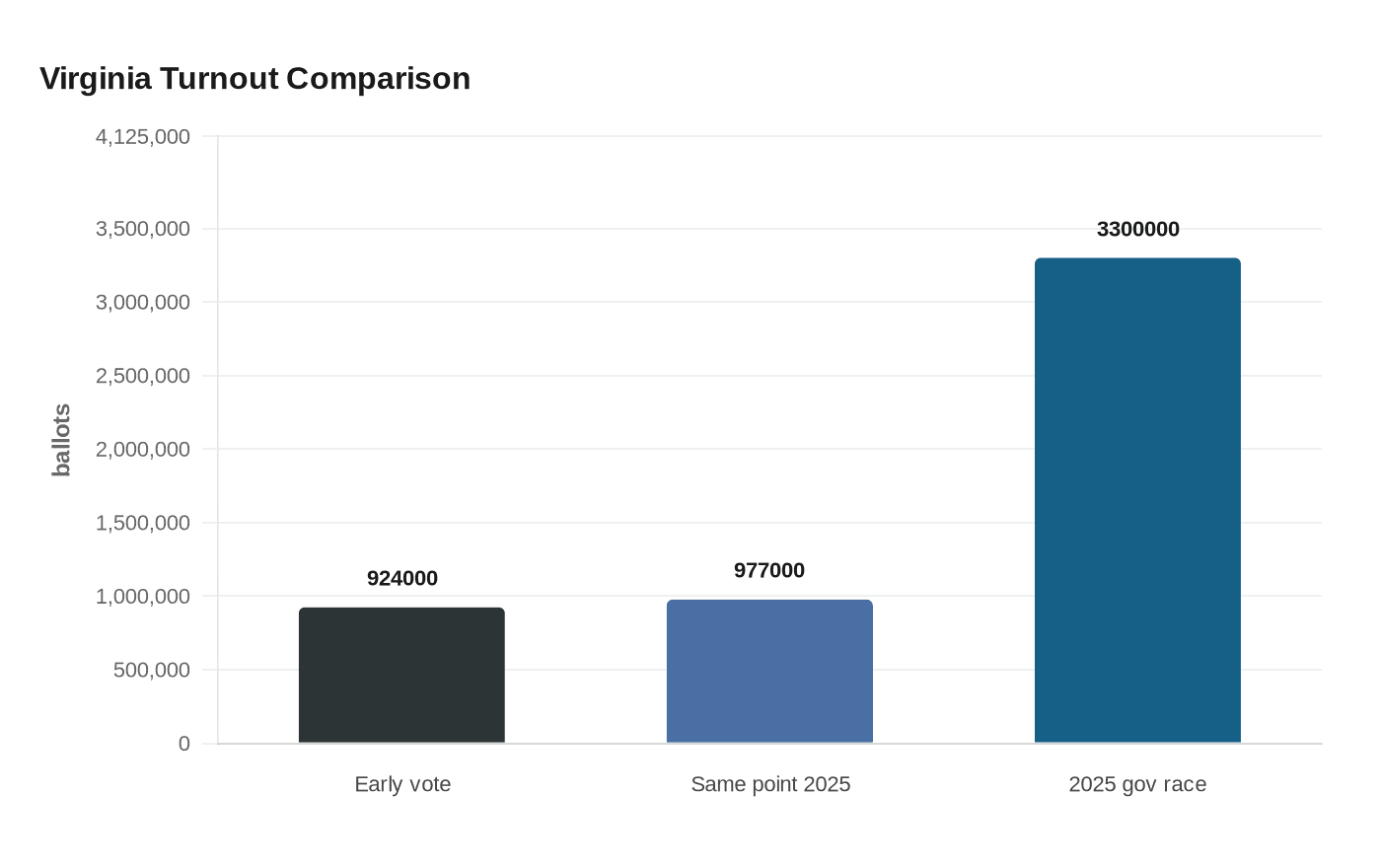
Turnout data underscored how different this electorate was from Virginia’s broader voting public. Early voting had reached about 924,000 ballots, compared with 977,000 at the same point in 2025, and in-person turnout on Tuesday trailed far behind the 2025 governor’s race, when more than 3.3 million Virginians voted in a nonpresidential election year. Local registrars reported unexpectedly high interest in some areas, but the statewide pool remained much smaller than the one that produced last year’s record turnout.
That gap mattered because the referendum was being decided in an off-cycle contest that political strategists described as competitive and likely close. It also carried added weight for Gov. Abigail Spanberger, whose 2025 statewide victory made Virginia a Democratic bright spot, and for party leaders looking for one last chance to offset Republican gains in Texas and elsewhere before the 2026 midterms. If the amendment passed, Virginia could become the next front in a national redistricting fight that now reached beyond maps to the size and shape of the electorate itself.
This article was produced by Prism’s automated news system from verified source data, official records, and press releases, then run through automated quality and moderation checks before publishing. The system is built and supervised by the people who set the standards it runs under. Read our full AI policy.
Did this article answer your question?

