Voters turn against Iran nuclear deal as Congress reviews accord
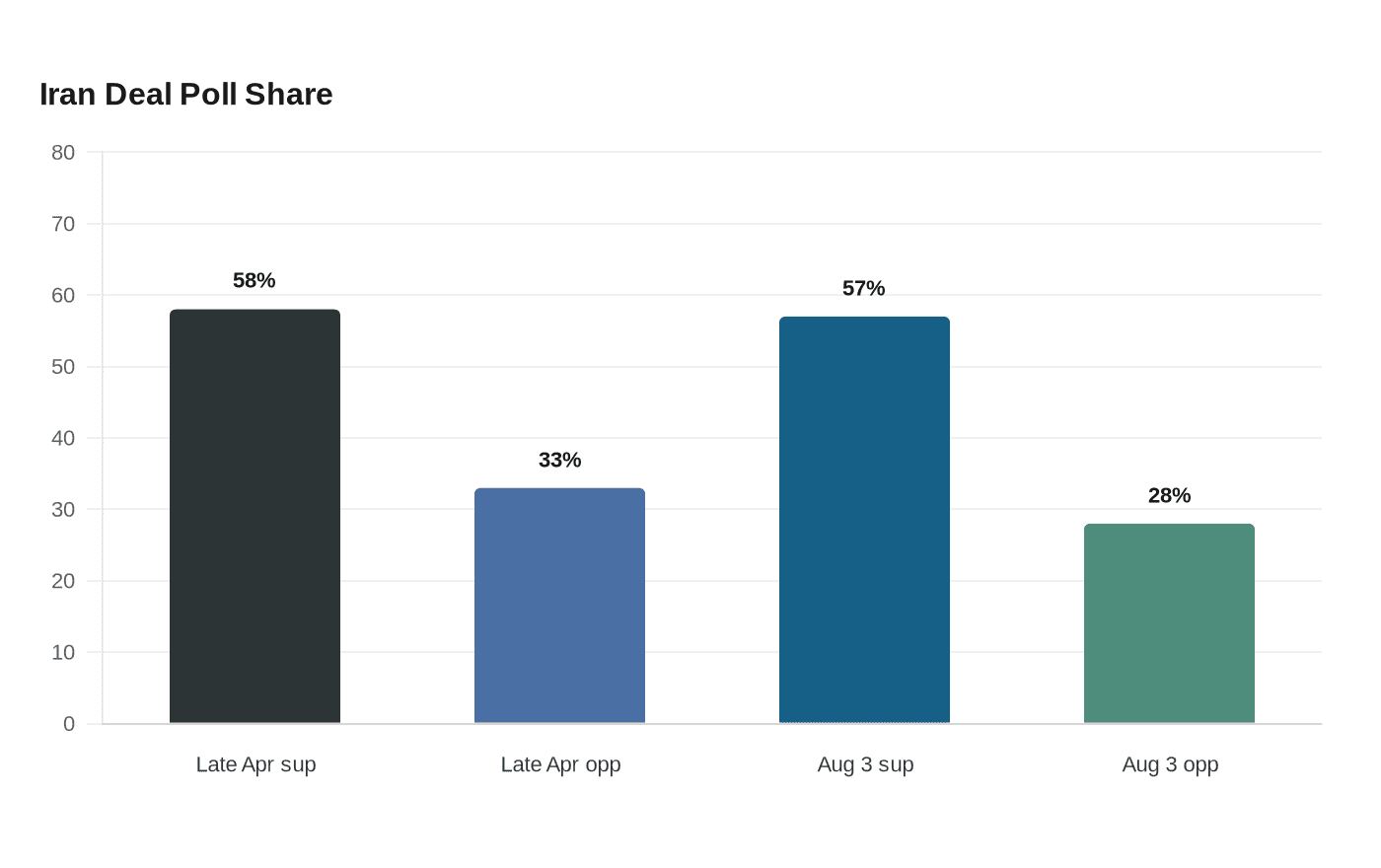
Poll numbers flipped fast: support for the Iran deal fell from 58% to 33% in April to 28% to 57% opposition by August as Congress reviewed it.
American voters went from backing the preliminary Iran nuclear agreement by 58% to 33% in late April to opposing it 57% to 28% by Aug. 3, a sharp reversal as Congress entered its 60-day review of the pact. The Quinnipiac University Poll numbers showed not just a policy dispute, but a collapse in public confidence in whether the deal could hold.
That turn mattered because the agreement would lift economic sanctions on Iran if Tehran restricted its nuclear program’s capacity to build a nuclear weapon. In Washington, the question was no longer only whether the deal was preferable to force, but whether enough voters believed it was trustworthy enough for their leaders to defend it.
Secretary of State John Kerry was at the center of the administration’s push. He spent the review period selling the accord to skeptical lawmakers, with the Obama administration arguing that the deal was the alternative to military confrontation. Barack Obama’s team needed more than a technical case about centrifuges and inspections; it needed political consent in a Congress prepared to scrutinize the terms for two full months.
The Quinnipiac polling also showed how quickly the coalition around the deal hardened along party lines. Democrats were far more supportive than Republicans, while independents leaned against the agreement, underscoring how fragile the public mandate was for one of Obama’s most consequential foreign-policy fights. The numbers suggested that support for diplomacy was not broad enough to mute fears that sanctions relief could come before Iran’s nuclear ambitions were fully constrained.
That public shift put pressure on every White House appeal. In April, Americans still gave the preliminary agreement a clear benefit of the doubt. By August, the same electorate was signaling that it did not trust the pact to last, or the bargain behind it to deliver. As Congress reviewed the deal, that erosion in confidence threatened to shape the politics around Iran far more than the language of the agreement itself.
This article was produced by Prism’s automated news system from verified source data, official records, and press releases, then run through automated quality and moderation checks before publishing. The system is built and supervised by the people who set the standards it runs under. Read our full AI policy.
Know something we missed? Have a correction or additional information?
Submit a Tip