Wahiawa Dam Teeters on Edge as Oahu Flash Floods Force Mass Evacuations
Emergency sirens blared across Oahu's North Shore as the Wahiawa Dam reached near-flood-stage levels, forcing hundreds from their homes.
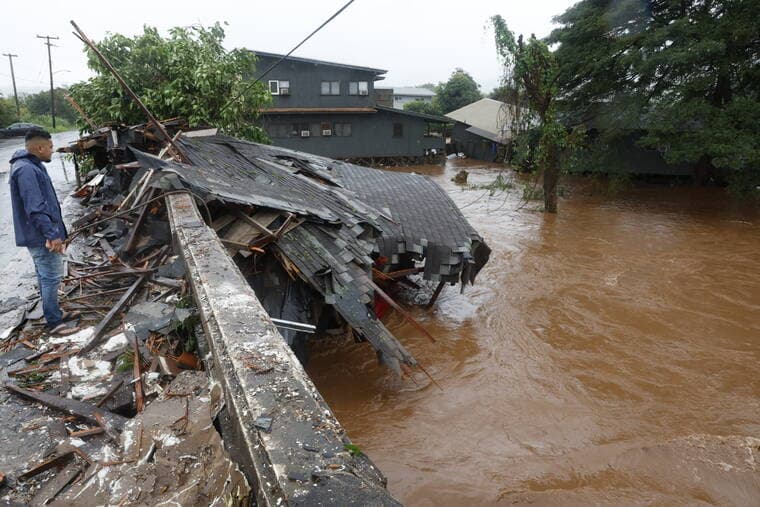
Emergency sirens blared across Oahu's North Shore on Friday as a catastrophic storm system dumped more than a foot of rain on the island in 24 hours, sending the Wahiawa Reservoir surging toward its flood stage and prompting authorities to warn thousands of residents that the dam holding it back could fail without warning.
The National Weather Service issued a flash flood emergency for northern Oahu, its most severe alert category, urging residents in Haleiwa and Waialua to act immediately. "This is a particularly dangerous situation," the agency declared. "Seek higher ground now."
Honolulu's Department of Emergency Management ordered evacuations for Haleiwa and Waialua, the communities sitting downstream of the Wahiawa Dam along Kaukonahua Stream. Oahu Emergency Management warned the dam "may collapse or breach at any time," and later that it "has not failed but is at imminent risk of failure." Floodwaters cut off road access into both communities, and the Hawaii Department of Transportation reported multiple road closures across the affected area.
The storm was the second major rainfall event to strike the island within a week, driven by what meteorologists identified as a Kona low, a regional weather system that draws moisture-laden southerly winds across the archipelago. Parts of Oahu received 8 to 12 inches of rain overnight, while Kaala, the island's highest peak, recorded nearly 16 inches in a single day. Radar readings early Friday showed rainfall rates of 1 to 2 inches per hour across southern and eastern Oahu.
The Wahiawa Reservoir, also known as Lake Wilson and owned by Dole Food Company, rose sharply throughout the day. Reservoir levels climbed from roughly 72 feet before heavier rains moved in Thursday, ticked up to 75 feet as additional showers arrived, then spiked toward the flood stage threshold of 84 feet as the storm intensified Friday. Dole said the reservoir peaked at about 84 feet around 1:15 p.m. before water levels began to recede. "At no point during the event did the Wahiawa Reservoir (Lake Wilson) dam breach," the company said in a statement, adding that flooding was due to heavy rainfall across the broader watershed and that the reservoir "continues to help slow flows during extreme weather conditions." Dole personnel, along with the state Department of Land and Natural Resources, monitored the dam throughout the storm; the U.S. Geological Survey monitoring station at Wahiawa remained online and operational.

One evacuation shelter at Waialua High and Intermediate School had to be abandoned after flooding reached the facility. About 185 people and 50 pets were bused to another evacuation center, though 54 people still remained in the school at midday, according to Honolulu spokesperson Ian Scheuring. Scheuring said crews searched by air and by water for residents who had been stranded, though those efforts were complicated by civilians flying personal drones over the flooding to capture footage. Some homes were swept away, he said, though there were no immediate reports of deaths or injuries.
Governor Josh Green activated the Hawaii National Guard and closed all non-essential state offices for the day. "We are coordinating closely with state and county partners to support evacuations, open shelters, and keep our communities safe," he posted on X.
For Waialua resident Kathleen Pahinui, the storm stirred a fear that has never quite faded. The Wahiawa Dam, she said, is "a concern every time it rains." On Friday, that concern became a community-wide emergency.
Climate scientists have long warned that the intensity and frequency of extreme rainfall events in Hawaii is increasing as a result of human-caused global warming, making events like Friday's not just a crisis to survive but a pattern to reckon with.
This article was produced by Prism’s automated news system from verified source data, official records, and press releases, then run through automated quality and moderation checks before publishing. The system is built and supervised by the people who set the standards it runs under. Read our full AI policy.
Did this article answer your question?