Wake County Libraries Add Blood-Pressure Monitor Kits at All 23 Branches
Wake County Public Libraries and the American Heart Association have expanded the Libraries with Heart program so residents can borrow blood-pressure monitor kits at all 23 county branches, improving access to heart-health tools.
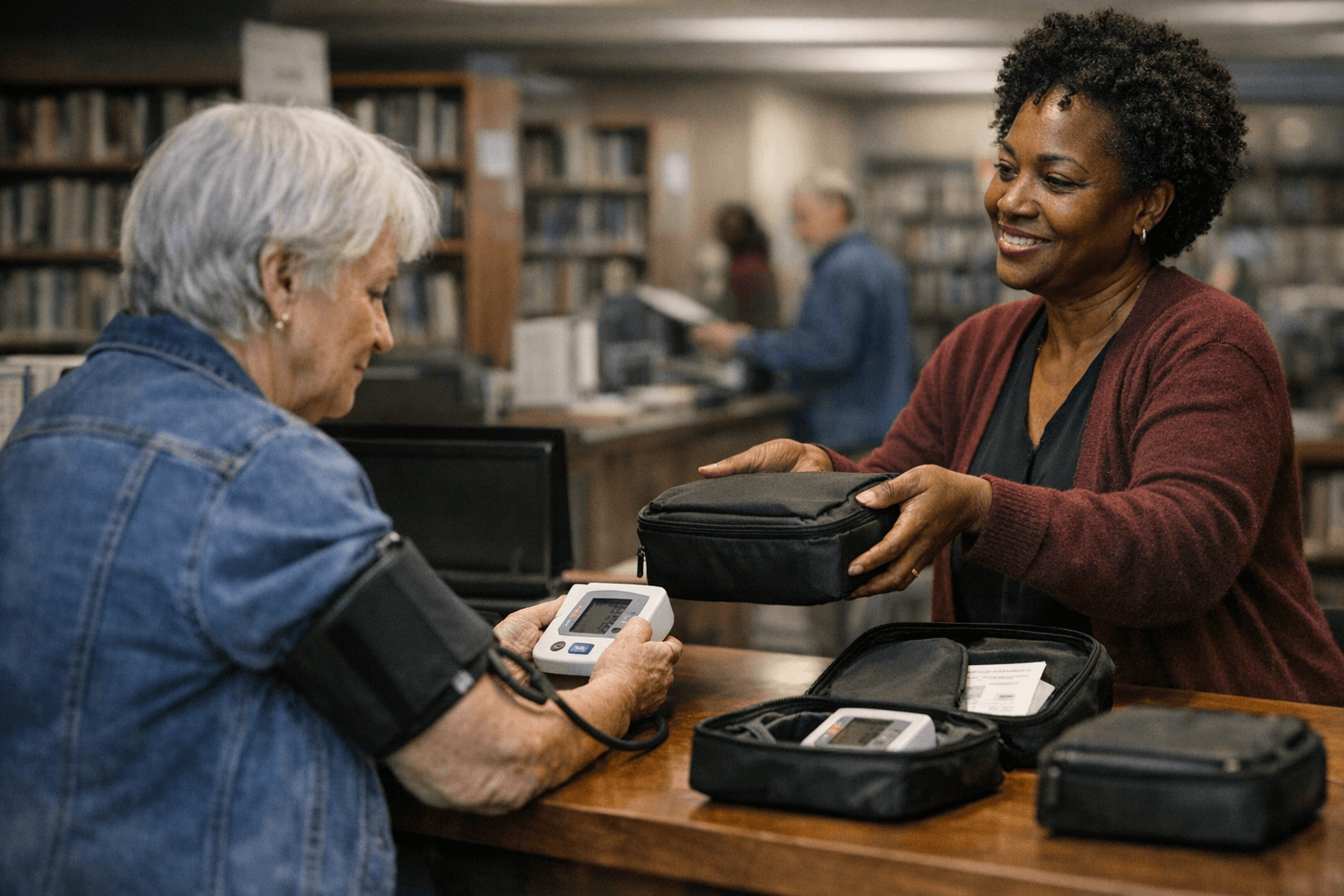
Thanks to a donation of 90 kits from the American Heart Association, Wake County Public Libraries expanded the Libraries with Heart program so residents can now check out blood-pressure monitor kits at all 23 county branches. The pilot began in February 2025 at six locations, and county officials said the full rollout was completed by the end of January, making short-term home monitoring available free to library cardholders across Wake County.
County figures show the kits were checked out 186 times over the past year. Residents with a Wake County Public Library card can borrow a kit for three weeks, with one renewal available. “People can check out the blood pressure monitor kits for three weeks at a time. And that kit, every one of them includes a blood pressure device, educational materials, and blood pressure tracking cards,” the CBS17 video transcript reported, reflecting the program’s standard contents.
The kits include a blood-pressure monitor, bilingual educational materials in English and Spanish, and tracking cards so users can record readings and share them with clinicians. Enlace Latino NC coverage highlights guidance that recommends taking blood pressure in the morning and at night, recording each measurement, and returning the equipment after three weeks to bring recorded readings to a doctor or clinic. The bilingual materials aim to serve Spanish-speaking residents and reduce language barriers to preventive care.
Local officials framed the expansion as a practical health-equity move. Wake County Commissioner Vickie Adamson said, “Access to basic health tools like blood pressure monitors can make a life‑saving difference. By offering these resources in our libraries, we’re removing barriers and empowering residents to take control of their health.” Library Director Tammy Baggett emphasized the library role beyond lending books: “Our libraries have always been about more than books - they’re about connecting people to resources that improve their lives. This partnership with the American Heart Association is a perfect example of how we can meet community needs in innovative ways.”
Library staff see immediate community benefit. Brandy Hamilton, manager of East Regional Library Knightdale, said, “It's a valuable tool for our community members who may be in need of a cost‑effective way to monitor their health.” The program has already produced user stories, including Tim Connelly, who checked out a monitor from Green Road Community Library. “Being able to check out a monitor from Green Road Community Library was just what I needed - short‑term access without blowing up my budget. The staff was incredibly helpful and the monitor worked perfectly. I was able to take my blood pressure daily and share the results with my doctor,” Connelly said.
Public-health advocates note that routine home monitoring can help identify high blood pressure earlier and connect people with care. Liliana Marín, identified as director of community impact for the American Heart Association, warned that high blood pressure can be a silent killer and highlighted prevention: “What we want is for people to know that high blood pressure is something very dangerous and in fact it is known as a disease that can kill you silently since it has no symptoms.” Enlace Latino NC reports Marín reminding the community that 80% of cardiovascular diseases can be prevented through healthy lifestyles.
For Wake County residents, the expansion means more equitable access to an inexpensive but vital tool for managing medication changes, tracking readings between clinic visits, or assessing an immediate concern without an upfront purchase. Borrowers should check with their local Wake County Public Library branch for availability, loan limits, and return procedures. The program’s growth also raises follow-up questions for officials about device maintenance, replenishment, and any plans to track long-term outcomes, matters county staff and the American Heart Association may address as the program matures.
Know something we missed? Have a correction or additional information?
Submit a Tip