WakeMed, Duke Health Dispute Over LINAC Highlights NC CON Rules
WakeMed and Duke Health asked the Court of Appeals to dismiss an appeal after a settlement in a dispute over WakeMed adding a LINAC, a decision that could affect local radiation access.
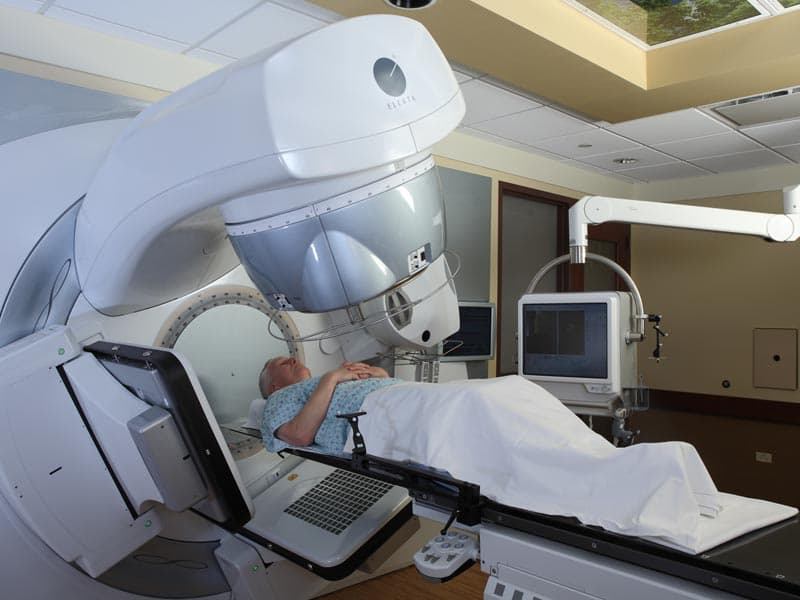
A settlement has paused a contentious legal fight over whether WakeMed can add a linear accelerator, the high-energy radiation machine hospitals need to provide on-site radiation oncology in Wake County. WakeMed, Duke Health and the North Carolina Department of Health and Human Services filed a joint motion to dismiss an appeal on Jan. 20–21, 2026, saying, "Since the settlement agreement resolved all claims, there is no reason for this appeal to continue."
The dispute grew from a September 2023 DHHS decision that awarded WakeMed a certificate of need to add a LINAC in the Triangle. Under North Carolina law, N.C. Gen. Stat. § 131E-176(16), LINACs are treated as a "new institutional health service," so providers cannot add them without a CON. That regulatory framework has made the fight both technical and high stakes for local cancer care and health-system competition.
A 2025 administrative law judge later threw out the DHHS ruling, issuing a final decision in February 2025 that invalidated WakeMed’s certificate of need but did not award a CON to Duke Health. WakeMed appealed, filing arguments to the North Carolina Court of Appeals on Aug. 13. Duke and UNC Health/Rex initially challenged DHHS’s 2023 award; UNC/Rex later dropped its appeal, while Duke continued until the parties moved to dismiss after reaching a settlement.
WakeMed framed the case as a patient access issue. "WakeMed has built a thriving cancer center with medical and surgical oncology services but cannot offer the full range of cancer treatment without a linear accelerator (LINAC) to provide radiation oncology," WakeMed’s lawyers wrote in filings. They added that "Patients’ difficulty accessing cancer care is what led WakeMed to develop its own cancer program. Without a LINAC, WakeMed must refer (send) its patients to either Duke or UNC/Rex for radiation therapy." WakeMed also claimed that "WakeMed’s patients wait more than three times longer than the average patient in the service area to begin radiation therapy."

Duke’s side emphasized errors in DHHS’s evaluation of Duke’s own CON application. WakeMed countered in court filings that "The Final Decision in this case plays into Duke’s consistent efforts to block competition and prevent WakeMed from developing the full range of cancer care by making multiple errors of law to reverse the Agency’s decision." WakeMed also noted that Duke already operates multiple machines, arguing, "Duke already has four LINACs and approval for a fifth that should already have been in operation, but for repeated delays by Duke."
The procedural back-and-forth highlights how North Carolina’s strict CON regime shapes where and when hospitals can add costly, specialized equipment. In 2023, Duke and UNC/Rex operated nine LINACs in the affected service area, and both systems previously received approvals to add machines that remained unbuilt or delayed. Observers have pointed to broader stakes: radiation technology can be financially advantageous to systems and can determine whether patients travel across the Triangle for treatment.
For Wake County patients, the immediate consequence is uncertainty. The joint motion says claims are resolved, but reporting so far does not disclose settlement terms or whether WakeMed will ultimately be allowed to install a LINAC on its Raleigh campus. Residents should expect follow-up actions from DHHS or filings in the Court of Appeals to clarify whether on-site radiation therapy will become available at WakeMed, and how long patients might still face longer wait times or travel to access radiation oncology.
Sources:
Know something we missed? Have a correction or additional information?
Submit a Tip