Wall Street ends mixed as Micron surges and Apple raises prices
Micron's blowout earnings lifted chip stocks, but Apple’s higher Mac and iPad prices dragged megacap shares lower and left Wall Street split.
Micron Technology’s surge and Apple’s price increases left Wall Street mixed Thursday, with the S&P 500 slipping less than 0.1 percent, the Dow Jones Industrial Average rising 0.1 percent and the Nasdaq composite falling 0.5 percent. The session captured a market still leaning hard on a handful of huge technology names, even as investors looked uneasy about how long that leadership can last.
Micron was the day’s clearest winner. The memory-chip maker jumped after posting stronger profit and revenue than analysts expected and raising its forecast for the current quarter. One report put Micron’s revenue at $41.46 billion and adjusted earnings per share at $25.11, both far above estimates. CNBC said the stock had climbed about 700 percent over the prior year and that Micron’s market value had crossed $1 trillion, a reminder of how deeply the artificial-intelligence trade has reshaped investor appetite for chipmakers.

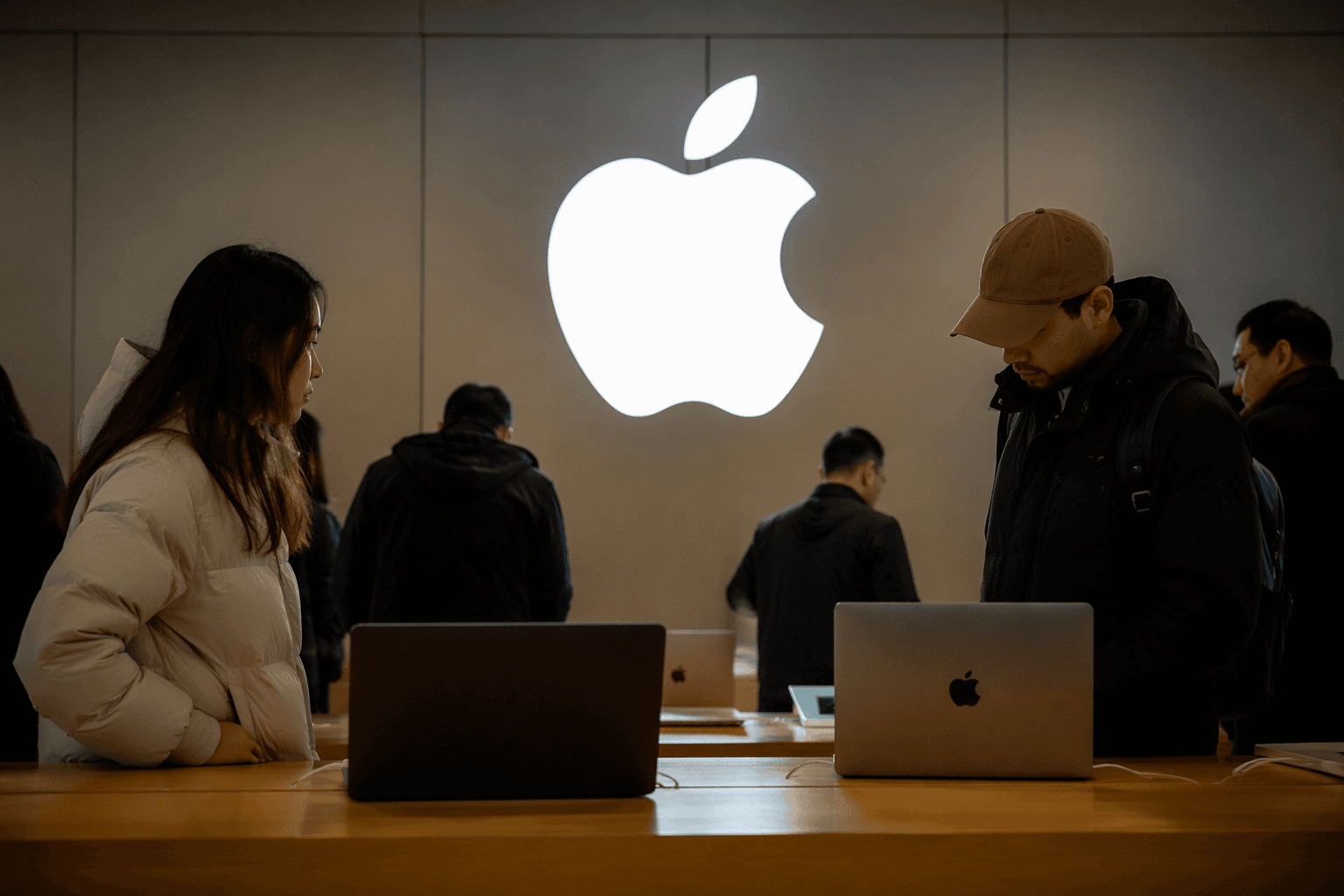
Apple moved in the opposite direction and helped cap the broader rally. The company raised prices on Macs and iPads, citing higher memory-chip costs tied to the AI boom. Reporting showed the MacBook Neo’s starting price rising to $699 from $599, while the MacBook Air went to $1,299 from $1,099. Those increases weighed on the megacap complex and reinforced a sharp distinction in the market: pricing power can help a company’s margins, but it does not always protect its stock when traders are already debating valuation.
The day’s trading also fit a wider pattern of investors rotating between AI enthusiasm and concern that the recent tech surge has gone too far. The market was waiting for the May 2026 PCE inflation report, the Federal Reserve’s preferred inflation gauge, with the Bureau of Economic Analysis set to publish the data and the Cleveland Fed’s June nowcast showing core PCE running around 0.28 percent month over month. That backdrop mattered after the Federal Reserve’s June 16-17 policy meeting, which left traders especially sensitive to any sign that inflation is cooling too slowly.
Even with Thursday’s uneven finish, the year’s gains remained intact. But the session showed how dependent the indexes have become on a narrow mix of AI-linked winners, and how quickly the mood can shift when one of the market’s biggest names stumbles.
This article was produced by Prism’s automated news system from verified source data, official records, and press releases, then run through automated quality and moderation checks before publishing. The system is built and supervised by the people who set the standards it runs under. Read our full AI policy.
Know something we missed? Have a correction or additional information?
Submit a Tip