Walmart expands digital shelf labels to 2,300 stores, expects chain-wide rollout
"Today, roughly 2,300 Walmart U.S. locations are already using digital shelf labels, and we expect this technology to be chain‑wide within the next year," Walmart said, calling the expansion a win for associates.
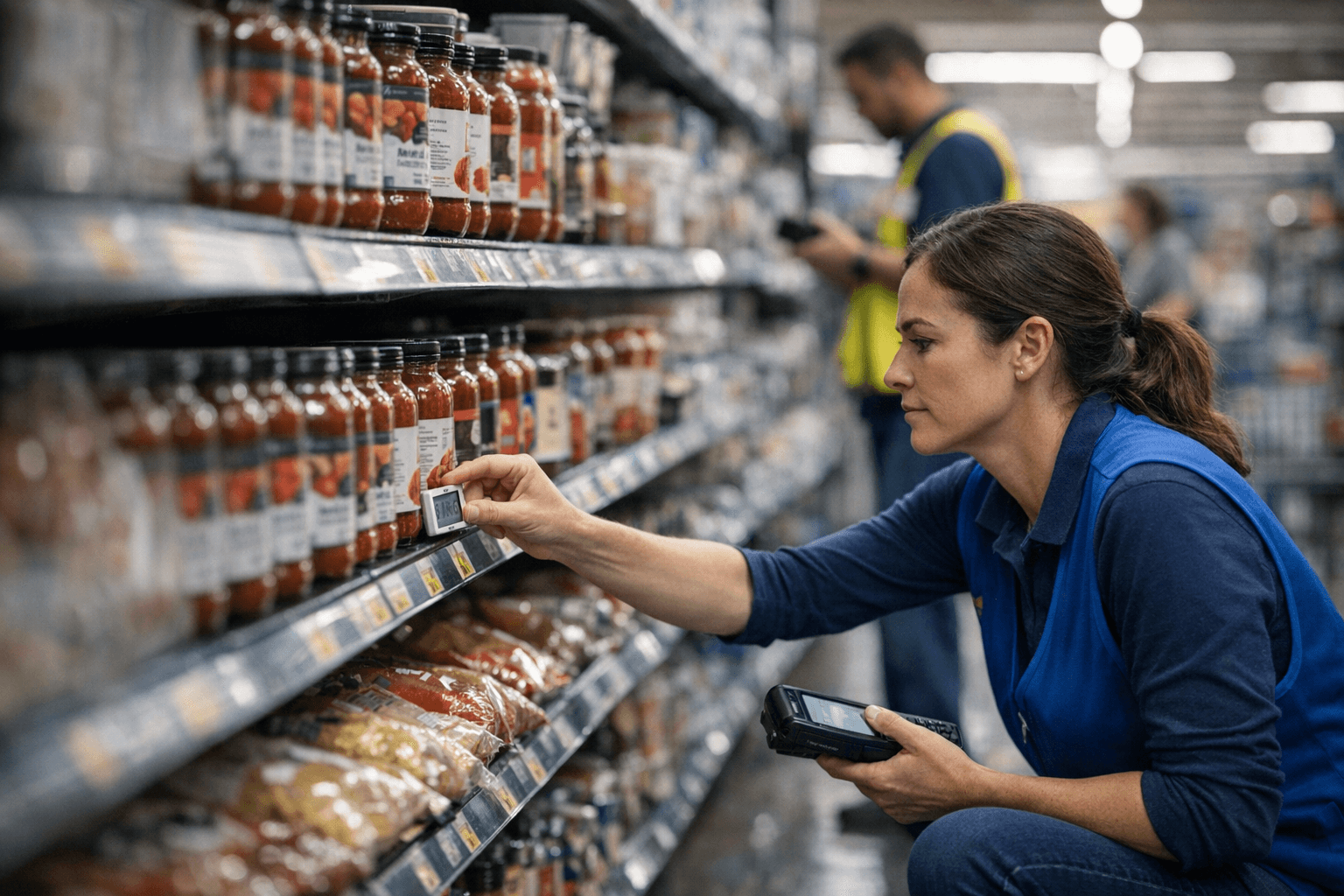
Today, roughly 2,300 Walmart U.S. locations are already using digital shelf labels, and we expect this technology to be chain‑wide within the next year. For our associates, that expansion can’t come soon enough," Walmart said in a company news post on March 2, 2026. The move signals a rapid shift from paper price tags to electronic shelf labels across a large share of the country’s biggest retailer.
Walmart framed the rollout around scale and speed, noting that "Walmart stores carry tens of thousands of items, and every single one needs to have a clear, accurate shelf price." According to the March 2 post, stores average "more than 120,000 items in a store" and face "thousands of weekly price updates including rollbacks and temporary price adjustments for competitive advantage." Before digital shelf labels, price changes "can take hours, if not days, to complete"; Walmart said those updates "can now be done in minutes, freeing up time to be spent with customers."
The company emphasized the human role in pricing even as it deploys technology. "Price updates are still people led and support Walmart’s Everyday Low Price (EDLP) promise. Associates review and push approved changes through a secure system, typically outside of shopping hours, so prices remain stable and consistent during the day," the post states. Walmart also highlighted shelf-to-register integrity, writing that this approach helps ensure that "customers see clear, consistent prices at the shelf that match what they are charged at the register. This builds customer trust."
Walmart is pushing operational features beyond static prices. The rollout includes a stock-locating capability Walmart calls "Stock to Light"; the company said, "Using a mobile device, associates can activate LED lights on shelf labels to quickly identify where items need to be restocked. That means less guessing, less backtracking and more efficient stocking helping ensure faster selling items are easily available for customers." The post also lists "Quicker Online Order Fulfillment" as a benefit of the system.
Industry context suggests Walmart is following a wider technology trend. BizTechMagazine said "Equipped with sensors, radio frequency identification (RFID) tags, and Internet of Things (IoT) connectivity, these intelligent shelves provide real-time data on product availability" and projected the global smart-shelf market to grow to "$15.34 billion by 2030." BizTech added that smart shelves can reduce out-of-stocks, inform product placement and even "reduce overall shrinkage."
Academic modeling gives a concrete performance case for smarter shelf decisions in perishables. An INFORMS summary of the study reported that researchers using "advanced analytical modeling and thousands of simulated retail scenarios" found that optimizing "product display, discount timing and discount depth" showed retailers could "increase profits by an average of 6% and cut waste by more than 21%." Zumbul Atan of Eindhoven University of Technology said, "Retailers don’t have to choose between profitability and sustainability." Amy Pan of the University of Florida added, "This research shows that better operations decisions can improve lives in very real ways."
Observers of the sector are urging faster adoption. Abasto cited IHL Group: "The data should force every retail executive to rethink their technology roadmap immediately," and reported that high-performing retailers "prioritize inventory visibility 208% more than laggards and are 136% more likely to deploy hybrid data-capture systems." Colliers data summarized by Midlandco shows where retail capacity is expanding, noting Texas recorded a net domestic migration of +0.9% between January 2021 and January 2025 and had "more than 17 million sq. ft." of retail under construction in early 2025 compared with 6 million sq. ft. of U.S. delivered retail space in the second quarter of 2025 and 47.9 million sq. ft. under construction nationwide.
Walmart’s announcement leaves clear follow-ups: the company did not name technology partners, publish installation costs or provide measured ROI or error-reduction figures from the 2,300 stores. Still, with a March 2, 2026 company post promising chain-wide deployment "within the next year" and industry voices calling adoption urgent, Walmart’s DSL program is positioned as an operational priority that will change how associates spend their time and how stores manage price and inventory in the near term.
Know something we missed? Have a correction or additional information?
Submit a Tip