Walmart promotes insider to CEO as retailers favor internal succession
Walmart said in November that US division CEO John Furner would become president and CEO on February 1, a move that highlights a retail trend of promoting insiders and matters for associates' career paths.
Harvard Business Review examines recent CEO appointments at Walmart, Target, and Disney, all insiders, discussing benefits and challenges for these companies. The pattern played out in retail this year as chains favored leaders who rose through their own ranks rather than outsiders.
Walmart said in November that the company's US division CEO, John Furner, would become president and CEO on February 1. Like outgoing CEO Doug McMillon, Furner has been with Walmart for decades, starting as an hourly associate and working his way up through the ranks. The personnel change follows a surprise retirement by McMillon that was flagged in industry headlines and fits a wave of executive reshuffling across big-box and grocery retailers.
The choice of an insider offers quick continuity for hourly associates and store managers who already know Furner's priorities and leadership style. Promoting from within can preserve institutional knowledge, sustain existing operational playbooks, and reduce disruption for store-level teams who rely on predictable supply chain and staffing policies. It also sends a signal to long-tenured workers that internal advancement remains a viable route to the top.
At the same time, insider succession can limit the blunt force of change that some investors and employees expect when companies need strategic reinvention. The sector appears to be striking a balance: companies are seeking leaders who can execute known playbooks while also delivering fresh results. Analysis from leadership consultancy Challenger, Gray & Christmas found that 43 retail companies announced CEO exits in the first 10 months of this year, up from 32 in the same period last year. Dozens of smaller retailers have taken the opportunity to shake up the C-suite as well.
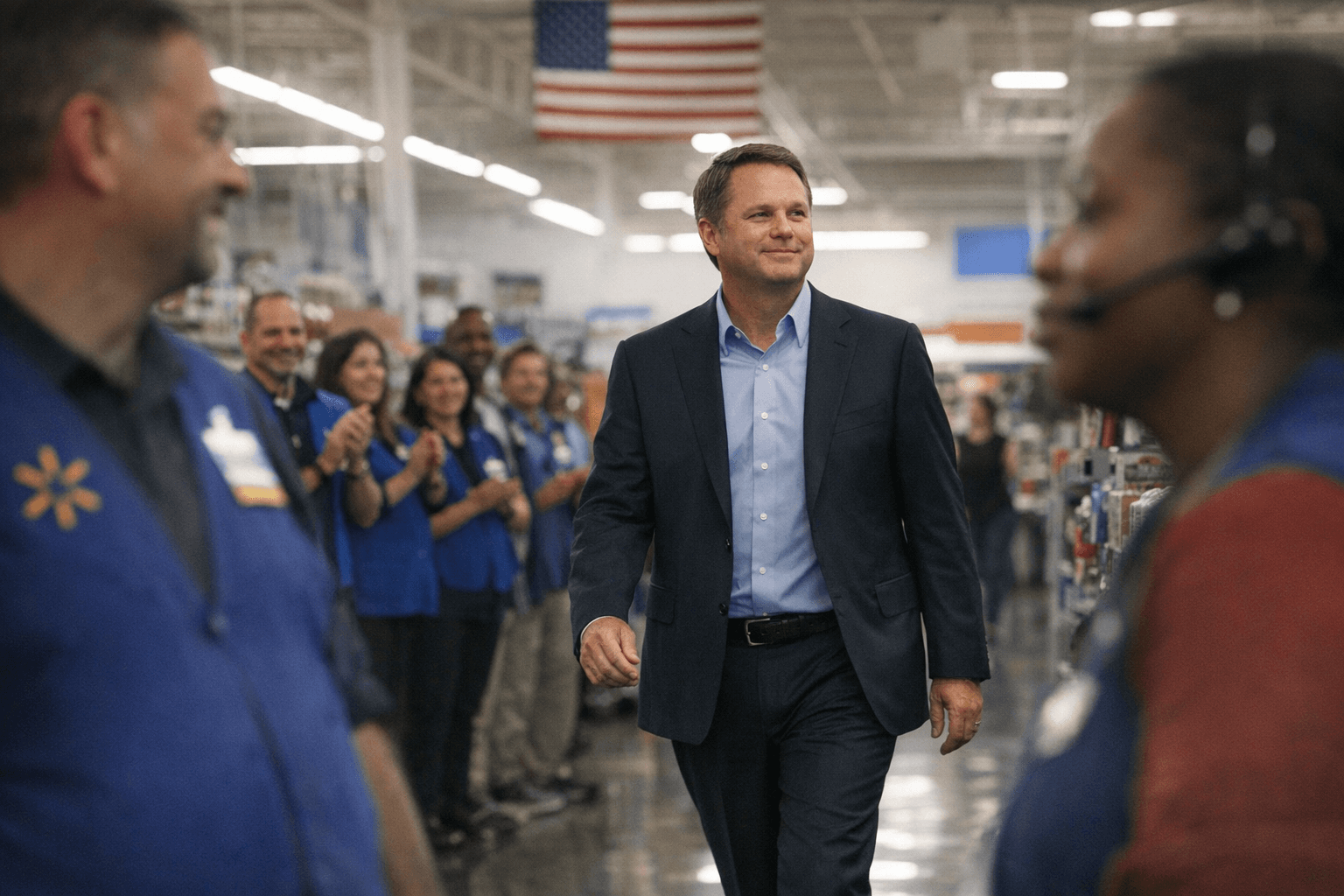
Adjacent appointments illustrate the mix of continuity and investor reaction. The appointment, effective immediately, is one of the latest CEO changes among U.S. retailers. New CEOs of Walmart and Target Corp. started last week. Kroger named Foran to lead its organization, and reports note Foran's prior impact at Walmart: “Foran, who was once called ‘the greatest retailer on the planet’ by Walmart’s former CEO Doug McMillon, encouraged staff to move with urgency when he took over to revitalize the company’s US segment in 2014.” “At Walmart, Foran’s leadership led to three straight years of increases in quarterly same-store sales at the US division of the world’s largest retailer.” Morgan Stanley analyst Simeon Gutman wrote that “The hiring of Foran would be an ‘incremental positive’ to the investment case for Kroger after his experience improving results at Walmart.” Gutman added, “Foran helped to drive meaningful operational change at Walmart,” while noting the new job will be harder because “Foran does inherit a more complex operation, with Kroger owning several retail chains — including Ralphs — compared to the single banner he oversaw at Walmart, he said.” Shares of Kroger rose as much as 6.8% in premarket trading on Monday. The stock had advanced 8% this year through Friday, compared with a gain of 1.3% for the Standard & Poor’s 500. Kroger reaffirmed its guidance for fiscal year 2025. The retailer will report quarterly earnings in March.
Other chains have chosen interim or dual leadership. Parent company Seven & i Holdings said in December that CEO Joe DePinto would retire at the end of the year. The company's current president, Stan Reynolds, and chief operating officer, Doug Rosencrans, are set to serve as co-CEOs until a permanent successor is hired.
For Walmart associates, the immediate outcome is likely stability in operations and leadership style under Furner, with the company signaling that long service and store-level experience remain pathways to senior roles. For employees at rival firms and recruiters watching the sector, the trend toward insiders suggests boards value execution and cultural fit as much as disruptive, outside change. As retailers report first-quarter results and new leaders settle in, workers should expect messaging that emphasizes operational priorities, and executives will face pressure to translate continuity into measurable sales and staffing gains.
Know something we missed? Have a correction or additional information?
Submit a Tip