Washington Square Park Debates Gates To Enforce Midnight Curfew
Washington Square Park’s midnight closure now hinges on locked gates, pitting residents who want sleep and order against a park built on openness.
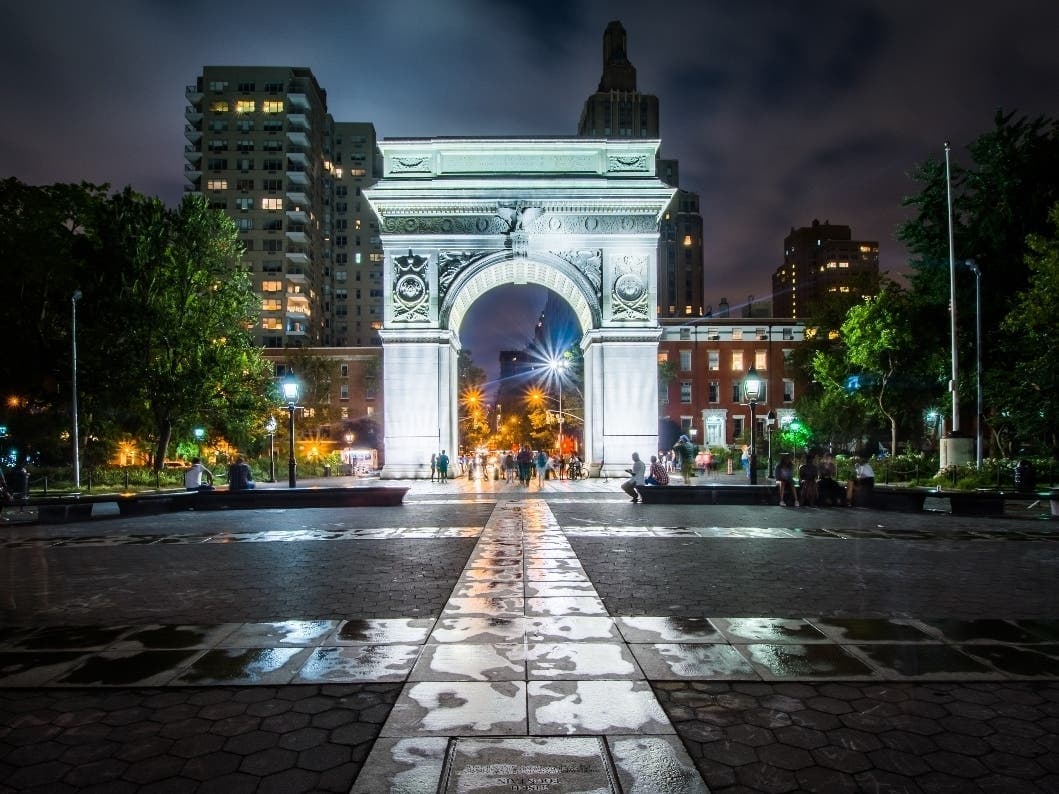
Washington Square Park’s overnight curfew is back at the center of a fight over who city space is for, and whether a lockable gate would do more than the police-placed French barricades now standing from midnight to 6 a.m. New York City park rules generally allow parks to stay open from 6 a.m. to 1 a.m., but anyone inside after hours can face a civil fine, and the current setup is widely seen as easy to bypass.
Community Board 2 voted to ask the Parks Department for recommendations on whether permanent gates should replace the movable barricades. Supporters say a fixed enclosure would make the midnight closure more effective and less dependent on makeshift barriers. Opponents say gates would change the character of a park that has long functioned as an open civic commons, not a controlled perimeter. One board member described the idea as something that had been “bubbling around for 20 years.”
The stakes are unusually high because Washington Square Park is not just another neighborhood green. The 9.75-acre space sits inside the Greenwich Village Historic District, established in 1969, and its past helps explain why changes to its entrances stir such intense scrutiny. The site was once a marsh fed by Minetta Creek and a Lenape village area known as Sapokanikan. In 1797, the city turned the land into a public burial ground that is estimated to have held about 20,000 burials. By 1826 it had become the Washington Military Parade Ground, and in 1827 it was officially named Washington Square Park.
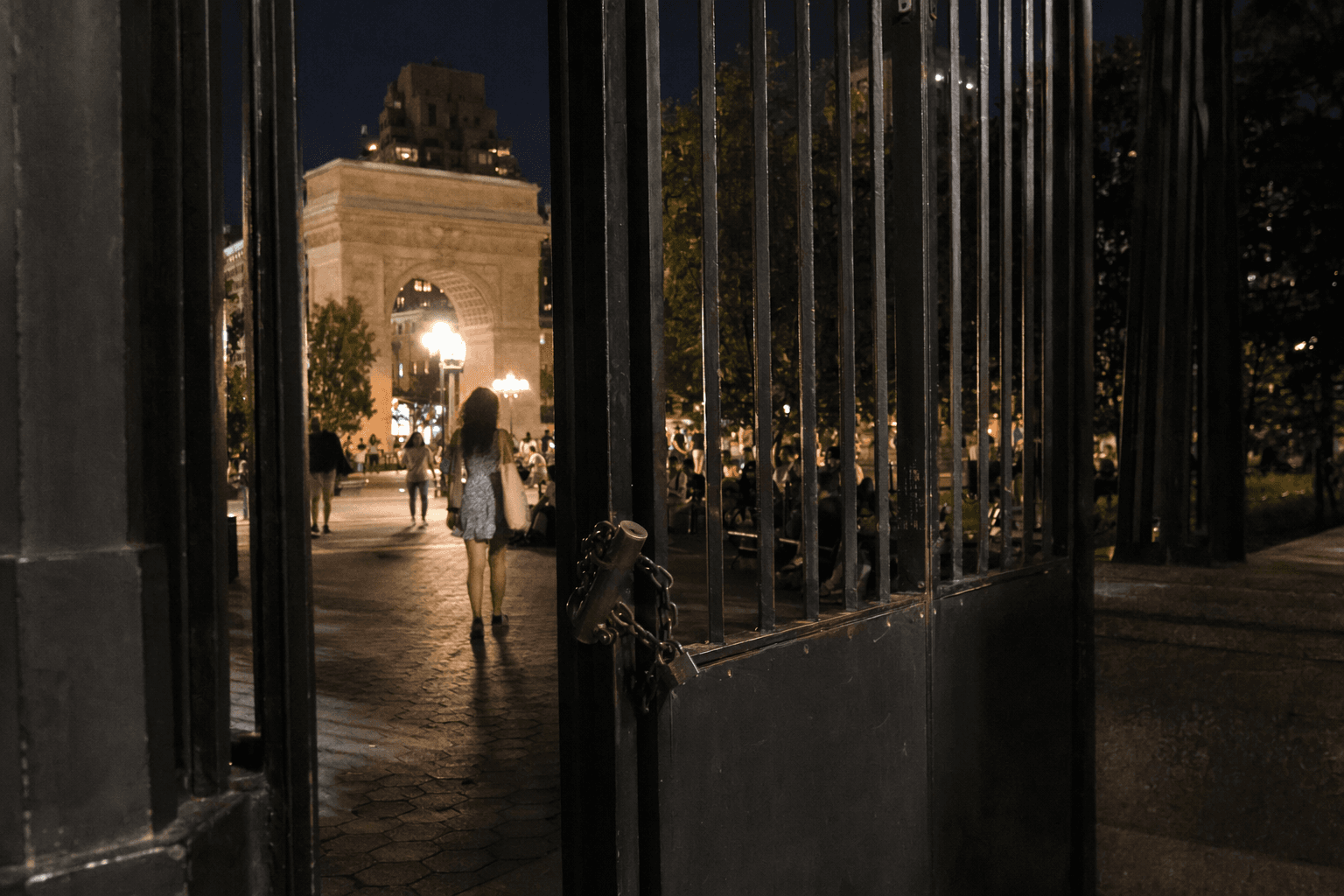
That layered history is anchored by the Washington Square Arch, built between 1890 and 1892 after a temporary version went up in 1889. Designed by Stanford White, the arch has become one of Manhattan’s most recognizable civic landmarks, a symbol of the park’s long association with protesters, artists, students and bohemian culture. For critics of gates, that legacy is inseparable from the park’s openness. For supporters, preservation does not mean tolerating disorder.
The gate push also comes after a run of public-safety problems that sharpened demands for control. In March 2025, Mayor Eric Adams and Manhattan District Attorney Alvin L. Bragg launched the Village Interagency Task Force to address drug use, homelessness, crime and public disorder around the park and nearby blocks. In October 2025, federal authorities announced drug-trafficking charges tied to two networks operating in and around Washington Square Park, and said at least five overdose deaths were linked to the case. In February 2026, a snowball confrontation at the park left two officers with lacerations.
If the proposal advances, it would still need approval from the Landmarks Preservation Commission. The next possible Community Board 2 vote was set for May 21, leaving the park’s future to a familiar New York test: whether physical barriers solve a governance failure, or simply narrow access to a place built as public ground.
This article was produced by Prism’s automated news system from verified source data, official records, and press releases, then run through automated quality and moderation checks before publishing. The system is built and supervised by the people who set the standards it runs under. Read our full AI policy.
Did this article answer your question?

