Weather Could Delay NASA's Artemis II Moon Launch Wednesday
Odds of Artemis II launching Wednesday at 6:24 p.m. are "essentially a coin toss" as midday rain threatens NASA's first crewed moon mission since 1972.
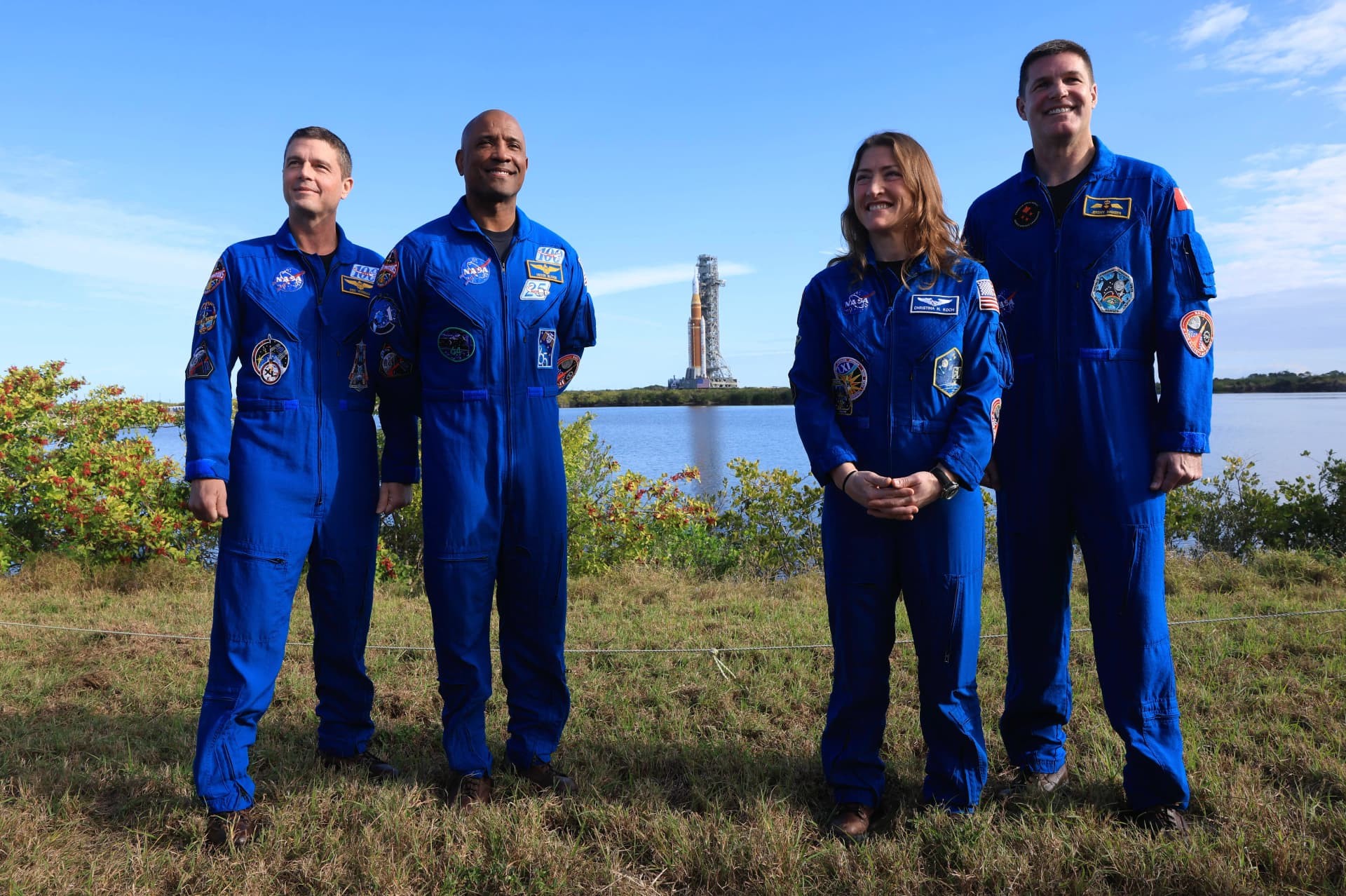
Record-breaking cold already forced a delay to NASA's Artemis II wet dress rehearsal, with freeze warnings sweeping Florida's Space Coast in the days before liftoff. Now, with Wednesday's launch window approaching, rain is the new variable meteorologists cannot pin down.
The mission is scheduled to lift off no earlier than 6:24 p.m. EDT Wednesday, April 1, from Launch Complex 39B at Kennedy Space Center. The crew of three Americans and one Canadian, including North Carolina native Christina Koch as the first woman to fly back to the Moon, will spend 10 days in space traveling further from Earth than anyone since the Apollo era, on the first crewed lunar mission since 1972.
NASA Ambassador Tony Rice described the outlook plainly: "At this point, the chances of Artemis II launching on its first opportunity on April 1 at 6:24 p.m. are essentially a coin toss."
The forecast calls for rain chances to build around midday Wednesday before easing as the evening window opens. Rice offered cautious encouragement, noting the trend "should be taken as a bit of encouragement rather than anything firm," given how quickly Florida weather can shift. A slip to Thursday offers little relief: Rice warned that Thursday "may bring more of a challenge, with isolated showers in the forecast."
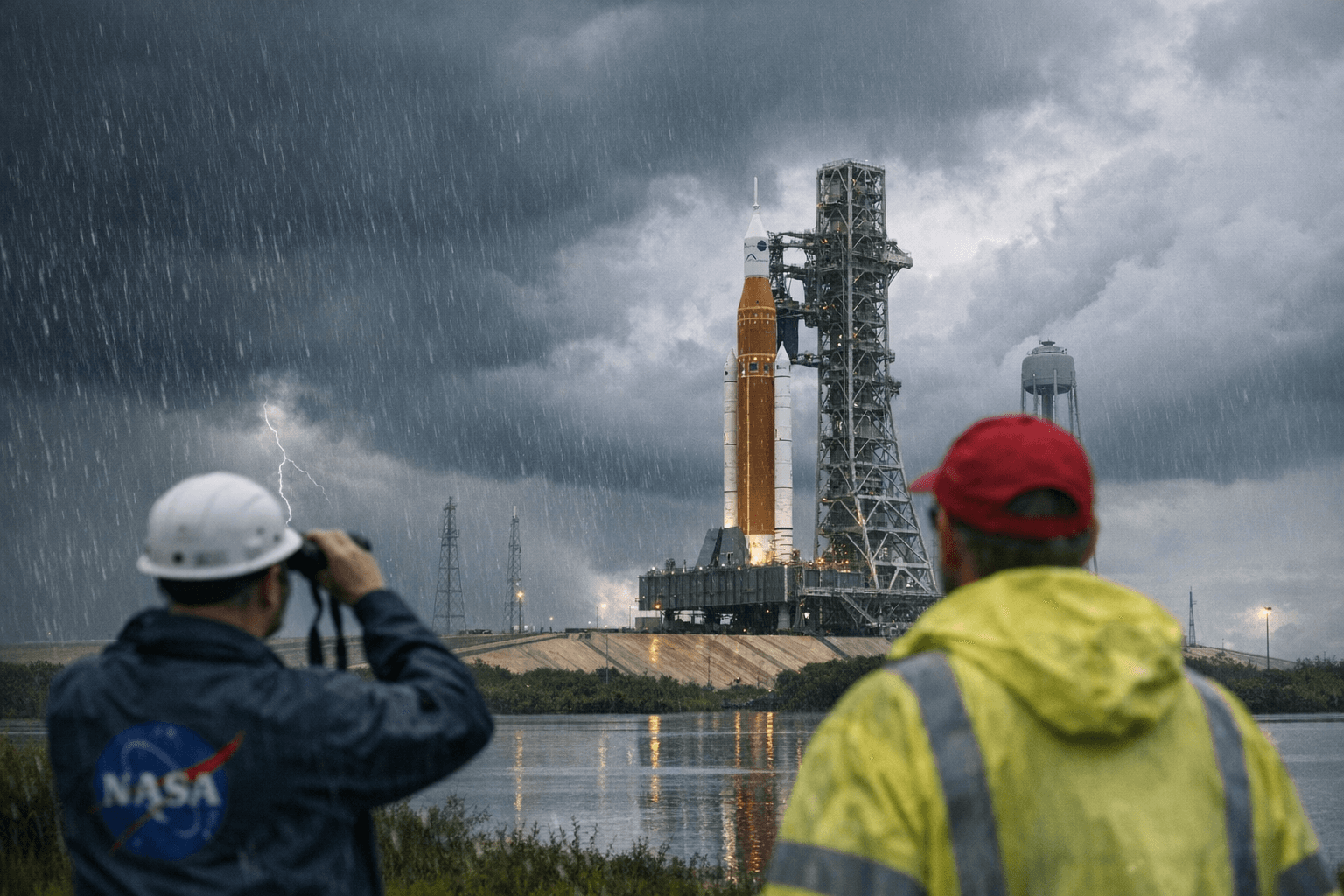
Weather is only one gate the mission must clear. "Everything either comes together, with fueling, technical work, and weather all within limits, or it does not," Rice said.
What makes launch-day forecasting more complicated than a simple rain check is that clear skies carry their own risks. Rockets can trigger lightning when passing through charged atmospheric layers, meaning an apparently sunny afternoon can still force a scrub. Launches are prohibited near thunderstorms or electrified cloud fields, and clouds not producing a single drop of rain can still violate rules if they contain the right mix of ice and liquid water. NASA's constraints specifically target clouds producing precipitation, thick cloud layers extending into freezing temperatures, and clouds capable of charge buildup.
The Artemis II Space Launch System rocket and Orion spacecraft completed their roughly 10-hour overnight rollout from the Vehicle Assembly Building to LC-39B on March 20, and teams have been working through final preparations since. If Wednesday's midday showers clear on schedule and fueling and technical checks hold, the 6:24 p.m. window remains NASA's best shot at sending humans toward the Moon for the first time in more than 50 years. For now, it is a coin in the air.
This article was produced by Prism’s automated news system from verified source data, official records, and press releases, then run through automated quality and moderation checks before publishing. The system is built and supervised by the people who set the standards it runs under. Read our full AI policy.
Did this article answer your question?

