Wedding Gallery's Missouri Manufacturing Shields St. Charles Bridal Shop From Tariff Hikes
Wedding Gallery in St. Charles says its decision to design and manufacture all wedding gowns in the U.S. has let it avoid tariff surcharges, price hikes, and supply disruptions.

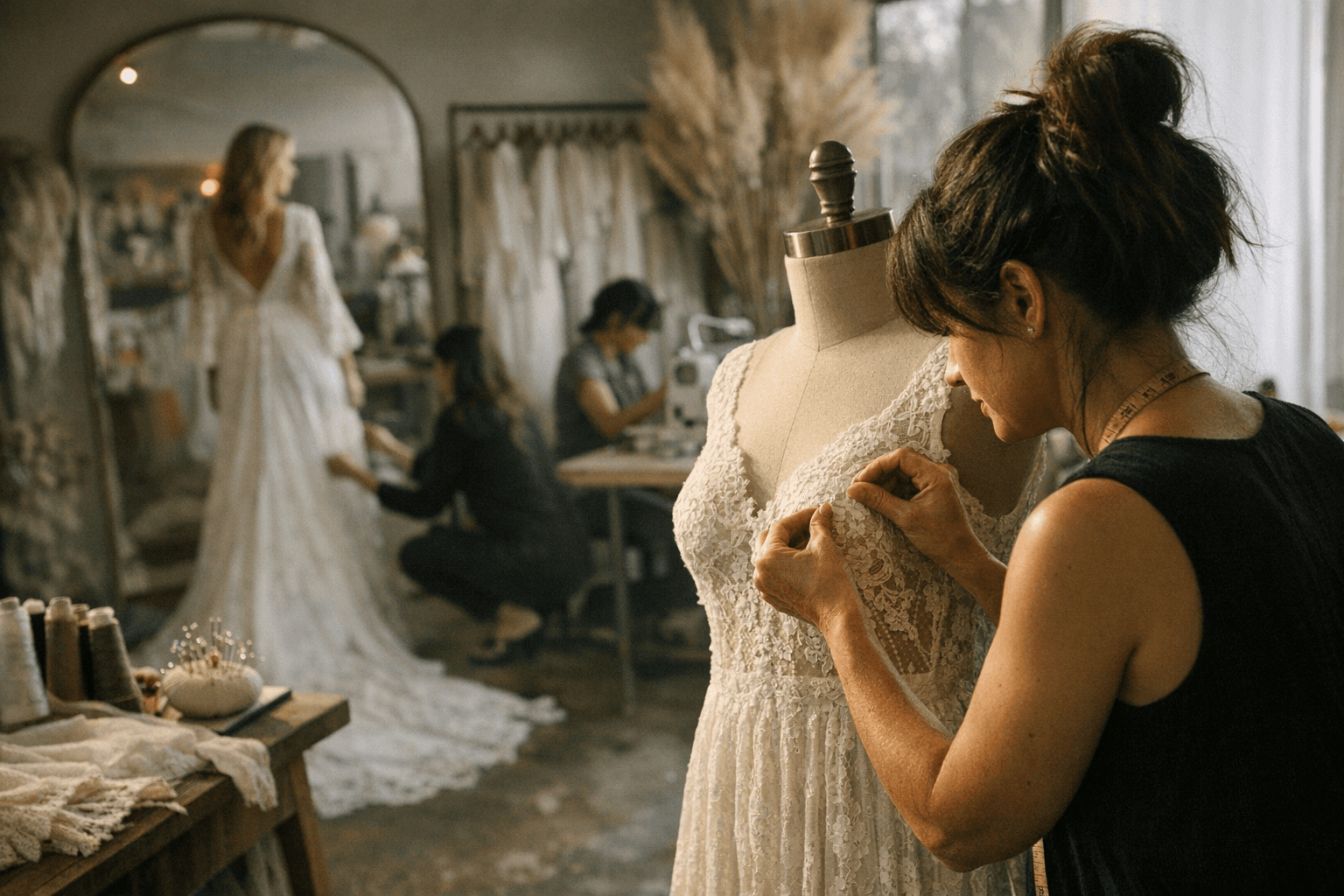
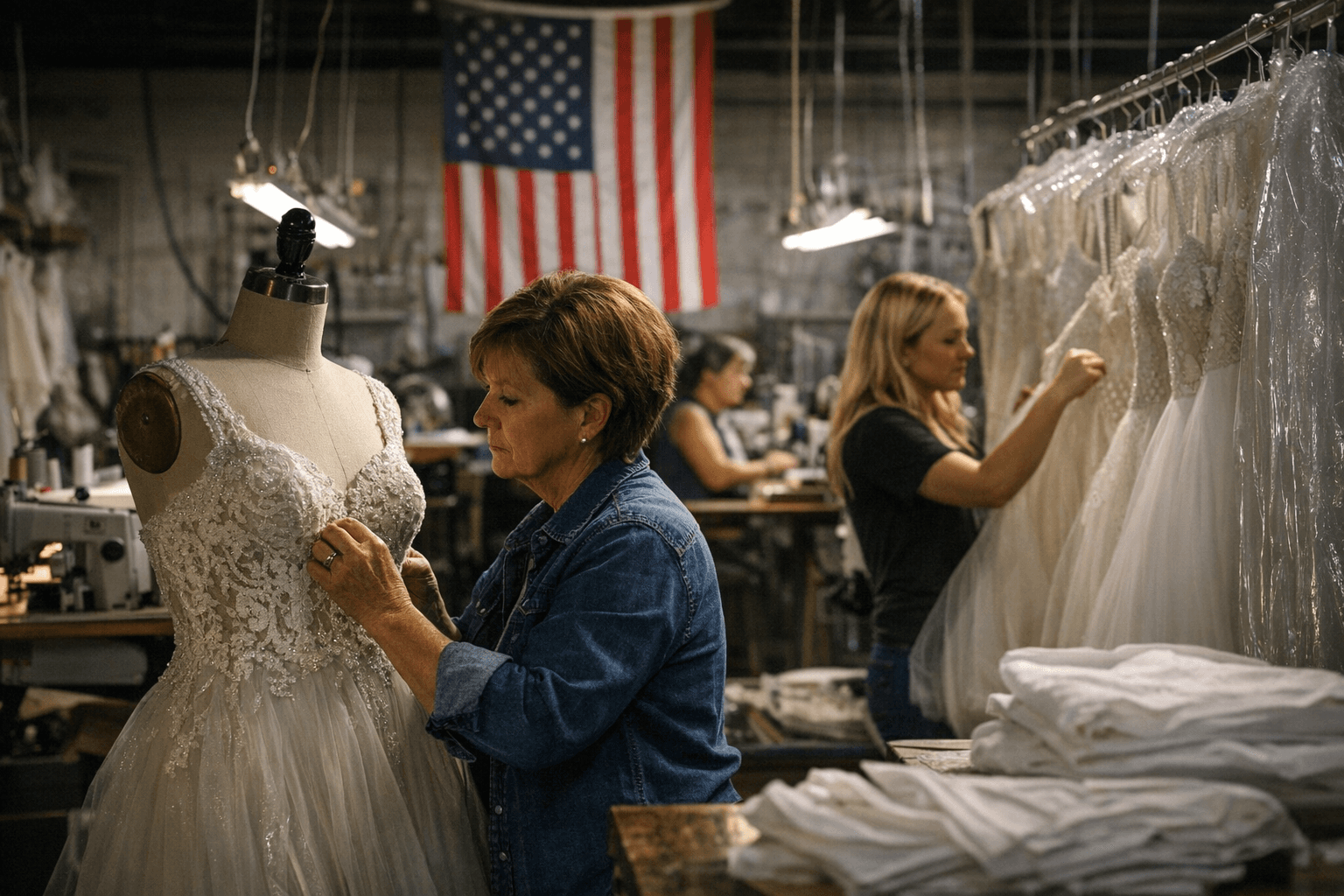
In a market where an estimated 90 percent of wedding dresses are made in China, Wedding Gallery has doubled down on a different path. The St. Charles, Missouri bridal salon and factory designs and manufactures all of its wedding dresses domestically, and Pr Chestercounty reported the company has not raised prices, added surcharges, or experienced a single supply chain disruption tied to the U.S.-China trade disputes.
The business has scaled rapidly. Pr Chestercounty notes Wedding Gallery grew from a 2,000-square-foot startup to a facility exceeding 10,000 square feet and operates a local production team in St. Charles. The company has “operated its factory continuously since transitioning from reselling other designers’ gowns to producing its own collection,” the release said. Speaking in the statement, Abdelghfour framed the shop as proof of a domestic model: “Every time someone says American-made wedding dresses aren’t possible, I think about the thousands of brides who have worn our gowns,” and “We’ve been doing this for almost 20 years. It’s not a theory. It’s our business.”
That local resilience stands in stark contrast with industrywide volatility. Pr Chestercounty reported bridal shops across the United States are grappling with tariff surcharges of 10 to 15 percent on imported wedding gowns. Editorial commentary from Astraea Bridal warned consumers that in some cases prices could rise by 20 percent or more, giving the example of a gown that moved from $2,000 to “closer to $2,400—or even higher.” At the company level, CNBC reported Justin Alexander applied surcharges that translated to approximately a 6 percent retail increase, noting that a $2,000 dress would now cost a customer $120 more. CNBC also detailed Justin Alexander’s production split as about 50 percent China, 45 percent Vietnam, and 5 percent Myanmar, and said the brand absorbed tariff costs for orders placed before the surcharges went into effect, with creative director and CEO Justin Warshaw saying, “We understand a bride said yes to the dress at a price.”
Retailers are responding in a range of ways. Pr Chestercounty reported David’s Bridal, the nation’s largest bridal retailer with nearly 200 stores, has publicly stated it is accelerating efforts to move all manufacturing out of China. Fifisbridal’s mitigation recommendations include diversifying suppliers to tariff-friendly countries such as Canada or Mexico, shifting production to Sri Lanka and Myanmar as an example, stockpiling in-stock inventory to avoid new duties, and investing in domestic production where feasible. Fifisbridal also highlighted Casablanca Bridal’s choice to absorb tariff costs so customers pay no additional fees, and Astraea Bridal urged brides to consider consignment as a tariff-free route to designer gowns.
The trade shock has also reinforced a price point reality. CNBC chronicled a luxury brand owned by Steven and Shawne Jacobs that opened a U.S. manufacturing facility near its Atlanta headquarters after COVID supply shocks; Shawne Jacobs acknowledged the move’s economics, saying, “It worked because of our price points,” and added, “But we're talking about luxury goods.” Wedding Gallery’s experience shows domestic production can blunt tariff-driven price shocks for brides, while the wider industry — representing approximately 6,000 wedding and special occasion shops through the National Bridal Retailers Association — still faces difficult choices about sourcing, cost absorption, and whether to relocate production overseas or invest in U.S. capacity.
Know something we missed? Have a correction or additional information?
Submit a Tip