WellSpan Lewisburg, Geisinger Danville Deploy AI Ambient Scribes During Visits
WellSpan Evangelical Community Hospital in Lewisburg uses Nuance’s DAX to transcribe visits while Geisinger in Danville also employs ambient listening programs, one clinician called the change a “game‑changer.”
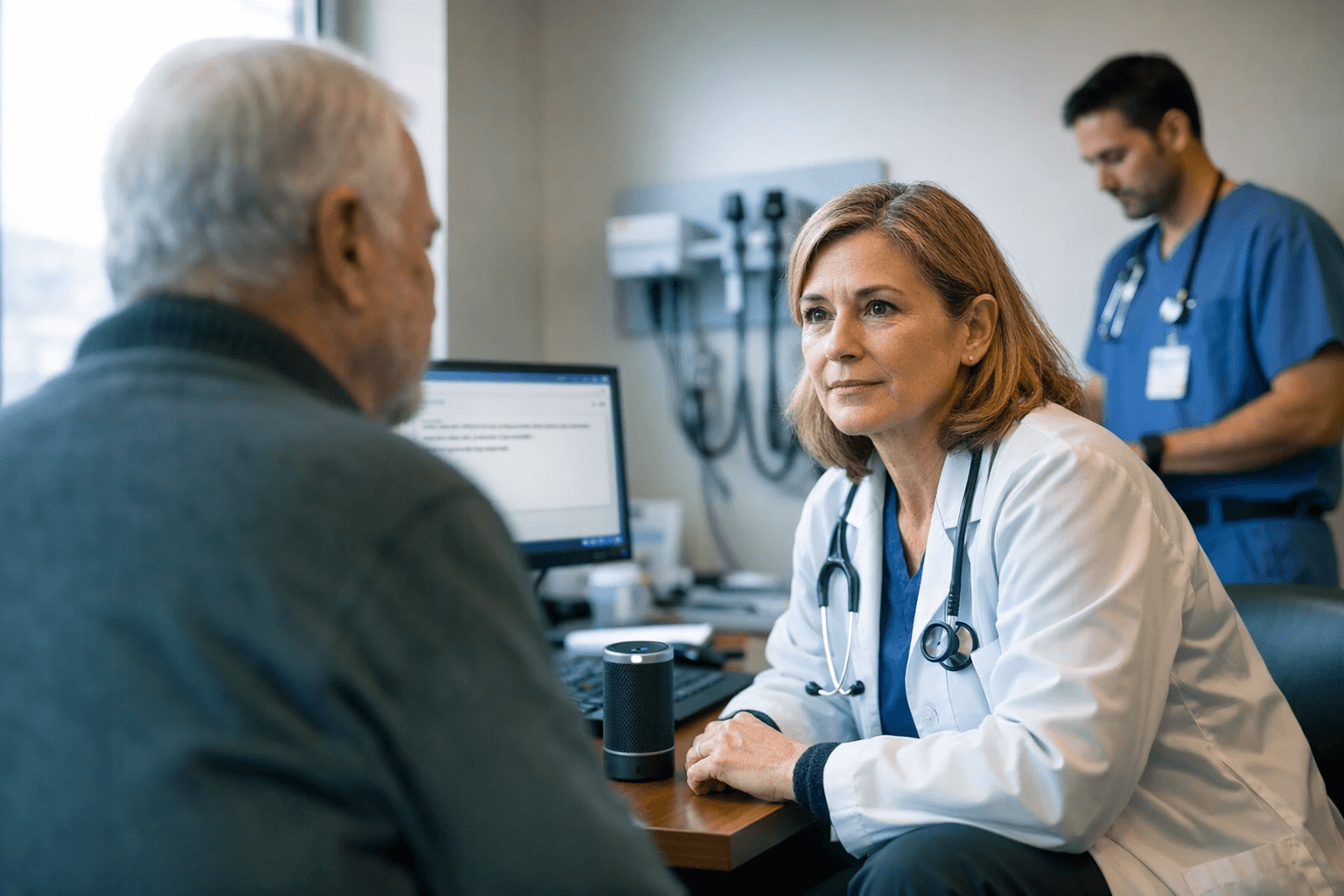
WellSpan Evangelical Community Hospital in Lewisburg and Geisinger in Danville are using artificial‑intelligence “ambient listening” programs during patient visits to generate clinical notes, local reporting shows, a change clinicians say alters how doctors spend time with patients. WellSpan identifies its system as DAX, short for Nuance Dragon Ambient eXperience, a voice‑activated tool that listens to conversations and converts them into electronic medical‑record documentation so physicians do not have to type during the encounter.
Nuance’s materials describe DAX as a voice‑recognition system that “listen[s] to and document[s] the conversation between a physician and a patient, converting it into clinical notes.” The vendor’s 2021 case study explicitly claims the technology “increases patient satisfaction” and notes a WellSpan figure of “2,600 physicians,” language presented as Nuance marketing rather than audited hospital data. A clinician voice printed in Nuance outreach captures the workflow shift: “Needing to return to my desk and document, I can say, ‘let's hear everything you have to say today.’”
WellSpan leaders and clinicians framed the deployment around access and documentation. Dr. Hal Baker, WellSpan’s chief digital and information officer in quoted materials, said the technology is “a catalyst to achieve best‑practice documentation while maximizing the intimacy and trust physicians build with patients,” and added, “There’s a certain business requirement for careful documentation and coding. But ultimately, all of the effort is founded upon the patient’s story.” Family medicine specialist Dr. Mokarroma Sharmin, identified in WellSpan/Nuance copy, tied the tool directly to local capacity: “Our community needs lots of providers, and patients need more appointments; there are new patients that we can’t accept because of the lack of providers in the community. DAX will help to open us to more new patients, that is the main goal of having DAX in our practice.”
National reporting places WellSpan and Geisinger’s moves in a wider rollout of ambient scribes across health systems. “Ambient AI scribes are being hailed by physicians as a game changer,” Michelle Andrews wrote for KFF Health News, noting large deployments such as Kaiser Permanente’s provision of the technology to “more than 25,000 doctors, advanced practice providers, and pharmacists systemwide.” KFF also flagged accuracy concerns known as “hallucinations,” where an AI‑generated note may say a doctor planned a referral or a two‑week follow‑up that the clinician never ordered. Daniel Yang, vice president of AI and emerging technologies at Kaiser Permanente, said those errors are “quite rare” but underscored that “the technology is not perfect, and that's why physicians are reviewing it,” adding, “It's learning from regular physician visits as it goes. That's why having a person check the work product is critical.”
Vendor and local materials emphasize privacy and quiet operation; Nuance’s copy asserts DAX “puts a listening device in the room quietly, securely, privately.” The excerpts available to this outlet do not include detailed patient consent forms, data‑retention policies, or systemwide error‑rate metrics for WellSpan or Geisinger, leaving gaps that health systems and regulators will need to address as deployments scale. Mid‑February regional reporting and national analysis suggest the immediate local impact in Union County is practical: clinicians in Lewisburg and Danville are using ambient scribes to reduce after‑hours documentation and to free clinicians to focus on patients, while physician review and quality controls remain essential to catch the technology’s mistakes.
Know something we missed? Have a correction or additional information?
Submit a Tip