Welsh schools back phone bans as government reviews nationwide guidance
Welsh schools say phone bans have sharpened behaviour, but uneven rules leave some pupils restricted while others are exempt and parents split over safety.

Phones have become one of the sharpest fault lines in Welsh classrooms: schools say tighter bans are improving behaviour, yet enforcement often falls unevenly on pupils while some age groups or circumstances remain exempt. That tension is now at the center of a Welsh Government review, after almost 100 schools, nearly half of Wales’ secondary schools, responded to BBC Wales questions on phone policies.
On 6 March 2026, Education Secretary Lynne Neagle said the government was developing national guidance and a survey on mobile phone use in schools. Decisions still rest with individual schools and governing bodies, and ministers want to cut classroom disruption without stripping away local flexibility. Neagle said the effects of social media on children are a “matter of significant concern,” and the government wants final guidance published before the new school year.
The current patchwork is already visible across Wales. Some schools allow phones if they are switched off and left unused in lessons; others use lockable pouches; still others impose a full-day ban that reaches breaks and lunchtime. That unevenness has produced the central contradiction in the debate: pupils can be barred in one setting while older students, or those with specific needs, may be allowed to keep devices for welfare, communication or safety reasons. Parents who see phones as a lifeline back those exceptions, while headteachers argue that distraction and conflict are harder to manage when rules are not clear.
A Welsh Government research summary published in May 2025 said teachers had reported a rise in challenging and disruptive behaviour, especially since the pandemic. It linked the pressure on classrooms to socio-economic disparities, changing classroom dynamics and technology integration, and recommended updated national behaviour guidance, including stronger whole-school approaches such as School-Wide Positive Behaviour Support. That context matters because the phone debate is not being fought in isolation; it sits inside a broader effort to restore order and protect teaching time.
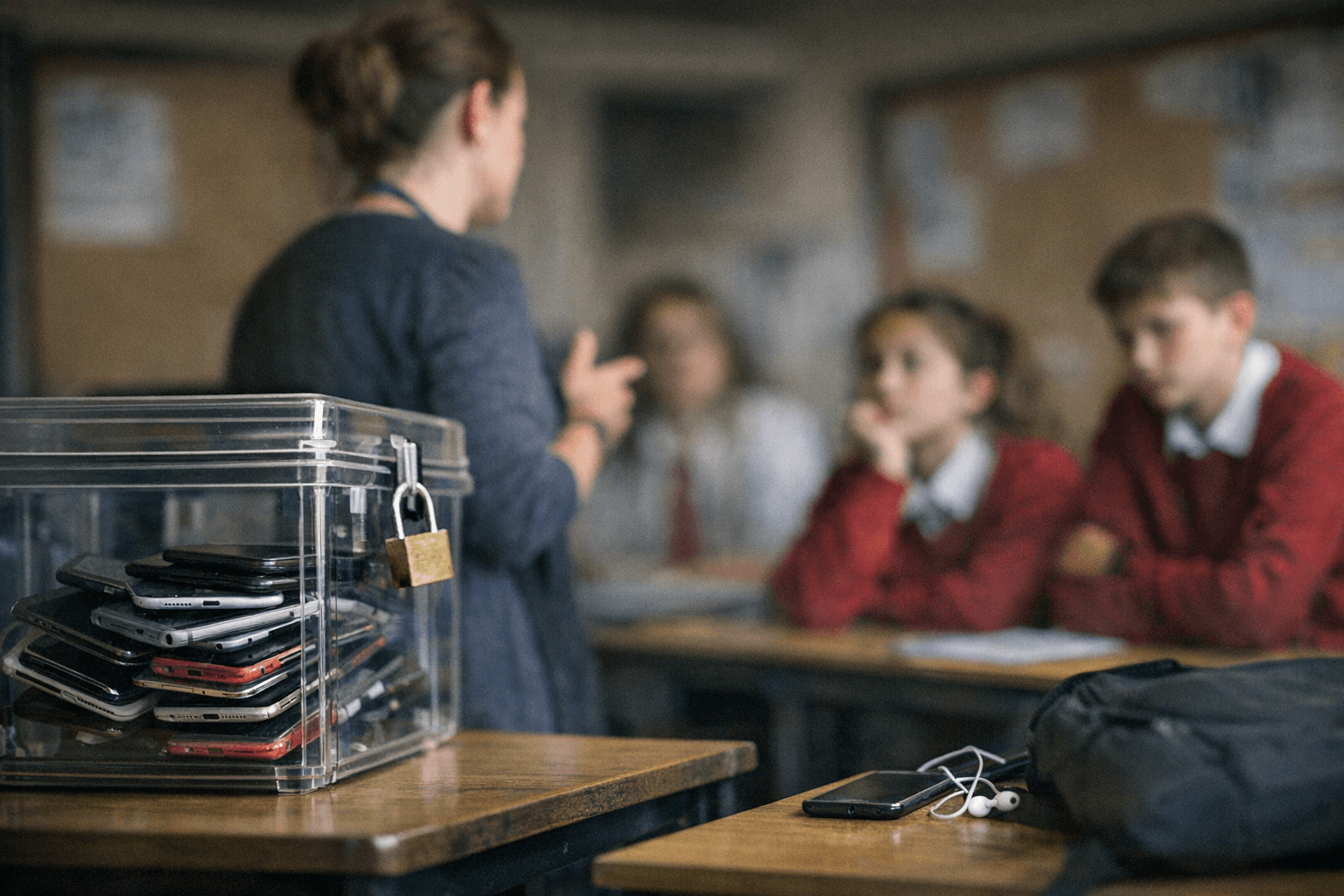
The Senedd Petitions Committee drew the same distinction in March 2025 when it rejected an outright nationwide smartphone ban. The committee said phones can damage concentration and wellbeing, but also noted that they can support some young people’s welfare and safety. The petition calling for a ban had more than 3,000 signatures, yet the committee said a uniform ban was not the clear answer and urged clearer guidance and a stronger decision-making framework for schools.
For Welsh ministers, the politics now hinge on whether national rules can reduce conflict without flattening local judgment. The Welsh Government says almost all schools already have mobile phone policies, but the range of restrictions remains wide. England has moved in the opposite direction, with official guidance expecting schools to prohibit phone use by default and Ofsted examining how policies are communicated and enforced. In Wales, the next test is whether new guidance can bring consistency to a problem that has become as much about discipline and trust as it is about devices.
This article was produced by Prism’s automated news system from verified source data, official records, and press releases, then run through automated quality and moderation checks before publishing. The system is built and supervised by the people who set the standards it runs under. Read our full AI policy.
Did this article answer your question?

