West aims to curb China minerals dependence, risks oversupply busts
Billions in U.S. and Australian mineral subsidies could spark the oversupply busts policymakers want to avoid, especially in rare earths and lithium.
Western governments are pouring tens of billions of dollars into critical minerals to cut dependence on China, but the bigger risk may be a fresh round of industrial-policy excess, the kind that once left Europe with butter mountains and metal gluts. Brett Beatty, a partner at Resource Capital Funds, warned that without coordination, officials could end up backing too much supply at once. He said the danger is that “everyone does their own thing and ends up generating multiples of the volumes the world needs,” a rush that would crush prices and leave the market weaker, not stronger.
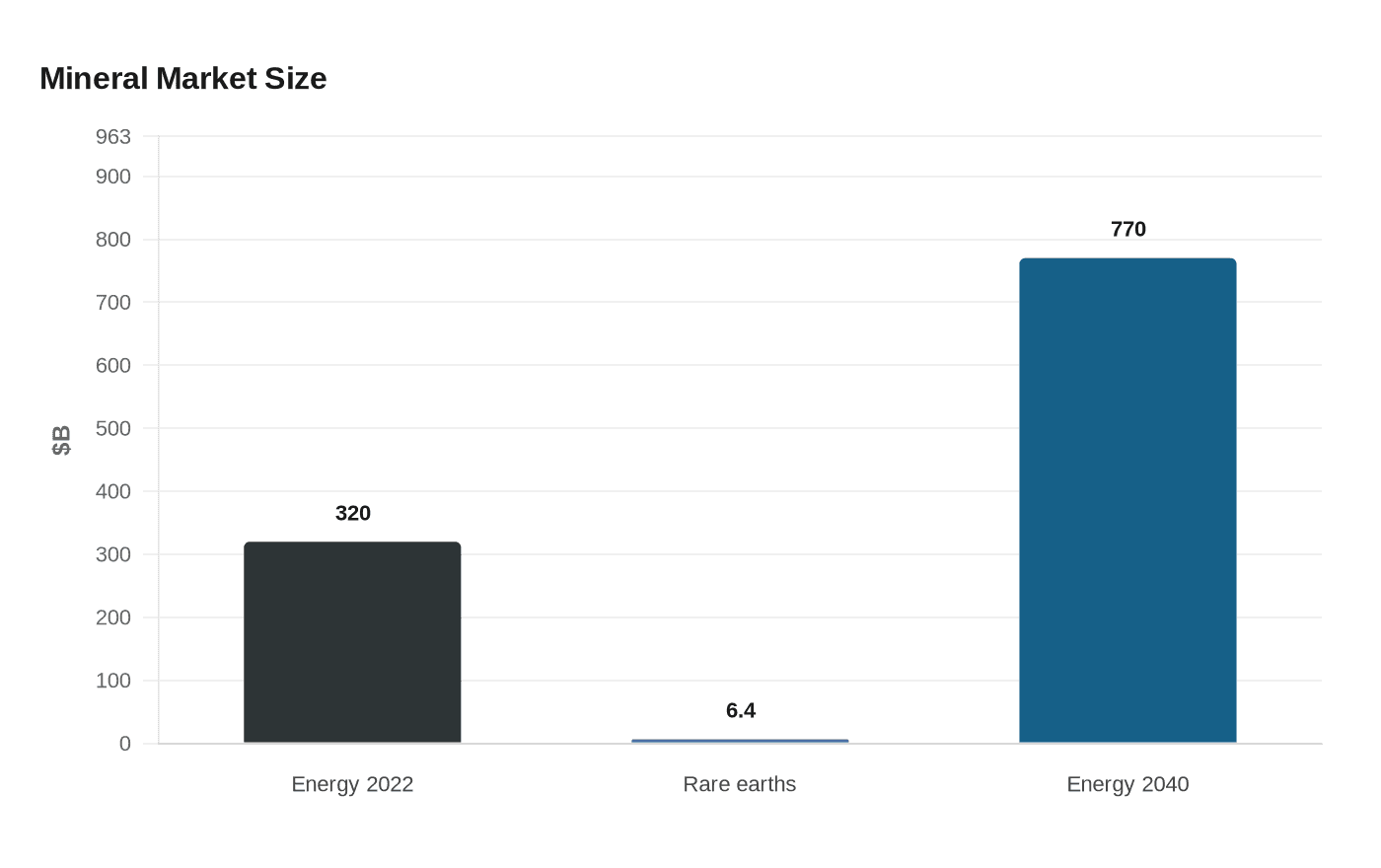
The stakes are highest in the smaller minerals markets, where public spending can overwhelm demand faster than private capital can retreat. The International Energy Agency said the market for key energy-transition minerals reached $320 billion in 2022 and is set to more than double again to $770 billion by 2040 in its net zero scenario. But rare earths, one of the most strategically sensitive segments, were worth only about $6.4 billion in 2024. The IEA also said lithium demand jumped 30% in 2023, while demand for nickel, cobalt, graphite and rare earth elements rose between 8% and 15%. That mismatch is why the flood of subsidies now being deployed by the United States, the European Union, Australia and Japan could outrun real demand if projects come online too quickly.
The U.S. has already moved from rhetoric to stockpiling. The White House introduced Project Vault on February 2, 2026, describing it as a critical-mineral stockpile for American businesses meant to cushion market disruptions. Australia is taking a similar tack, but with a broader supply-chain play. Canberra committed A$1.2 billion on April 24, 2025, to establish a Critical Minerals Strategic Reserve, which is due to become operational in the second half of 2026. The reserve is designed to secure rights to minerals produced in Australia and on-sell those rights to meet demand, with $1 billion set aside for transactions from an expanded A$5 billion Critical Minerals Facility.

The policy case is clear: secure supply before a geopolitical shock turns into a shortage. The policy hazard is just as clear: if governments subsidize mines, refineries and stockpiles without coordinating timing, they can create stranded capacity and force taxpayers to absorb the losses. Australia’s own resource base, including some of the world’s largest reserves of lithium, cobalt and rare earths, makes it a natural supplier. It also makes the country vulnerable if too many governments chase the same security trade at once. Europe’s butter mountains grew out of guaranteed milk prices before 1984, when intervention buying and price supports encouraged surpluses that swamped the market. A similar pattern in critical minerals would not just distort prices. It would leave the West paying for the excess while trying to escape China’s grip on supply.
This article was produced by Prism’s automated news system from verified source data, official records, and press releases, then run through automated quality and moderation checks before publishing. The system is built and supervised by the people who set the standards it runs under. Read our full AI policy.
Know something we missed? Have a correction or additional information?
Submit a Tip