West Nile surveillance helps officials track outbreaks and guide control
West Nile surveillance gives health departments the earliest warning, but the monitoring system is labor-heavy and uneven. When sampling lags, control measures do too.
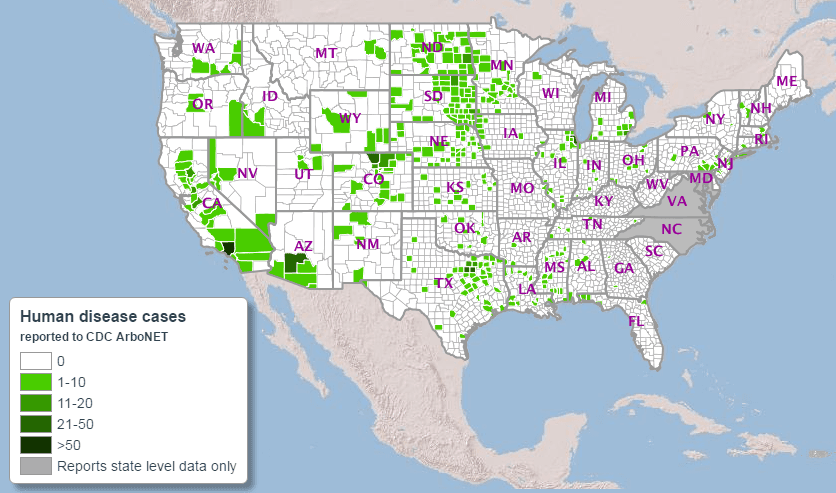
West Nile surveillance is what lets health departments see trouble before hospitals do. CDC guidance places that job with state and local public health officials and mosquito control personnel, and the agency’s ArboNET system is built for them to collect and submit field data. That matters because mosquito-borne diseases already kill more than one million people and infect up to 700 million worldwide, making early detection a practical line of defense rather than a paperwork exercise.
How the tracking system is set up
CDC’s West Nile Virus Surveillance and Control Guidelines are designed to help officials monitor the virus and decide how to respond. The surveillance side is not abstract data management, it is the routine work of trapping mosquitoes, testing them, and feeding the results into ArboNET so local and state teams can see where the virus is moving. West Nile can cause severe neurologic illness, including encephalitis and meningitis, so the value of that system is measured in cases avoided, not just records kept.
The structure is built around local action. Public health agencies and mosquito control professionals are the ones collecting data, and CDC’s role is to provide the common system and guidance that turn isolated samples into a regional picture. That framework has been part of the long-running national response to West Nile, which is exactly why the system still matters after years of experience with the virus.
What early warning actually prevents
Surveillance is useful because it changes timing and geography. At Colorado State University’s Rockies and High Plains Vector-borne Diseases Center in Fort Collins, vector-control decisions often depend on surveillance to determine the best time and place to enact control measures. In practice, that means the difference between moving in before local transmission builds and waiting until human cases force a broader response.
The practical stakes are straightforward. When officials know where infected mosquitoes are showing up, they can direct control measures to the right area instead of treating a whole county as if it were equally at risk. That kind of targeting is the main way surveillance keeps a manageable public-health threat from turning into a costly outbreak.
Where the system still misses things
Even well-established surveillance networks have blind spots. A 2017 report based on CDC data found that gaps remained in monitoring mosquitoes that transmit Zika, showing that the challenge is not limited to one virus or one season. The lesson carries over to West Nile, because the same local systems that track a known threat can struggle when a new pathogen appears or spreads faster than sampling can keep up.

A later review by public-health experts sharpened that concern, identifying two persistent problems in Europe and the United States: finding emerging pathogens early and maintaining enough public-health funding and testing infrastructure to support surveillance. That combination matters because surveillance is only as strong as the staff, lab capacity, and reporting systems behind it. If any of those pieces fall behind, the warning arrives after transmission has already widened.
What the workload looks like on the ground
Ohio’s vector-borne disease update shows how demanding the work can be when surveillance is functioning at scale. The state reported 118,252 mosquitoes tested from 44 agencies in 40 counties, pooled into 3,670 samples. Those numbers show why mosquito surveillance is labor-intensive by design: it relies on coordination across local agencies, sustained sample collection, and enough testing capacity to turn thousands of insects into usable public-health intelligence.
That scale also explains why underfunding hurts so quickly. A single county program can miss patterns that become visible only when dozens of agencies are feeding consistent data into the system. Pooling samples helps stretch resources, but it still requires trained personnel, working labs, and regular submission of results, all of which are vulnerable when budgets tighten.
Why sustained surveillance remains the core defense
West Nile remains the clearest example of why surveillance is not a side task. The virus can cause severe neurologic disease, the mosquito-borne disease burden is global, and the same systems that track West Nile must also be able to notice the next emerging threat. CDC’s guidance, ArboNET, Colorado State’s field-based decision-making, and Ohio’s test counts all point to the same reality: early-warning systems prevent outbreaks only when local capacity is strong enough to feed them.
When that capacity is thin, surveillance stops being an early alarm and becomes a delayed record of spread. The public-health cost is not just more mosquitoes in the air, but more illness, more testing, and more expensive control after transmission has already taken hold.
This article was produced by Prism’s automated news system from verified source data, official records, and press releases, then run through automated quality and moderation checks before publishing. The system is built and supervised by the people who set the standards it runs under. Read our full AI policy.
Did this article answer your question?