West Point cadets honor fallen soldiers with unique cemetery memorial
At West Point, a cemetery tour and a half marathon turn remembrance into training, teaching cadets that sacrifice is carried together, not honored from a distance.

The cemetery as a classroom
West Point’s remembrance culture begins with a place, not a speech. The West Point Post Cemetery is America’s oldest military post cemetery, with a first recorded interment estimated around November 7, 1782, and 9,396 burials spread across a landscape that still carries the academy’s sense of duty. Before the grounds were designated a military cemetery in 1817, local residents used them for burials, which gives the site a deeper history than a single institution alone.
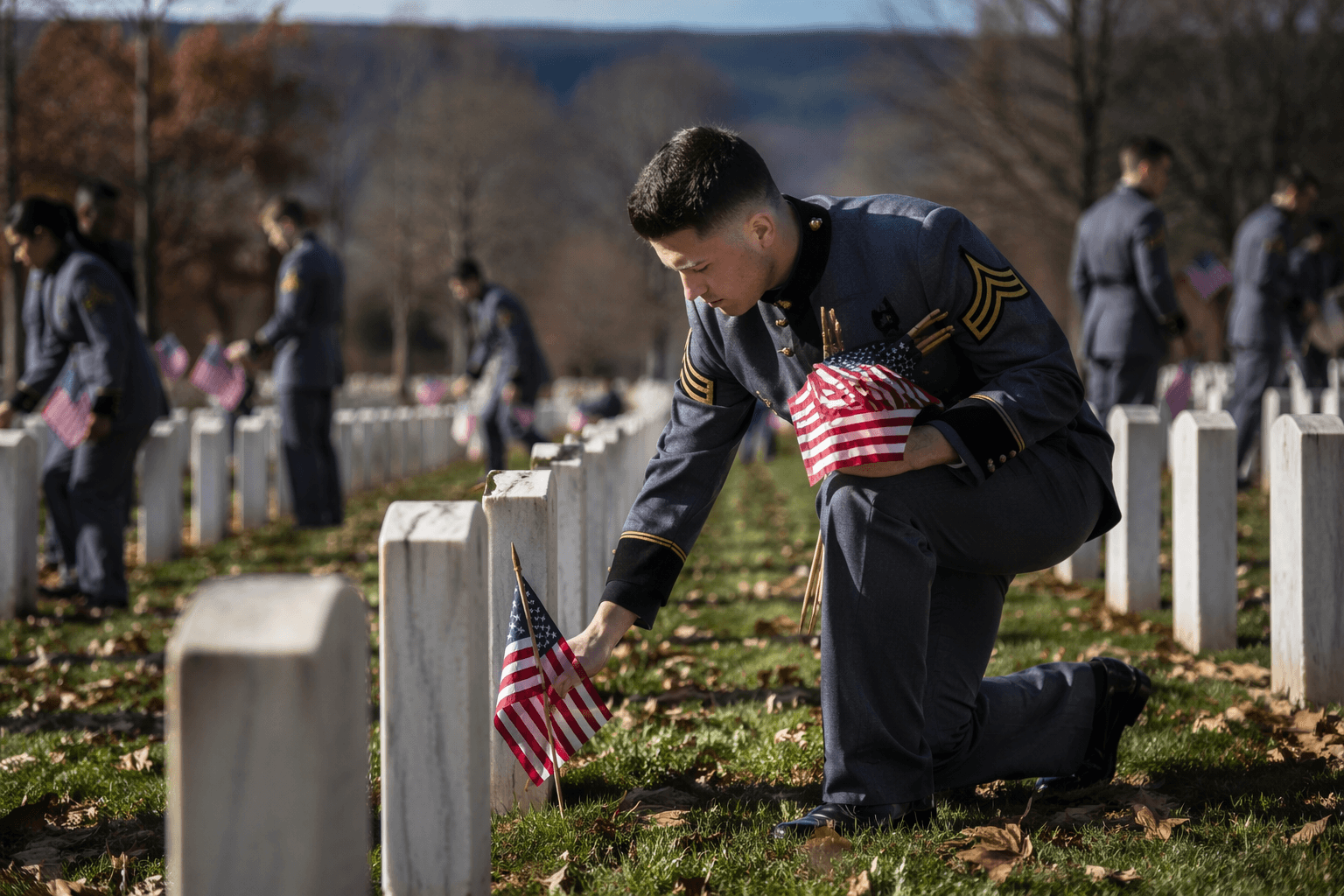
That history matters because West Point treats the cemetery as an active part of cadet formation. The academy says the cemetery’s mission is to deliver the “FINAL SALUTE” to cadets, faculty, staff, and graduates who dedicated their lives to the nation. In practice, that means the cemetery is not just a resting place for the dead. It is a place where future officers are taught to understand what service asks of them, and what their profession owes in return.
Why Inspiration to Serve is more than a walk through graves
The Simon Center for the Professional Military Ethic has run the annual Inspiration to Serve Cemetery Tour since 2004, turning remembrance into a structured part of cadet education. By the time West Point held the 19th annual tour on May 2, 2024, the academy said the event was about “human connection,” a phrase that captures how the experience links cadets to the people who wore the uniform before them.
West Point described the tour’s purpose in three parts: remember and honor fallen graduates, inspire cadets and strengthen their identity as members of the Long Gray Line, and prompt reflection before they affirm their commitment to serve. That sequence is important. It shows how the academy tries to balance mourning with preparation, so cadets do not simply admire sacrifice from afar but measure their own obligations against it.
The 2023 tour highlighted 30 graduates who died in service to the country, along with Retired Col. John McMullen, a U.S. Military Academy Class of 1975 graduate. The names attached to the program, including Maj. Adam Scott, Maj. Sarah Ryan, Dr. Pete Kilner, Class of 2026 Cadet Kathryn Scales, Gail Dwyer, Stephen Dwyer Jr., Class of 2026 Cadet Dylan Wade, and Lt. Col. John Furman, reinforce that this is a living community of cadets, faculty, staff, graduates, and families. Remembrance at West Point is collective work.
How West Point teaches sacrifice through shared hardship
West Point’s philosophy of doing hard things together is visible in the way it pairs memorialization with physical challenge. The clearest example is the Fallen Comrades Half Marathon, hosted by the Army West Point Cadet Marathon Team on March 22, 2026. About 800 participants completed the 13.1-mile course in remembrance of 13 fallen West Point graduates.
The choice of a half marathon is not accidental. Long-distance running demands discipline, endurance, and mutual encouragement, all qualities that mirror military service. By asking participants to move together in memory of the fallen, West Point makes sacrifice tangible. The lesson is not only that some gave their lives, but that the next generation must be ready to shoulder hard moments as a group, with discipline and solidarity.
That shared effort gives the memorial work a moral edge. A ceremony can honor the dead; a run can train the living to feel the strain, the repetition, and the burden of commitment. In West Point’s hands, physical hardship becomes a form of reflection, and reflection becomes preparation for leadership under pressure.
What the memorial says about the Long Gray Line
The academy’s emphasis on the Long Gray Line is central to how it teaches continuity across generations. Cadets are not only studying military history in the abstract. They are being asked to see themselves as part of a line of graduates who carried the same responsibilities, faced the same risks, and, in some cases, paid the ultimate price. That is why the cemetery tour and the marathon work so well together. One asks cadets to pause and remember, while the other asks them to move, endure, and finish what others began.
This approach also explains why West Point’s annual remembrance programming is about more than ceremony. The institution wants cadets to understand that service carries emotional weight, communal weight, and moral weight. Honoring the dead is part of that education, but so is preparing living cadets to act with humility when they inherit authority.
Visiting West Point now requires more planning
Anyone approaching the cemetery or other parts of the installation should know that access has tightened. As of March 2, 2026, West Point requires 100% ID card checks at all installation access points. West Point is a REAL ID-compliant installation, and visitors without Department of War identification must meet REAL ID requirements or obtain a local area credential.
That matters because the cemetery sits within a working military installation in West Point, New York, near Highland Falls, New York, not in a public park. The added security underscores the academy’s dual identity: it is both a place of memory and an active post where training, duty, and readiness remain front and center.
At West Point, the dead are not remembered as an ending. They are part of the instruction. The cemetery, the tour, and the half marathon all point cadets toward the same lesson: service is carried together, and the burden of that service begins long before commissioning.
Know something we missed? Have a correction or additional information?
Submit a Tip