What Dollar General Employees Should Do If Assaulted, Robbed, Threatened
If you’re assaulted, robbed, or threatened at work, prioritize your safety, call 911, report to your manager plus the Risk Management Hotline or ERC, seek medical care, and document everything.

1. During the incident
“During the robbery: Comply with demands—your safety comes first. Don’t resist or chase the robber. Try to remember details for police.” This is the primary operational rule: do not fight or pursue an assailant. Focus on memorizing distinguishing details (height, clothing, direction of escape, vehicle or weapon) if you can safely do so — those details help police and any later investigations without increasing your risk.
2. Immediately after the incident
“After the robbery: Call 911 immediately. Report to your manager. Seek medical attention if injured, even for shock or trauma. File a workers’ comp claim for any physical or psychological injuries. Document everything.” Make the 911 call first; a responding officer secures the scene and creates a police report you will need. Notify your manager as soon as possible, then follow store protocols for handing off to emergency services or investigators.
3. Use Dollar General’s reporting channels: manager, Risk Management Hotline, ERC
Dollar General’s policy is explicit: “Report any threats to workplace safety to your manager and the Risk Management Hotline immediately.… If you experience or know of this sort of behavior, notify your manager or the ERC.” After calling 911, contact your manager and the Risk Management Hotline; also notify the ERC (Employee Resource Center). Those are the company’s named channels — use all of them so there’s both a local and corporate record of the incident.
4. Seek medical care and file workers’ compensation
Seek medical attention “even for shock or trauma,” and file a workers’ compensation claim for physical or psychological injuries. The guidance notes that “Workers’ comp may cover psychological trauma in some states, but eligibility and process vary,” so get a medical record documenting injuries or trauma and file promptly with your state-specific workers’ comp process and through whatever Dollar General reporting forms you’re given. Medical records and the police report are the key evidence workers’ comp insurers will review.
5. Document everything and keep a personal log
“Document everything.” Keep a personal, contemporaneous log off company devices — the guidance explicitly says “Keep a personal log (off company devices) of:” — and treat that as an independent record. Record dates and times, what happened, who was present, what you told police and management, and any post-incident medical treatment or time off. A private log and copies of the police report and any medical notes make later claims (workers’ comp, internal investigations, or legal actions) far stronger.
6. If you’re worried about retaliation or feel unsafe reporting
“Reporting safety concerns is a protected right, and many improvements start with one person speaking up. If you’re worried about retaliation, you can report anonymously.” Dollar General’s Non-Retaliation Policy also states: “No one may retaliate against a fellow employee who reports misconduct in good faith… If you believe you have experienced retaliation, contact the ERC.” Use anonymous reporting options if you fear reprisal, but keep your personal log and any evidence separate and secure so you can document retaliation if it occurs.
7. What Dollar General should provide (what to demand and expect)
The employer responsibilities listed in the guidance form a practical checklist for what you should expect from the company: conduct a risk assessment for each location (crime rates, layout, cash handling); provide security measures such as adequate staffing during high-risk hours, cameras, panic buttons or silent alarms, and cash-management procedures; deliver training on robbery response and post-incident procedures; and provide post-incident supports, including workers’ compensation, paid time off, and access to counseling. If your store lacks these measures, report that gap through the manager, Risk Management Hotline, or ERC — the company’s code says safety is important and that it “won’t tolerate physical acts of violence, threats of physical harm, verbal abuse or other intimidating behavior.”
8. Working alone and staffing risks
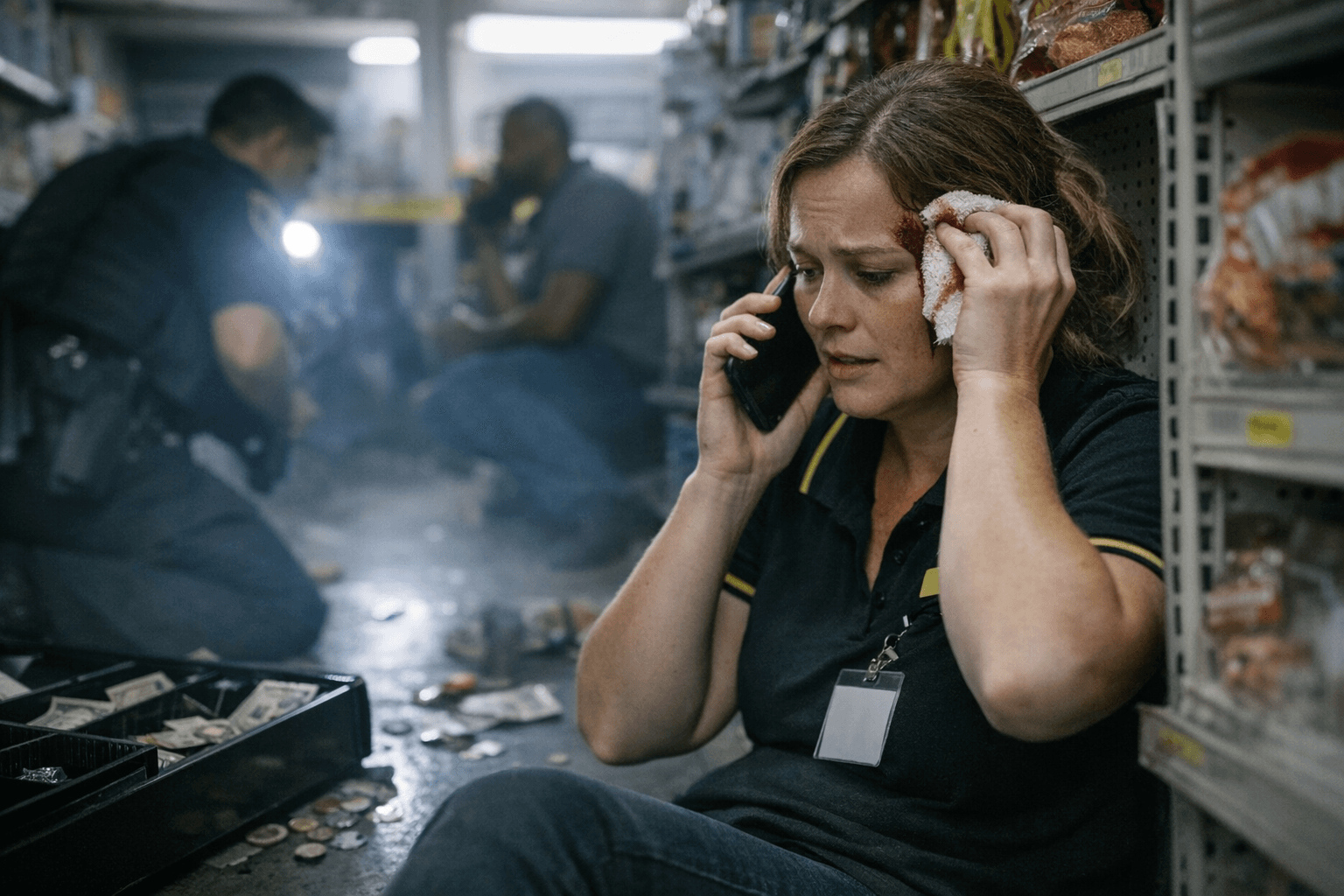
The material warns explicitly that “Single-coverage shifts bring well-documented risks” and that “Workers have reported robberies, assaults, and injuries while working alone, with no one to call for help. The risks are real, and the pressure to keep up with tasks can make it even harder to maintain safe conditions.” If you are scheduled alone in a high-risk area or during late hours, raise the staffing concern with your manager and use the Risk Management Hotline or ERC to record the safety risk. Staffing is not a minor scheduling gripe — the guidance links single-coverage directly to real incidents.
9. If you believe you were retaliated against
Dollar General’s written policy is clear: “No one may retaliate against a fellow employee who reports misconduct in good faith… Examples of retaliation under our policy include threats, harassment and discrimination, as well as unwarranted discharge, demotion and suspension. If you believe you have experienced retaliation, contact the ERC.” If you face adverse action after reporting, document the action, preserve copies of schedules or communications, and notify ERC. The company’s own code directs you to ERC; that internal record matters for both company discipline processes and outside claims.
10. Regulatory and enforcement context that matters to employees
Beyond the store-level steps, the broader record shows why thorough reporting matters: as of February 2025 there were “13 open Unfair Labor Practice cases pending at the NLRB,” and OSHA entered a corporate-wide settlement in July 2024 ordering Dollar General to pay $12 million in fines, adding to “more than $21 million in OSHA fines… from 2017 to 2023.” Those numbers don’t replace individual reports, but they show regulators and shareholders have taken notice; they also strengthen the case for systemic fixes when enough incidents are reported and escalated through the Risk Management Hotline, ERC, OSHA complaints, or NLRB filings.
11. Practical next steps and a durable checklist to follow
Do these things in this order after an incident: 1) stay safe and comply, 2) call 911, 3) notify your manager and the Risk Management Hotline, 4) notify ERC, 5) get medical care and file workers’ comp, 6) document everything off company devices, and 7) follow up in writing with the ERC and keep copies of police and medical reports. Use the company’s named channels — manager, Risk Management Hotline, ERC — so there is both local and corporate acknowledgment of the incident.
Conclusion This is not just a list of steps — it’s how you create the record and protections that matter later: police reports for investigations, medical records for compensation, corporate reports for store-level fixes, and ERC channels for non-retaliation protections. Given the company’s regulatory history and the documented risks of single coverage, documenting and escalating every serious incident is the clearest way to protect yourself and push the company to adopt the staffing, training, and security measures workers and regulators have demanded.
Know something we missed? Have a correction or additional information?
Submit a Tip