What to See and Hours at Island County Historical Museum in Coupeville
Plan a visit: Island County Historical Museum at 908 N.W. Alexander St. in Coupeville is open daily (donation admission) and houses Indigenous artifacts, a dugout canoe, an early car, and maritime exhibits.
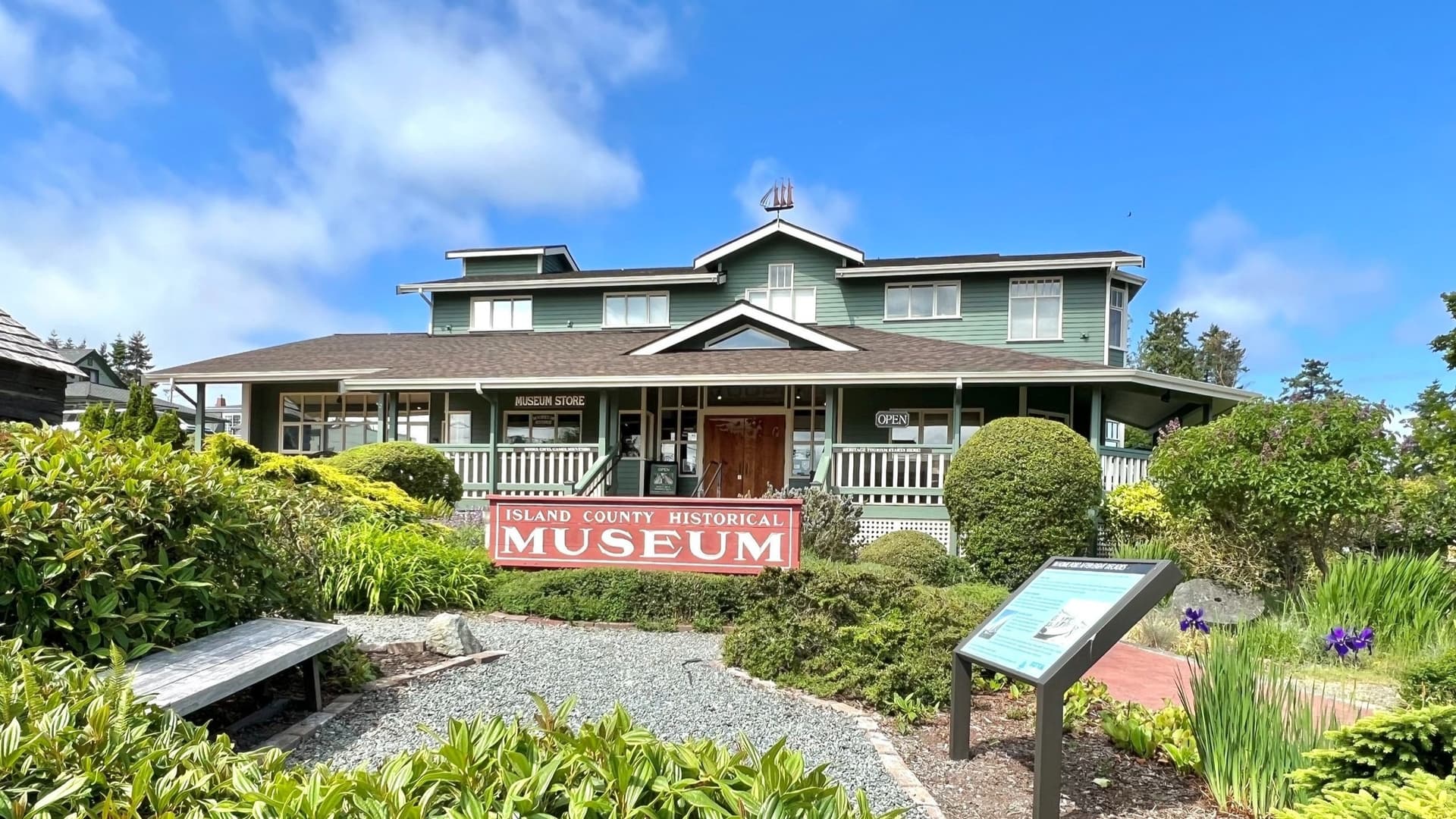
The Island County Historical Museum sits at 908 N.W. Alexander Street in Coupeville, occupying the waterfront site that once hosted the Blockhouse Inn and now looks over the Coupeville Wharf. Open Monday through Saturday, 10:00–16:00, and Sunday 11:00–16:00, the museum accepts admission by donation and bills itself as the Island County Historical Society’s public face for preserving local memory.
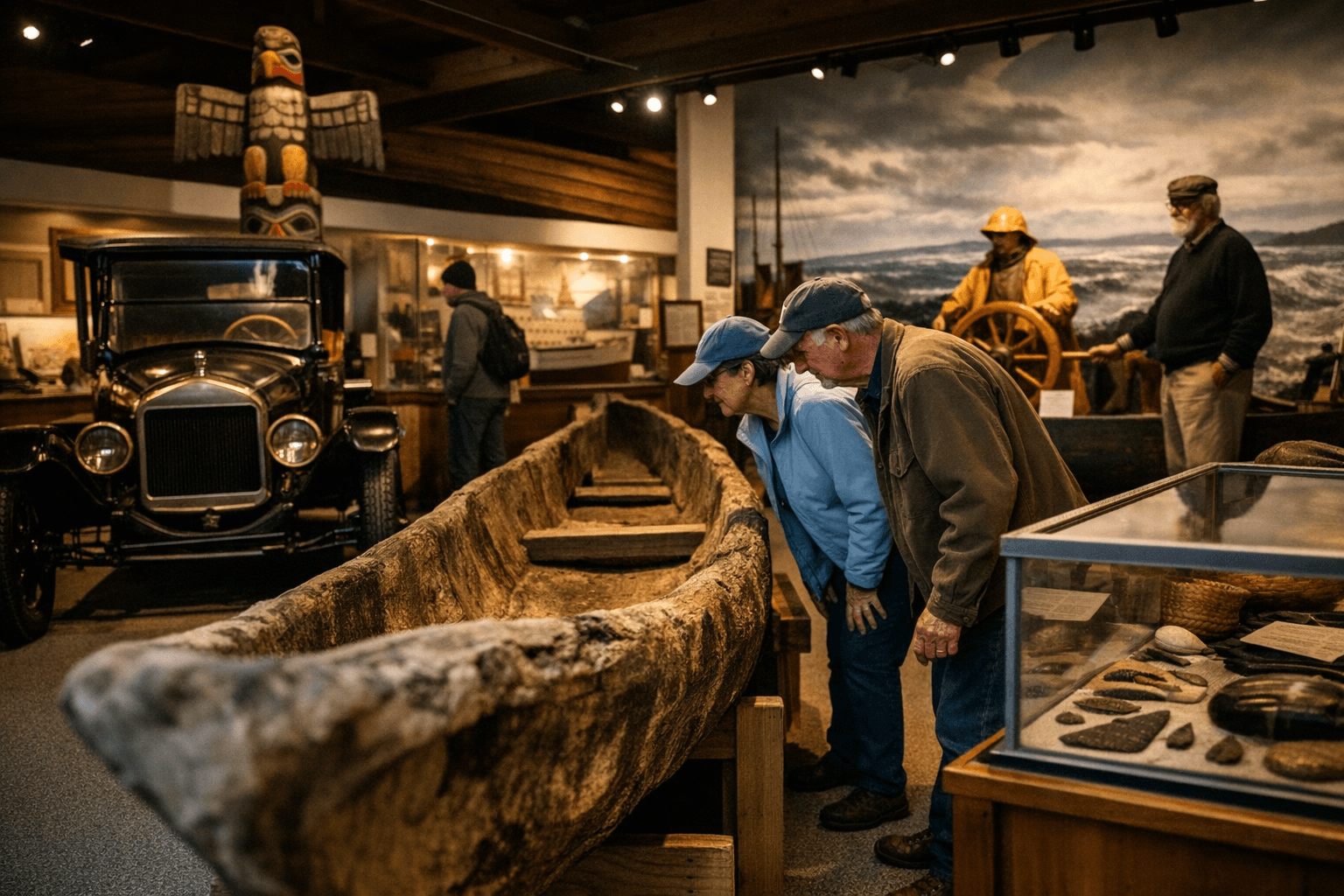
What you'll see Inside the museum you will find displays that trace Island County’s layered past: Indigenous heritage, early settler life, maritime and logging eras, and the development of island communities. Highlights described by local guides include a Native American dugout canoe with a black-and-red bow, an early automobile that “looks more like a buggy,” and interpretive panels about pioneer families and early communications firms. These artifacts are the kinds of objects Whidbey visitors point to when they want a compact, object-driven orientation to Whidbey Island history.
Hours, admission and practical entry The museum’s published weekly hours are Monday–Saturday 10:00–16:00 and Sunday 11:00–16:00; admission is by donation. Those are the hours listed on regional museum directories; because small institutions sometimes change schedules seasonally, consider confirming hours directly with the museum before traveling. The museum is included in the Cultural and Heritage Guide distributed at visitor centers across Whidbey and Camano Islands, which can help you plan a longer day around Coupeville’s waterfront.
The place and its timeline The museum building was completed in 1989 on the site of the old Blockhouse Inn, a hotel first opened in 1870 by Frances Alexander Fay, widow of pioneer John Alexander. As the National Park Service notes, “It was still operating as the Blockhouse Inn, when it burned down in 1968. The historical museum was built on the site in 1989.” The Island County Historical Society itself was founded in 1949; the museum’s organizational history includes a 1970 move into the Old Fire Hall at 903 N.W. Alexander Street, where it remained until the current building opened in 1989. That physical continuity—museum on a historic hotel site, and previous homes within Coupeville’s downtown—helps explain why the museum is often described as central to interpreting the town’s built landscape.
Staffing, governance and recent upgrades The museum operates year-round and, according to local funders, is staffed primarily by volunteers. A Whidbey Community Foundation grant supported recent nonprofit capacity-building work after a cybersecurity breach prompted institutional investment. The grant funded replacement of outdated hardware, installation of a secure firewall, and cybersecurity training for staff and volunteers. The museum also enhanced its Wi‑Fi to support a museum tour app “designed for visitors with vision or hearing impairments and those who prefer information in other languages.” As the foundation put it, “Now, ICHS is better prepared to serve as a trusted steward of Island County’s heritage while maintaining a safe and welcoming space for all visitors.”
Why those operational details matter Small museums frequently hold unique primary materials—archives, donor records, and object collections—that require both physical and digital protections. The recent investments at the Island County Historical Museum illustrate a broader governance question for cultural institutions: who pays for cybersecurity and accessibility upgrades, and how quickly can volunteer-led organizations deploy them when a breach occurs? The Whidbey Community Foundation’s grant demonstrates one local funding pathway, and it highlights that such grants have immediate public-interest outcomes: better protection of personal and institutional data and improved access for visitors with disabilities or limited-English proficiency.
Exhibits, contradictions, and what to verify Public listings describe a range of artifacts and themes at the museum, but regional directories differ on the museum’s exhibition cataloging. One directory explicitly states, “No exhibitions in Island County Historical Museum have been found,” even while descriptive text elsewhere on the same listing and in other guides details dugout canoes, early cars, and maritime displays. That contradiction is worth noting: the museum clearly interprets Indigenous, maritime, logging, and pioneer histories, yet structured-data fields on some sites show no formal exhibitions. If you plan a visit with a particular exhibit in mind, confirm availability—especially for rotating or temporary displays.
Context in Coupeville and Ebey’s Landing Coupeville’s historic downtown and its position within Ebey’s Landing National Historical Reserve give the museum an outsized interpretive role. The town itself was established by Captain Thomas Coupe in 1852 and is often identified as one of the oldest continuous settlements north of the Columbia River; the museum is described in regional guides as “the principal local repository for the area’s deeply layered history.” Its proximity to the wharf, an 1855 blockhouse, and other National Park Service–documented sites (the Island County Abstract Office, early hotels, and the Old Fire Hall) lets visitors connect objects inside the museum to the buildings and landscape immediately outside.
Nearby sites to add to a visit Because the museum sits on Coupeville’s waterfront, it pairs naturally with a walking tour of nearby historic points. The wharf and blockhouse are directly adjacent, and regional guides list other nearby attractions—Admiralty Head Lighthouse and larger state parks are often featured on local itineraries—so the museum works well as the interpretive stop that frames a day in town.
Visitor experience and reputation Local guides and travel pages describe the museum as “beautifully curated” and highlight the role of volunteers who “can tell you about the exhibits and direct you to even more sites of interest.” At the same time, some listings note that the museum’s footprint is compact and that structured directories lack images or formal exhibition entries. The museum’s modest physical size and volunteer staffing make it a different kind of stop than a large metropolitan museum, but its collections are consistently framed as essential for understanding Whidbey Island.
- Bring cash or a way to donate: admission is by donation.
- Pick up the Cultural and Heritage Guide at local visitor centers to stitch a museum visit into a broader walking route through Coupeville.
- If accessibility features matter to you—audio description, alternate-language content—ask about the museum’s tour app, which the Whidbey Community Foundation says was enabled by recent Wi‑Fi upgrades.
What to bring and practical tips
Transparency and verification Because public listings vary on exhibition details and some directories report “no images” while local photo authorship exists, verify the specific exhibits and photography permissions before citing or publishing visual material. The museum’s claim, featured in grant materials, that it is “the only year-round museum in Island County” is notable; it is presented as an institutional fact by local funders and merits confirmation if you require an authoritative inventory of county cultural institutions.
Conclusion The Island County Historical Museum in Coupeville combines concentrated, place-based collections with a town-scale historical landscape: a Blockhouse Inn site that burned in 1968, a museum building finished in 1989, and an organizational lineage back to 1949. Recent cybersecurity and accessibility upgrades funded by the Whidbey Community Foundation strengthen the museum’s stewardship capacity while underscoring the funding realities small museums face. For anyone building a day in Coupeville, the museum provides a compact, volunteer-led entry point to the island’s Indigenous, maritime, logging, and settler stories—just confirm current exhibits and hours before you go, and budget a donation to support ongoing operations.
Sources:
Know something we missed? Have a correction or additional information?
Submit a Tip