What's the Password? puzzle game turns simple code into profitable hit
A four-digit-password loop powers more than 100 puzzles, and the game made back its costs about 48 hours after launch. Its lean design shows why small puzzle games can punch above their weight.
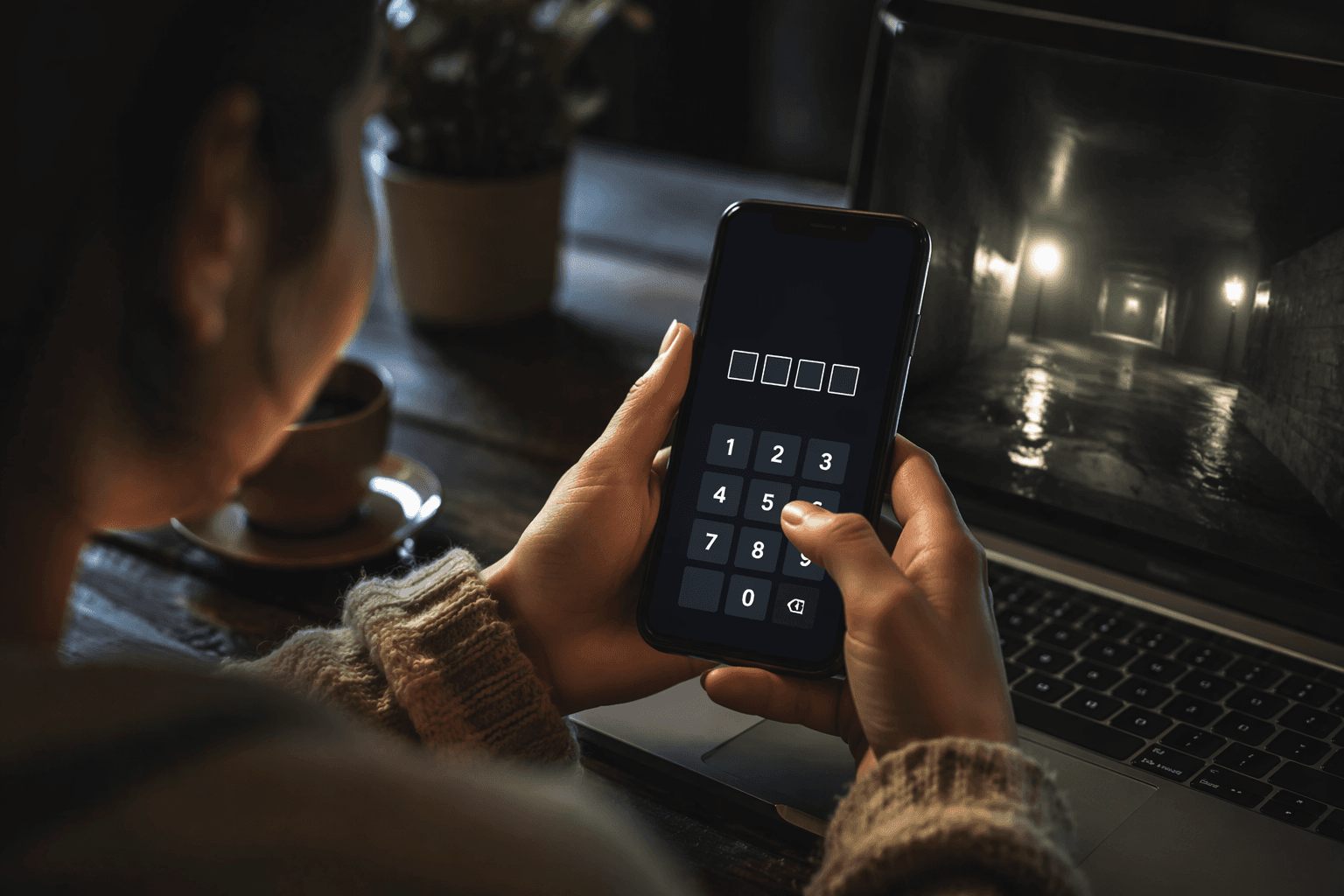
What's the Password? turns a single four-digit rule into a surprisingly elastic puzzle machine. Every challenge asks for the right code on a number pad, yet Dan DiIorio's TrampolineTales stretches that premise across more than 100 puzzles, black-and-white visuals, optional hints, randomized solutions and achievements. The result is a compact game that Steam lists at $7.99, clocks in at about two hours, and reached profitability roughly 48 hours after launch.
The strength of the constraint
The game works because it refuses to waste motion. Instead of piling on systems, What's the Password? keeps returning to the same core action, decode the four-digit password, enter it, move on, then asks the player to look harder at how the clue is constructed. That is the first lesson in elegant puzzle design: a hard limit can be a strength when each new screen changes the logic of the limit rather than adding more clutter around it.
TrampolineTales announced the project on Dec. 1, 2025, with the promise of more than 100 puzzles. That number matters because it shows how far a single mechanic can travel when the designer keeps recombining the same ingredients. A minimalist game does not need sprawling maps or long upgrade trees to create variety if each puzzle changes the relationship between clue, pattern recognition and deduction.
How the game keeps expanding without bloating
What's the Password? is built to feel fresh without abandoning its central rule. Black-and-white graphics keep the interface clean, optional hints lower the barrier for players who get stuck, and randomized solutions give the game replay value without forcing a larger content budget. Achievements add another layer of persistence, encouraging players to return after the first clear and test whether they can solve the puzzles faster or with fewer assists.
That structure is where the depth comes from. One puzzle may reward a direct read of the clue, while another is designed to make the obvious answer wrong until the player notices a hidden pattern. On a replay, randomized solutions prevent rote memorization from doing the work, so the player has to reason again rather than simply recall an old answer. The design never becomes bigger for its own sake; it becomes denser.
For a two-hour puzzle game, density is the point. If more than 100 puzzles fit into that runtime, the average challenge is brief, but the total effect is cumulative. Each solved password adds a tiny burst of progress, and the repetition of the input ritual makes the variations stand out more sharply than they might in a larger, noisier production.
A small price, a fast break-even
The commercial shape of the game matches its design. Steam lists What's the Password? at $7.99, which places it in the impulse-buy zone for puzzle fans who want a concise challenge rather than a long campaign. The store page also shows a Mostly Positive rating from 68 user reviews, a modest but meaningful early signal for an indie release built around a narrow idea.
TrampolineTales then added a more striking number to the story. In a May 30, 2026 post, DiIorio said the game had already made back its development costs about 48 hours after launch. For a small studio, that kind of speed matters because it changes the economics of future projects: a short, tightly scoped game can recoup quickly, reduce risk and free the developer to keep iterating on the next idea instead of spending years chasing a bigger, costlier release.
That commercial momentum also fits the timing. The demo arrived on May 2, 2026, giving players a chance to sample the premise before the full version landed on May 28, 2026 on Steam and mobile. The sequence suggests a low-friction rollout built to convert curiosity into sales quickly, especially for a game whose appeal is easy to understand from one sentence.
Why the creator's background matters
DiIorio's own profile helps explain the game's focus. His newsletter bio says he has ADHD and makes video games, and TrampolineTales has already produced Luck be a Landlord and Maze Mice. That background lines up with a design style that favors clear rules, fast feedback and tightly bounded sessions rather than sprawling systems that demand long attention spans.
He has also talked publicly about puzzle creation, translation and localization, and why he was happy his last game was not a giant hit. Those topics fit What's the Password? especially well. A minimalist puzzle game with short rounds and a simple interface is easier to translate and localize than a text-heavy adventure, and a controlled scale makes it easier to preserve the feel of each puzzle across languages without losing the underlying logic.
Even the endorsement attached to the game reinforces the same point. Robin Ward, co-designer of The Roottrees are Dead, called it "one fun puzzle after another with no fluff or padding." That phrase captures the central appeal here: the pleasure comes from the next small decision, not from excess content.
What this kind of hit says about indie puzzle design
What's the Password? shows how a four-digit mechanic can become commercially viable when it is treated as a system for variation rather than a single joke stretched thin. More than 100 puzzles, a roughly two-hour runtime, randomized solutions and optional hints make the game feel larger than its components, while the $7.99 price and rapid break-even show that lean design can also make business sense. In a market crowded with bigger productions, this is the kind of project that proves restraint can be a feature, not a limitation.
This article was produced by Prism’s automated news system from verified source data, official records, and press releases, then run through automated quality and moderation checks before publishing. The system is built and supervised by the people who set the standards it runs under. Read our full AI policy.
Know something we missed? Have a correction or additional information?
Submit a Tip