Where to experience Menominee culture and community in Keshena
This article highlights cultural sites and events in Menominee County and shows how residents and visitors can engage respectfully.
Menominee County’s cultural life and tourism value are concentrated in a handful of Keshena sites that center Menominee language, lifeways, and river stewardship. For residents and visitors alike, those places are not only destinations but living institutions that sustain community health, identity, and the local economy.
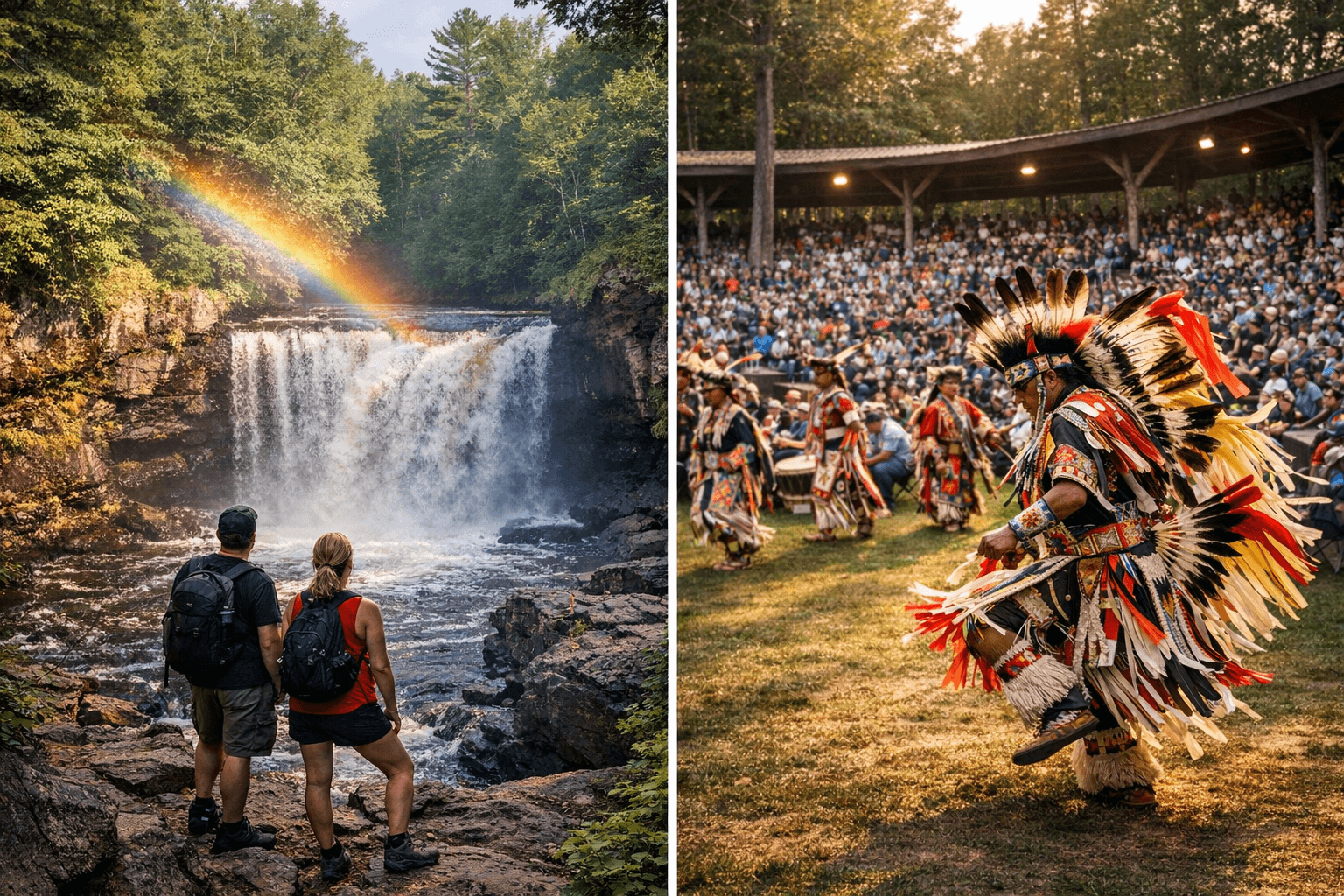
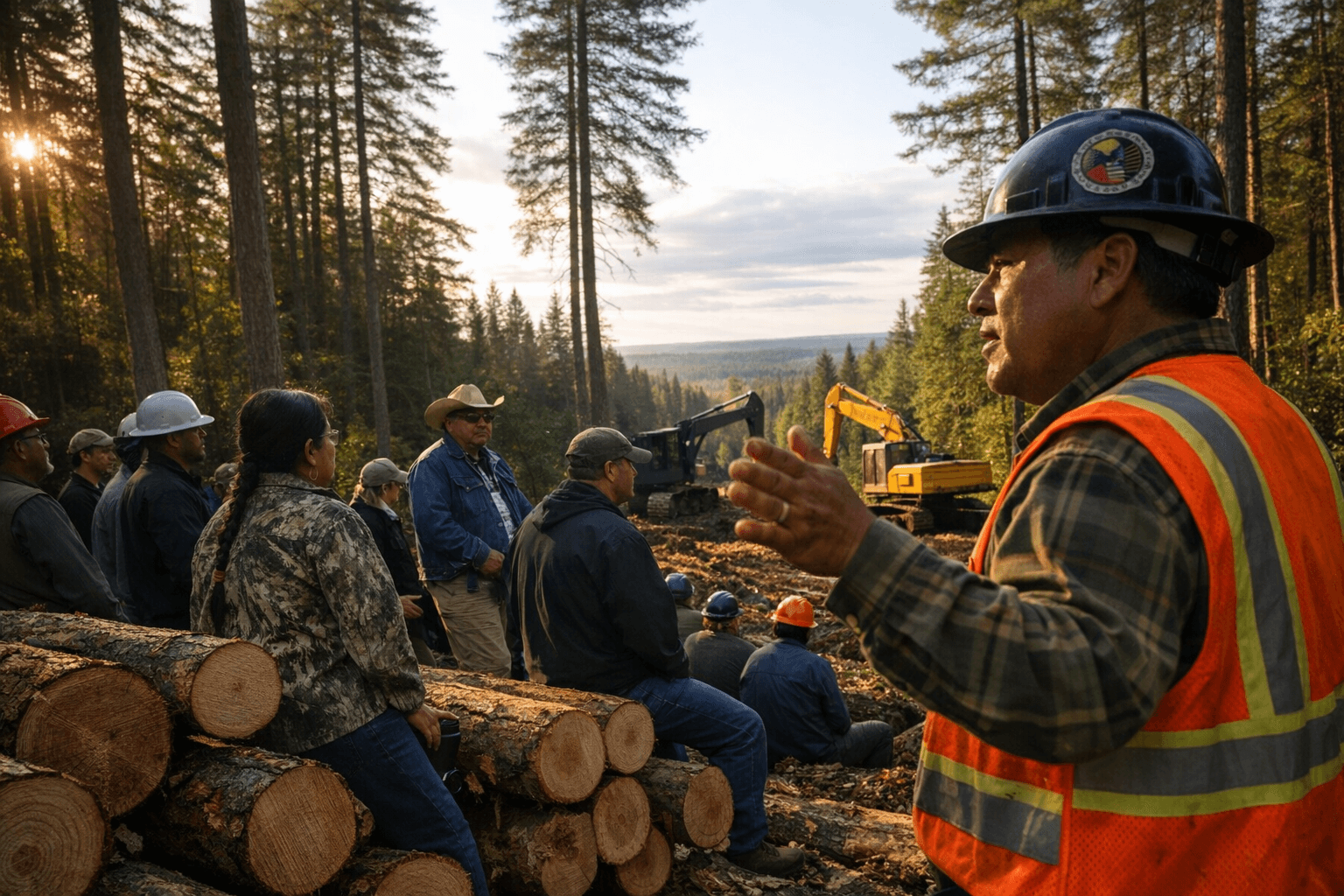
The Menominee Indian Tribe Cultural Museum and the adjacent historic logging camp interpret Menominee logging history and traditional woodworking. Exhibits and the preserved camp on the Wolf River corridor give context to timber-era labor and cultural practices while supporting small-scale visitation that helps preserve local crafts and storytelling. The corridor itself, from Keshena Falls downstream, remains a cultural and ecological anchor used for recreation, sturgeon restoration work, and events that tie river stewardship to tribal lifeways.
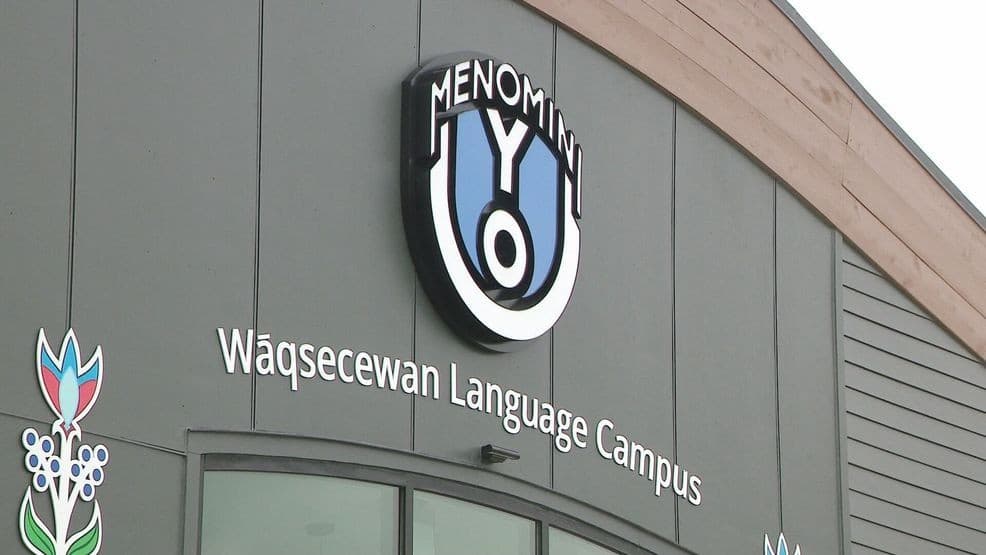
Language revival is central to cultural resilience in Menominee County. The Wāqsecewan Language Campus and the Menominee Language & Culture Commission host classes, workshops, and community programs that draw tribal members and visitors for language practice and cultural exhibits. Those programs bolster intergenerational ties and have public health implications: language and cultural continuity are linked to better mental health outcomes and stronger social supports in Indigenous communities.
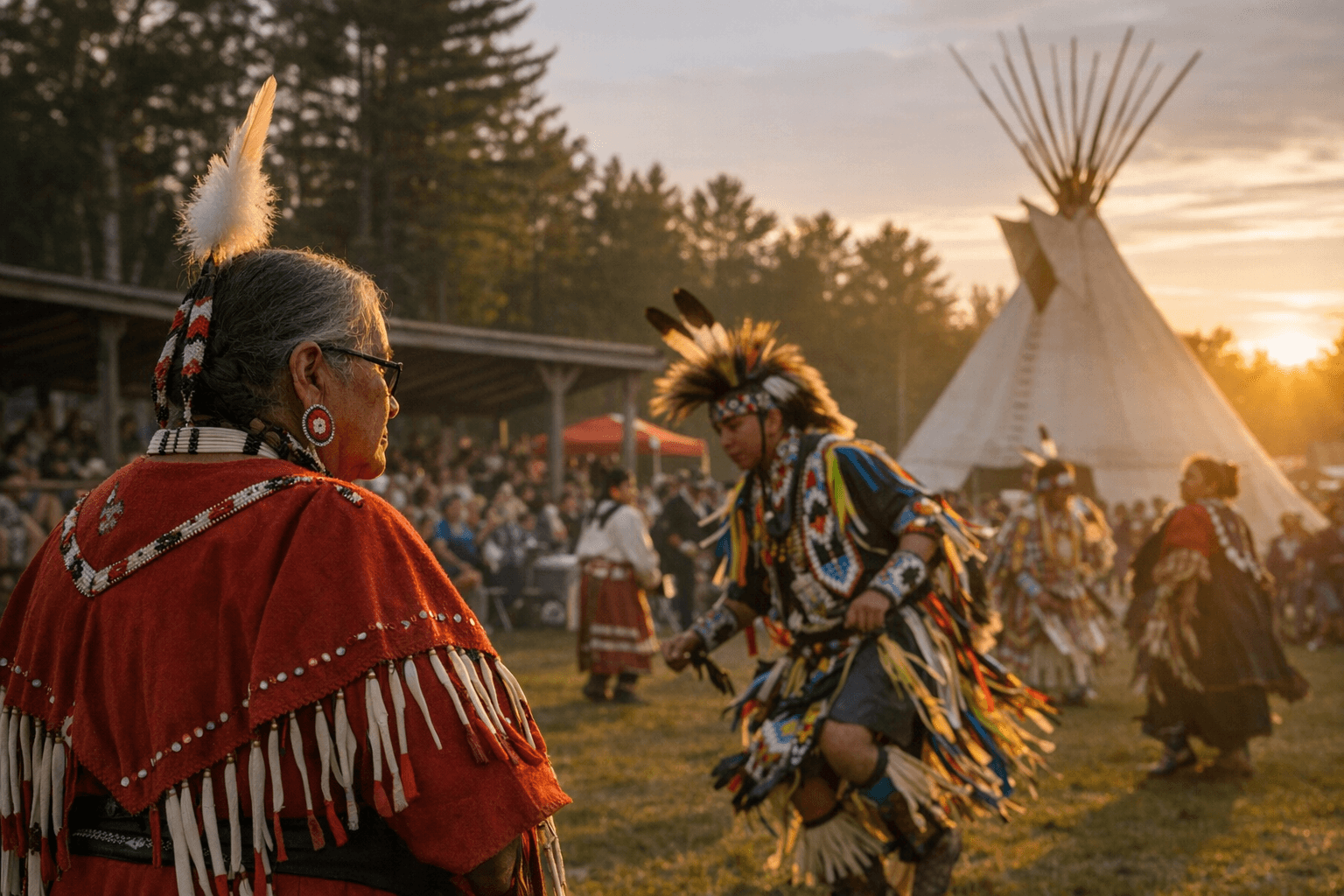
The College of Menominee Nation on tribal land offers public workshops in traditional skills such as weaving, beading, and moccasin-making when scheduled. As a tribal land-grant college, CMN plays a role in educational access and workforce development while also serving as a site for community healing and cultural exchange. The FACE Center, formally the Omaeqnomenewak Wetohkatikamek Center, hosts powwows, sobriety-focused gatherings, and seasonal cultural events that welcome visitors who observe local protocols. Those gatherings provide social cohesion, recovery support networks, and opportunities for cultural transmission that extend beyond tourism.
Practical considerations matter. Many cultural gatherings are community-focused and include guidance about respectful attendance and protocols; visitors should verify dates, access details, and any guest requirements before traveling. Event calendars at tribal and CMN web pages offer the most current schedules; one central resource is the Menominee Indian Tribe website: menominee-nsn.gov.
For Menominee County residents, these places support cultural continuity, local jobs, and stewardship projects such as sturgeon restoration along the Wolf River. For visitors, they offer meaningful experiences when approached with attention to community norms. Supporting programming at the museum, the language campus, CMN, and the FACE Center helps sustain language revival, sobriety initiatives, and ecological work that benefit the whole county. Check event listings, come prepared to observe protocols, and consider contributing to local efforts that keep Menominee culture vital for future generations.
Know something we missed? Have a correction or additional information?
Submit a Tip