Where to Find White, Black and Green Sand Beaches on Big Island
Find white sand at Hapuna and Kaunaʻoa on the Kohala coast, black sand at Punaluu, Pohoiki and Richardson, and the rare green sand at Papakōlea near South Point.
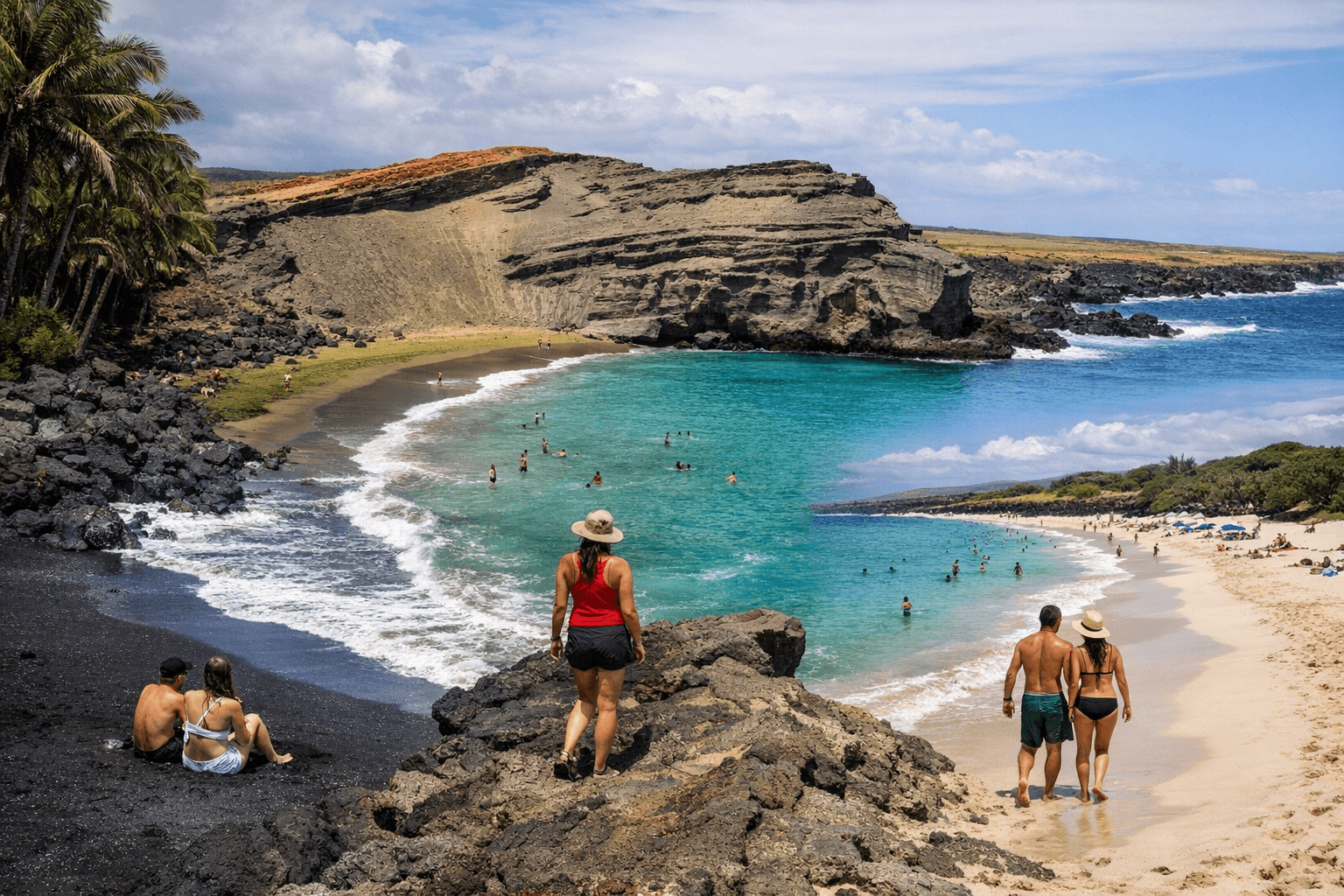
Big Island beaches vary from mile‑long white sand crescents to volcanic black sand coves and the rare olive‑green shore at Papakōlea. Below is a practical, location‑by‑location guide with where to go, what to expect, safety notes, and who manages each site.
1. Hapuna Beach (white sand)
Hapuna Beach State Recreation Area on the Kohala coast is one of the island’s largest white‑sand beaches, with lifeguards on duty during peak hours and restroom and picnic facilities in the park. The long crescent and consistent sand make it popular for families and swimmers; the county posts surf and lifeguard advisories when currents pick up, so check Hawaii County lifeguard updates before you go. Parking can fill early on summer weekends and holidays, and the park is managed by the state Division of State Parks.
2. Kaunaʻoa / Mauna Kea Beach (white sand)
Kaunaʻoa Bay, often called Mauna Kea Beach, sits in North Kohala adjacent to the Mauna Kea and Kaunaʻoa resort properties and is known for powdery white sand and clear snorkeling close to shore. Facilities at resorts and nearby public access points make this a go‑to for visitors staying on the Kohala coast; boat access and organized tours operate from nearby harbors when weather allows. Respect private‑property access routes and use public parking and walkways provided by the county.
3. Anaehoʻomalu Bay (white sand)
Anaehoʻomalu Bay at Waikōloa Resort features a broad white sand shoreline fringed with Hawaiian ironwood and cultural fishpond remnants—it's convenient for resort guests and visitors driving from Kona. The bay has gentle snorkeling near the reef and shallow waters good for paddleboarding; the resort area is patrolled, and Waikōloa Beach management maintains signage about current conditions and cultural sites. Expect family‑friendly amenities and scheduled resort activities during peak tourist seasons.
4. Spencer Beach Park / Puʻukoholā Heiau area (white sand)
Spencer Beach Park, near Kawaihae and the Puʻukoholā Heiau National Historic Site, offers a calmer white‑sand shoreline with shaded lawn areas, picnic tables, and a boat ramp used by local anglers. The park is operated by Hawaii County and is a convenient stop for families, historical visitors, and divers heading to nearby reefs. Note that high surf or strong currents occasionally close swimming areas; the county posts advisories, and lifeguards may not be present year‑round.
5. Magic Sands / Laʻaloa (white sand, seasonal)
Magic Sands Beach (Laʻaloa) in Kailua‑Kona is a compact, white‑sand pocket beach that can appear or shrink depending on recent storms and winter surf—locals know its size changes with the season. When the sand is in place, the beach fills quickly on afternoons and is popular for boogie boarding when surf picks up. Check current conditions before planning a beach day, as lifeguard coverage and parking are limited.
6. Punaluu Black Sand Beach (black sand)
Punaluu Beach Park in Kaʻū, near Pāhala, is the Big Island’s best‑known black sand beach; the dark volcanic sand and palm grove attract visitors and frequent sightings of endangered hawksbill and green sea turtles. The site has a small parking area, restrooms, and interpretive signage; the sand is produced by lava entering the ocean and breaking into fine fragments. Park management and county signage remind visitors not to disturb nesting turtles and to leave the beach as found.
7. Isaac Hale/Pohoiki and other Puna black‑sand shores (black sand)
Isaac Hale Beach Park (Pohoiki) in Puna became widely observed after the 2018 Kīlauea eruption created new black sand and reshaped the shoreline; Pohoiki now features a broad, dark‑sand beach with a new pond area and a boat ramp rebuilt by county efforts. The Puna coast has several black‑sand pockets—Kehena and nearby coves—where currents and steep drop‑offs can make swimming hazardous. Hawaii County Parks and the Division of State Parks post condition alerts for these locations; always check before entering the water and treat the sand and new shorelines as dynamic, unstable terrain.
8. Richardson Ocean Park and Hilo black sand spots (black sand)
Richardson Ocean Park in Hilo offers a black‑sand shoreline with calm tide pools and accessible snorkeling; it’s a county park with parking, lifeguard towers in season, and kayak/snorkel access points used by local dive operators. Hilo’s eastern exposure means waves and currents can be variable—Richardson is favored for calmer days and family snorkeling, while nearby beaches may be rougher. The park serves residents and visitors from Hilo and is a manageable option when west‑side travel is impractical.
9. Kehena Beach (black sand, local note)
Kehena Beach on the Puna coast is known for its dramatic black sand and a history of being a less‑regulated, local beach with strong currents and occasional crowding. It’s sometimes listed as clothing optional and has limited parking and no formal lifeguard station; use extra caution, avoid entering the water alone, and obey posted safety warnings and county advisories. Local coastal volunteer groups occasionally conduct cleanups—participation helps preserve these fragile shorelines.
10. Papakōlea / Mahana Beach (green sand)
Papakōlea (Mahana Beach) near South Point (Ka Lae) in Kaʻū is one of the world’s rare olive‑green sand beaches, colored by the mineral olivine (peridot) eroded from a cinder cone. It’s remote—access involves rough four‑wheel‑drive roads and walking across lava fields or using a guided vehicle or shuttle—and the site is fragile, so visitors should stay on paths and pack out everything they bring. Respect County and state signage: the area is culturally sensitive and environmentally delicate; collection of sand or olivine fragments is prohibited under state conservation rules.
- Check lifeguard and Hawaii County beach advisories before visiting: conditions change quickly with swell, trade winds, and rainfall.
- Never remove sand, shells, or olivine—state conservation and cultural resource protections apply across many coastal parks.
- Black‑sand beaches often have steep shorelines and sudden drop‑offs; enter water slowly, never swim alone, and treat currents seriously.
- Facilities vary: some state and county parks (Hapuna, Spencer, Richardson, Punaluu) have restrooms and parking; remote sites like Papakōlea and some Puna coves do not.
- Protect reef and marine life: avoid touching coral, use reef‑safe sunscreen, and follow signage about turtle resting zones.
Safety, conservation and practical tips
How to plan your beach day 1. Pick beaches by objective: choose Hapuna or Kaunaʻoa for classic white sand and family swimming; Richardson or Spencer for convenient county parks; Punaluu and Pohoiki for dramatic black sand; Papakōlea for the rare green‑sand experience. 2. Time your visit: start early for parking at popular white‑sand parks, and avoid high‑surf advisories which are most frequent in winter for north and east shores. 3. Check official sources: look at Hawaii County lifeguard postings and Division of State Parks alerts for closures and advisories before you drive.
Conclusion The Big Island’s coastline offers distinct experiences: expansive white‑sand beaches with park facilities on the Kohala and Waikōloa coasts; volcanic black‑sand shores shaped by lava flows on the Puna and Kaʻū sides; and the singular green‑sand Papakōlea near South Point. Prioritize safety—follow Hawaii County and state advisories, respect cultural and natural protections, and plan logistics (parking, facilities, lifeguards) in advance to make the most of each unique shoreline.
Sources:
Know something we missed? Have a correction or additional information?
Submit a Tip