White House Correspondents’ Dinner Blends Politics, Comedy, and Press Tradition
A Washington ritual built to celebrate press freedom now doubles as a stress test for political comedy. Jon Stewart’s gunfire line captured a room measuring shock, distance, and resilience.
A dinner built around press freedom
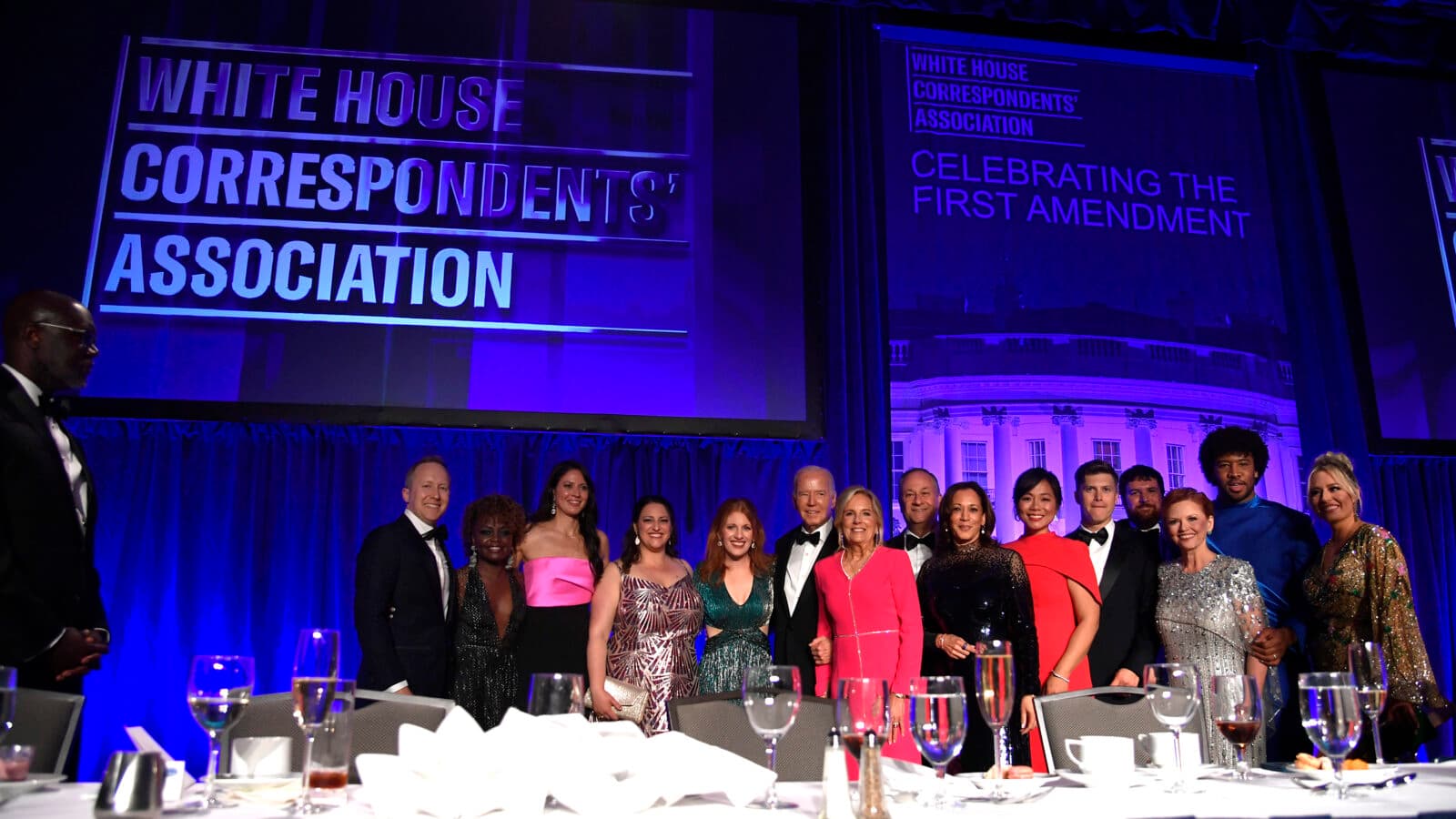
The White House Correspondents’ Dinner is more than a black-tie social fixture. It is the annual fundraiser for the White House Correspondents’ Association, and the money it raises supports journalism scholarships and awards that honor reporting talent. The association describes the event as a celebration of the First Amendment, which gives the evening a purpose that goes beyond entertainment and into the institutions that protect a free press.
That mission matters because the dinner sits at the center of Washington’s political and media calendar. It traditionally draws the president, the first lady, senior government officials and members of the news media into the same ballroom, creating a rare setting where power, scrutiny and performance all share the same space. The White House Correspondents’ Association was created by journalists on Feb. 25, 1914, giving the dinner a century-old institutional backbone even as its public meaning has evolved.
Why the room matters as much as the program
The dinner’s power comes from proximity. In most cities, political leaders and the journalists who cover them move in separate circles; at this event, they sit, laugh and react in real time under the same roof. That unusual closeness is part of what turned the dinner into a major Washington media-culture event, where the tone of the room often says as much as the jokes onstage.
In 2025, the dinner was held at the Washington Hilton in Washington, D.C., and the White House Correspondents’ Association said it drew about 2,600 attendees. The association also said the event did not include an entertainer that year, a notable choice for an evening so closely associated with comedy and self-parody. Donald Trump did not attend the 2025 dinner, underscoring how the event can still reflect the tense relationship between presidents and the press even when the formal seating chart suggests reconciliation.
Comedy as pressure release, and as a political signal
The late-night reaction to the dinner is best understood as more than a string of punchlines. Political comedy at this event works like a cultural barometer: it reveals how the press corps, the political class and the broader public are processing pressure in a moment when the ordinary rituals of Washington feel fragile. When the usual ceremony is interrupted by violence, the jokes do not erase the rupture. They register it, then try to make it speak.
Jon Stewart captured that tension with a line that the event “was supposed to be an evening of fun and merriment,” but “like most things in America, it was interrupted by gunfire.” The joke lands because it fuses two realities that rarely belong in the same sentence: the polished ritual of a Washington gala and the intrusion of violence into civic life. In that sense, the laugh becomes a form of coping, but also a form of commentary, showing how quickly political humor moves from celebration to diagnosis.
That is why the dinner’s comedy matters so much in the first place. The event has long allowed reporters and political figures to play with the distance between public image and private anxiety. A joke that works in this room usually does so because everyone present recognizes the strain beneath the performance. When the background mood is unsettled, the jokes become sharper evidence of what the capital is feeling than any formal speech could provide.
What the tradition says about Washington now
The White House Correspondents’ Dinner remains a rare institution that combines fundraising, awards, political theater and newsroom self-reflection in one evening. Its stated purpose is serious: support scholarships, honor journalism awards and affirm the First Amendment. Yet the event endures because it also performs something harder to quantify, a shared ritual through which Washington watches itself react.
That dual identity helps explain why the dinner still attracts attention even when the broader political environment is sour. The 2025 gathering, with its 2,600 attendees and no entertainer, showed how the event can adapt without losing its symbolic function. The focus is not only on who is in the room, but on how the room responds when comedy is asked to absorb national strain.
The deeper significance of the dinner is that it compresses Washington into a single image. Presidents and reporters, officials and comedians, ceremony and criticism, all collide under one roof. When Jon Stewart jokes about gunfire interrupting merriment, he is not simply aiming for a laugh. He is naming the uneasy truth that the capital’s most polished rituals now exist alongside the possibility of rupture, and that political comedy has become one of the few places where that tension can be openly staged.
The result is a tradition that still matters because it shows how a press institution can honor its mission while also reflecting the emotional weather of the country. The dinner is part fundraiser, part roast, part civic pressure valve. In moments like this, it becomes something more: a live record of how Washington tries to laugh while carrying the weight of what sits just outside the ballroom doors.
This article was produced by Prism’s automated news system from verified source data, official records, and press releases, then run through automated quality and moderation checks before publishing. The system is built and supervised by the people who set the standards it runs under. Read our full AI policy.
Did this article answer your question?