White House Terminates Members of National Science Foundation Advisory Board
The White House moved to terminate the science board that steers NSF policy, raising fears that grant decisions will face more political pressure.
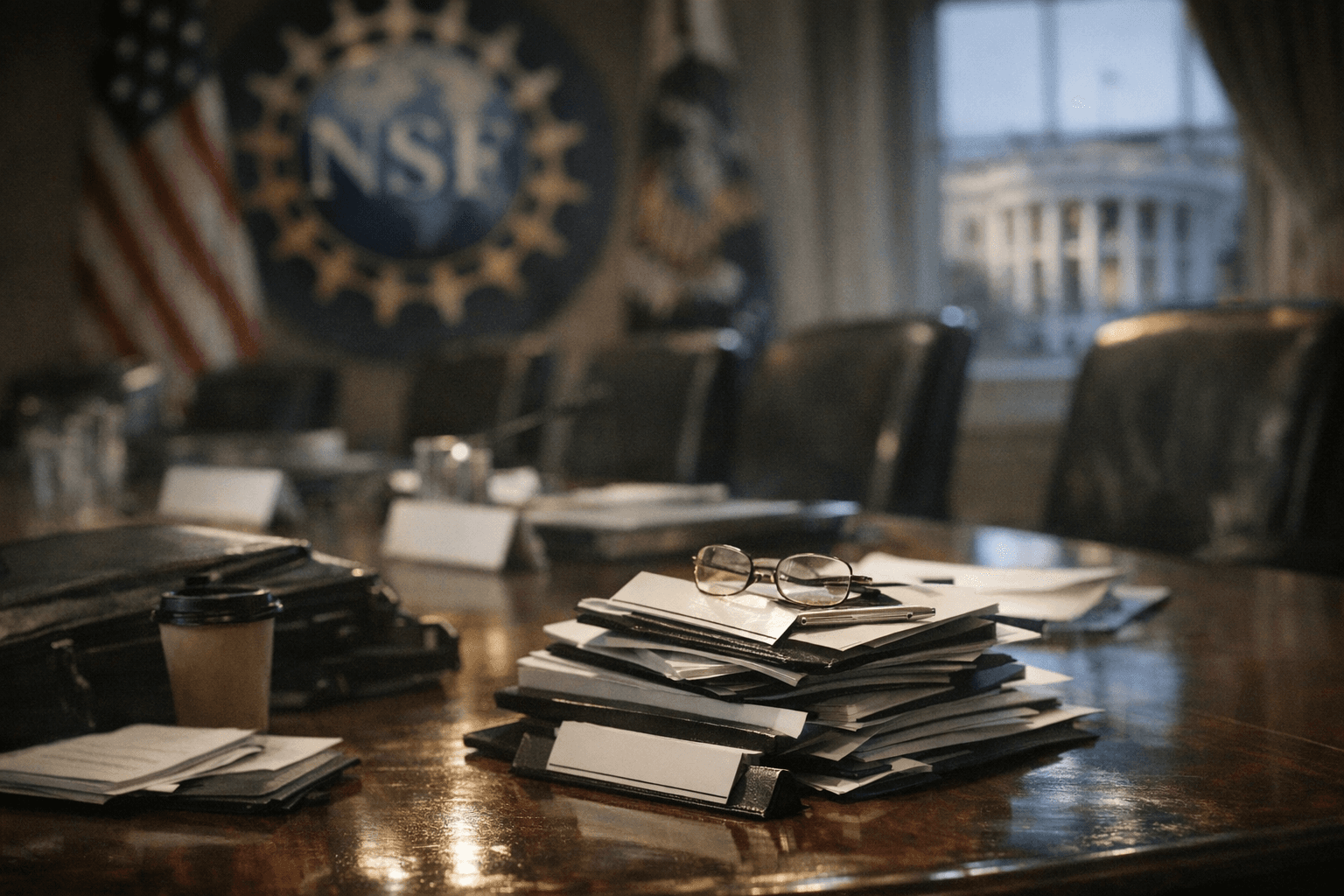
The White House told members of the National Science Board that their positions were being terminated, striking at the 25-member body that sets policy for the National Science Foundation and advises both Congress and the president. The board also approves major NSF awards, and its members are presidential appointees drawn from universities, industry, and a range of science and engineering fields.
The move matters because the National Science Board sits at a critical choke point in the federal research system. NSF dollars flow into universities, laboratories, graduate training, fieldwork, and high-risk projects that private investors often avoid. When the board is able to act independently, it helps keep those choices tied to scientific merit rather than shifting political demands; when that independence weakens, the effects can travel far beyond Washington and into the research pipeline that feeds future technologies and jobs.
Concerns about that erosion had already surfaced inside the board. In May 2025, former White House science adviser Alondra Nelson said she was resigning from the National Science Board and wrote that the board’s role had become hollow. She said NSF investments had helped shape technologies from GPS to the internet and supported research in the social and behavioral sciences. She also said DOGE had authority to approve or reject grant applications vetted by experts, and that a DOGE team member had observed deliberations and blocked approved grants.
The latest removals sharpen those warnings. If a board created to guide federal science policy can be cut off by notice from the White House, universities, researchers, and the communities that depend on NSF support could face a more politicized funding process. The immediate fight is over board membership, but the larger question is who gets to shape the nation’s research agenda, and whether that power will remain insulated enough to protect scientific independence.
This article was produced by Prism’s automated news system from verified source data, official records, and press releases, then run through automated quality and moderation checks before publishing. The system is built and supervised by the people who set the standards it runs under. Read our full AI policy.
Did this article answer your question?

